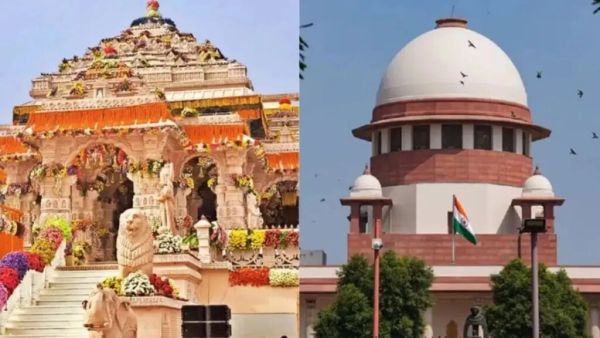
The matter of alleged irregularities in the dedication fund collected for the construction of Shri Ram Janmabhoomi temple in Ayodhya has now reached the threshold of the Supreme Court, where a new petition has been filed demanding a thorough investigation into this sensitive issue. This development has come to light at a time when, just a few days ago, the Allahabad High Court had rejected another petition filed on the same subject, refusing to give it an urgent hearing. These allegations to alleged manipulation of donations and lack of transparency are directly to the faith and belief of crores of Ram devotees across the country, who have contributed in the construction of the temple with incomparable enthusiasm and passion.
The latest petition filed in the Supreme Court has sought a detailed investigation into alleged irregularities and embezzlement in donations received by Shri Ram Janmabhoomi Teerth Kshetra Trust. The petitioners have specifically urged for setting up a Special Investigation Team (SIT) led by the Central Bureau of Investigation (CBI). Additionally, the need to immediately file a First Information Report (FIR) in the case and preserve all relevant records has been emphasized to prevent any tampering or destruction of evidence. The petition also seeks to establish a strong audit and monitoring system for the management of the trust’s funds and assets, thereby eliminating the possibility of any such irregularities in future and ensuring transparency.
It is noteworthy that Allahabad High Court has already refused to hear this case urgently. The petition filed by a person named Mohit Ashok had sought urgent hearing in the Ram Temple donation theft case, which was rejected by the High Court saying that a large number of cases were already pending in the court. Orally, the court also remarked that the Uttar Pradesh government has taken cognizance of the matter, hence there does not seem to be any need for an immediate hearing at this stage. After this decision of the High Court, the petitioners have now approached the Supreme Court in search of justice and truth.
This is not the first time that legal questions have been raised over the management of donations collected for the Ram temple. Even before this, a petition has been filed in the Supreme Court by advocate Narendra Kumar Goswami. That petition had sought a forensic audit to get detailed information on the total donations received by the temple, how and where these funds were deposited. Advocate Goswami had strongly stated in his petition that all records to the donation, especially CCTV footage, documents and digital evidence, should be preserved, as they would act as important evidence during any possible investigation.
A central point that has emerged in the petitions is that donations or offerings made in the name of the deity are, in fact, property of the Trust, and hence, complete transparency in the process of counting and managing these contributions is essential. This is not only a legal requirement but also a respect for the sentiments of crores of people who have dedicated their devotion and hard-earned money for the construction of the temple. Through these petitions, it has been demanded that the information to all the offerings received at Shri Ram Janmabhoomi Temple, as well as the CCTV footage, documents and digital evidence, should be kept completely safe, so that every single penny can be accounted for and there is no scope left for any kind of doubt. It is extremely important to ensure that the sacred work of temple construction remains free from allegations of any kind of financial irregularity and the public trust remains intact. The purpose of these legal efforts is not only to investigate alleged irregularities but also to establish a transparent and accountable system for the future.