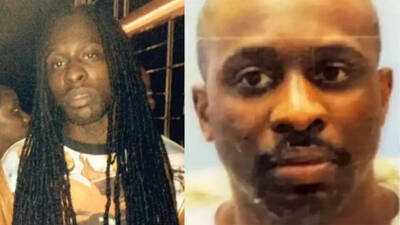
On Tuesday, the US Supreme Court delivered a pivotal 6-3 verdict against Damon Landor, a Louisiana resident and committed Rastafarian. He sought compensation after prison authorities cut his dreadlocks, claiming it infringed upon his religious rights. This case originated from a 2020 event at the Raymond Laborde Correctional Center, where Landor was serving a five-month sentence for a drug-related offense. Court documents reveal that prison staff restrained him and shaved his head, disregarding a court ruling that stated cutting a Rastafarian's dreadlocks would breach religious protections.
Rastafari is a religious and spiritual movement that began in Jamaica, famously associated with reggae legend Bob Marley. Landor, identifying as a devout Rastafarian, had maintained his dreadlocks for over two decades as part of his faith. His hair care adhered to the Nazirite vow, which prohibits hair cutting. Before the officials cut his hair, Landor explained the importance of his beliefs and presented a Louisiana Fifth Circuit Court ruling that prohibited cutting Rastafarian inmates' dreadlocks under the Religious Land Use and Institutionalized Persons Act (RLUIPA). Following his release, he filed a lawsuit against the prison officials and the Louisiana Department of Corrections, claiming a violation of his religious rights.
The Supreme Court's decision, which was divided along ideological lines, concluded that Landor could not claim damages under RLUIPA. Justice Neil Gorsuch, writing for the majority, stated that the law does not permit claims against individual state prison officials. He noted, "The only way the suit could proceed is if the officials had agreed to be liable under federal law, which they did not." Landor expressed his disappointment with the ruling, stating, "What happened to me violated my faith and my dignity. I will continue pursuing accountability." Justice Ketanji Brown Jackson dissented strongly, arguing that the ruling undermines the law's intent to safeguard prisoners' religious freedoms. She emphasized that prisoners like Landor, who experience blatant violations of their religious rights, often find themselves without recourse. Louisiana acknowledged Landor's mistreatment and indicated that it has revised its grooming policies to prevent similar occurrences for Rastafarian inmates in the future.