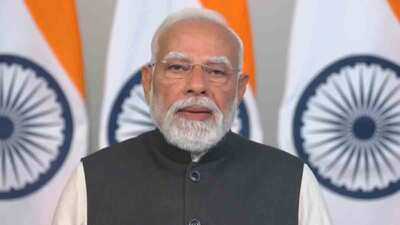
Before the third round of group stage fixtures at the World Cup, the leading contenders for the Golden Boot already boast four or five goals each — but what explains this goal rush?
Most of the frontrunners for the 2026 World Cup Golden Boot are yet to feature in their third group stage encounter.
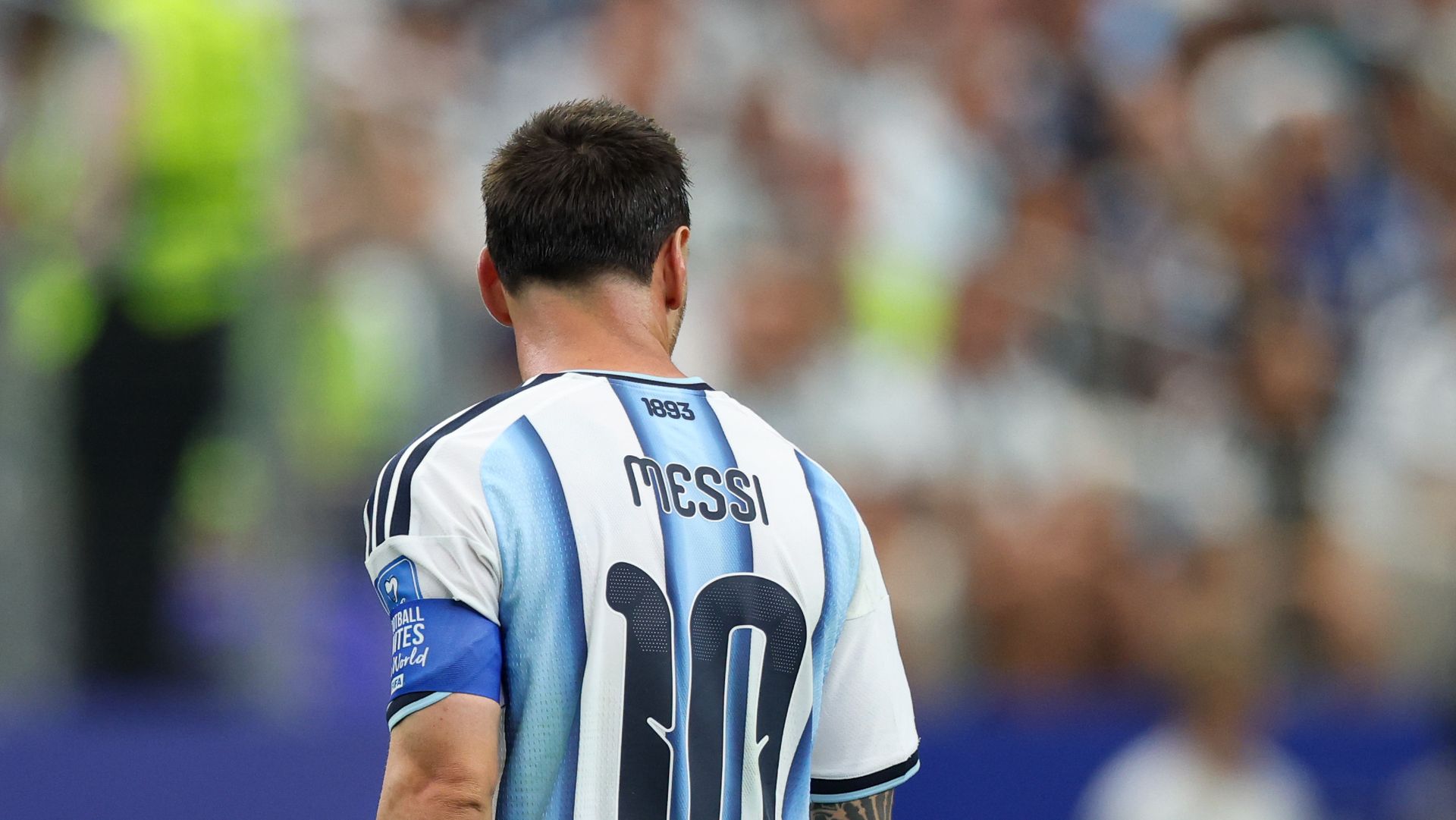
Still, Lionel Messi currently leads the scoring charts with five goals, followed closely by Kylian Mbappe and Erling Haaland, who have netted four times each.
Brazil’s Vinicius Junior is the only player to have scored four or more goals across three matches, maintaining an average of more than one strike per game. So, what’s driving this surge in goals across North America?
The simplest explanation might be the expanded tournament format, which allows elite forwards to capitalise on weaker opponents.
However, Messi’s five goals have come against teams that would likely feature even in a 32-nation event, proving it’s not just about facing lesser opposition.
It’s fair to say Iraq might not have qualified under the old format — but what about Senegal? The Africa Cup of Nations finalists are a formidable side, well-known to followers of African football.
Yet Mbappe and Haaland both struck twice against the African powerhouse, while Messi delivered explosive performances versus Algeria and Austria — both solid teams in their own right.
Beyond these three prolific scorers, the 2026 World Cup already has five players with three goals each in just two or three matches, and an astonishing 18 players who have scored twice.
The number of players averaging roughly a goal per game is too high to attribute entirely to reduced competitiveness. So, what’s really behind this scoring spree at the 2026 World Cup?
Here’s a bold statement: this may be the most gifted attacking generation football has ever witnessed.
To illustrate, consider Mohamed Salah and Thierry Henry — both Premier League legends with outstanding records in their respective eras.
Each has represented their country at multiple World Cups: Salah in two, Henry in four. One played for France, World Cup winners in 2006; the other for Egypt, who only recently claimed their first-ever World Cup victory against New Zealand.
Henry featured in 17 World Cup matches, while Salah has appeared in just four across the 2018 and 2026 editions.
Surprisingly, Salah already has half of Henry’s career tournament goals — six to Henry’s three — along with two assists compared to Henry’s one.
An ageing Salah has registered five goal contributions in four World Cup matches for a relatively modest Egyptian side, three of which have come during this tournament. Henry achieved seven goal involvements in 17 matches for a title-winning French team.
Salah played through the 2018 tournament while still recovering from a shoulder injury and missed the 2022 edition during his prime years.
And the difference in opposition quality doesn’t fully explain it either. Henry’s goals came against South Africa, Saudi Arabia, Togo, South Korea, Croatia, and Brazil, while Salah’s came against Russia, Belgium, New Zealand, and Saudi Arabia.
This comparison doesn’t diminish Henry’s legacy — instead, it highlights an important point.
No previous generation of forwards has displayed such consistent capacity for scoring and assisting as this one.
Take another top striker, Robert Lewandowski — a player many believe was denied a Ballon d’Or during his peak. Despite his club-level brilliance, he managed just two goals in seven World Cup appearances across 2018 and 2022, with a single assist. By contrast, Cody Gakpo, still establishing himself in England, already has five goals in seven matches, plus an assist.
Three of Gakpo’s goals came in the same 32-team 2022 tournament that Lewandowski participated in.
Across the pitch, whether comparing strikers or wingers, the trend is unmistakable.
Arjen Robben recorded nine goal contributions in 15 matches across three World Cups. Vinicius Junior has already managed eight in just eight games over two tournaments.
The flair that once defined Brazilian football has evolved into a relentless drive for goals and assists — and this generation seems to be excelling at both better than any before it.
Some may argue that football has changed, and that players of the past shouldn’t be judged by modern standards. Others maintain that goals and assists determine victory, and by that measure, today’s forwards are unmatched in football history.
Of course, if we look far enough back, there were other prolific eras too. Eusebio netted nine goals in his sole World Cup appearance for Portugal in 1966, while Just Fontaine scored an incredible 13 for France in 1958.
But those were different times — when defensive systems were less sophisticated and attacking play was more open.
Given the scoring rate of Messi and Mbappe, who’s to say Fontaine’s long-standing record might not fall in 2026?
As the tournament progresses, it seems increasingly likely that 10 or more players will finish the group stages with at least three goals each — a staggering statistic that underlines the attacking quality on display across North America.
Whether the knockout rounds, with their tougher opposition, will slow down this scoring blitz remains to be seen — but don’t count on it.