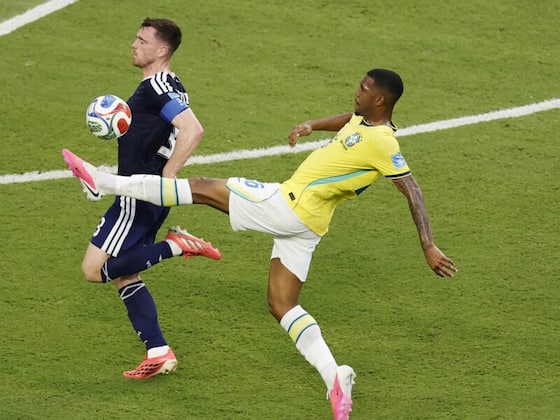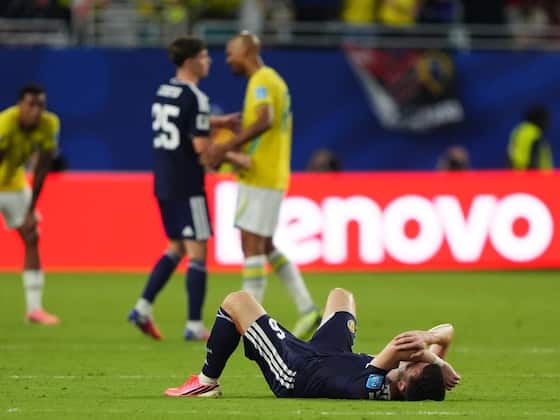
Scotland currently trail Brazil 3-0, but according to former referee Darren Cann, the scoreline could have been even more one-sided.
The Scotland vs Brazil clash unfolded much as many football enthusiasts had foreseen.
The Scots appeared uneasy on such a grand stage, with numerous mistakes marking their first-half display.
Brazil opened the scoring after a disastrous Scottish error, allowing Vinicius Junior to capitalise on a loose ball. A similar incident followed before half-time, sparking debate over whether Brazil’s disallowed second goal should have stood.
Vinicius seized on another poor touch from Scotland’s back line, cutting swiftly towards goal.
The Brazilian forward delivered a delicate finish into the bottom left corner, rolling the ball past the Scottish goalkeeper in a calm one-on-one finish.
The goal, however, was ruled out. Vinicius later made amends just before half-time, heading home at the back post for his second of the match.
The earlier strike had been disallowed due to an alleged foul in the build-up, reportedly committed by the Brazilian when he dispossessed Kenny McLean.
In the studio, former Liverpool and Brazil midfielder Lucas Leiva disagreed with the referee’s interpretation, suggesting there was minimal contact. The Scottish pundits on the panel also expressed limited support for the foul call.
Darren Cann, speaking through presenter Kelly Cates, described Scotland as “very lucky” to have avoided conceding the goal, emphasising the light nature of the infringement.
Former Scotland international Rachel Corsie echoed that sentiment, remarking that the Tartan Army were “extremely fortunate” not to see their side concede a second goal at that point.
The incident, when viewed alongside England’s recent luck in avoiding a penalty decision, has sparked a wider conversation about refereeing consistency at the tournament.
England’s reprieve during their match against Ghana, where a clear penalty shout was ignored, was linked to a new FIFA directive. Referee Christina Unkel explained that officials had been instructed to award penalties only if they were “110%” certain, in order to reduce “clip-debate-analysis.”
These contrasting decisions appear contradictory, with Scotland benefitting from a soft foul while England escaped a stonewall penalty.
Despite both Scotland and England suffering underwhelming group-stage results, the bigger concern now surrounds the overall refereeing standards at the 2026 World Cup.
Scotland eventually succumbed 3-0, with Manchester United’s Matheus Cunha adding the third goal around the 60-minute mark.
The defeat leaves Scotland anxiously waiting to see if they can still qualify for the last 32.