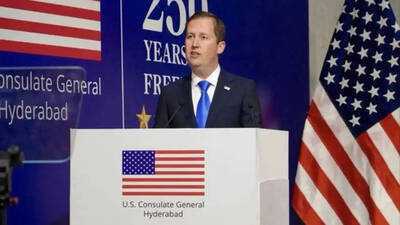
On Saturday, Sergio Gor, the United States Ambassador to India, aimed to alleviate the worries of Indian professionals regarding the recent modifications to the H-1B visa program. He emphasized that these reforms are part of a comprehensive revision of US immigration policy and are not specifically targeting Indian applicants. His remarks come at a time when students, tech workers, and employers are closely observing the changes affecting a key route for skilled foreign workers seeking jobs in the US.
In an interview, Gor explained that the adjustments to the H-1B program should be understood within the broader framework of the Trump administration's immigration strategy. He stated, "The H-1B initiative is part of the administration's extensive immigration reforms and should not be seen as directed solely at Indians." Data from the US Citizenship and Immigration Services (USCIS) indicates that Indian nationals represent the largest group of approved H-1B visa applications.
The H-1B program enables US companies to hire foreign professionals for specialized positions, especially in sectors like technology, engineering, and science. A significant change for the FY27 H-1B season is the implementation of a wage-based selection system for cap-subject visas, which replaces the previous random lottery method.
Under the new system, applications associated with higher-paying positions will be prioritized during the selection process, while those for lower-paid and entry-level jobs will receive less attention. The administration has indicated that these changes aim to benefit highly skilled workers and positions that offer better salaries. Another noteworthy proposal was a requirement for certain new H-1B applications to include a $100,000 fee. However, a federal district court in Massachusetts recently ruled this policy unlawful, although the legal battle continues.
The impact of these changes is expected to vary among applicants. Those with advanced degrees, specialized skills, or higher salaries are likely to remain competitive, while recent graduates and those seeking lower-paying roles may encounter more difficulties. USCIS data reveals a significant drop in the number of properly submitted H-1B registrations, from 343,981 in FY26 to approximately 211,600 in FY27. Additionally, selections for applicants with advanced US degrees have increased, while those from the lowest wage category have decreased.
Gor also mentioned that discussions regarding the initial phase of a proposed India-US trade agreement are progressing positively, with both nations now concentrating on the legal details as negotiations continue.