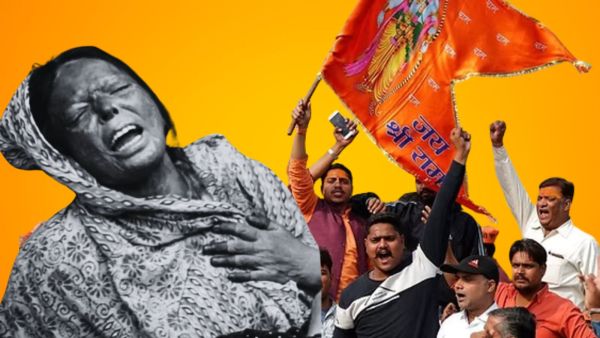
Hyderabad: In early May, West Bengal’s first Bharatiya Janata Party (BJP) Chief Minister made his intentions plain. “The Hindu people of Nandigram made me win again. There, the entire Muslim vote went to TMC… I will work for the Hindus of Nandigram,” Suvendu Adhikari told the media, a statement blunt even by the current standards of Indian political discourse.
Adhikari became the first right-wing leader to head the state, ending the powerful Mamata Banerjee and Trinamool Congress’s 15-year rule. His victory also triggered a wave of violence. And it arrived at the start of a month in which 72 hate crimes were recorded against minority and marginalised communities.
Muslims recorded the highest number at 63. Five hate crimes were registered against Dalits and Adivasis, while four were recorded against Christians. Besides these, two other hate crimes were recorded against Hindus. In all, Siasat.com recorded 74 incidents in May.

We recorded 10 of those crimes from West Bengal alone, many concentrated in the days immediately after the election results. Incidents were reported from Darjeeling, Cooch Behar, North 24 Parganas, Murshidabad, Islampur and Kolkata.
In Dinhata town, a Taj Mahal selfie point — built with the message ‘I Love Dinhata’ to promote local tourism — was burnt down by Hindutva elements. The structure stood near a famous Goddess Durga temple. “West Bengal zindabad, maaje hee maaje,” slogans reverberated across the skies.
In Darjeeling’s Jor Pokhari area, a mob climbed atop a local mosque, planted a saffron flag and shouted “Jai Shri Ram.” Elsewhere, right-wing elements targeted and shut down non-vegetarian shops – this in Bengal, where fish is offered to the Goddess.
As India celebrated Bakrid, or Eid al-Adha, on May 28, some celebrations in parts of the country were stained with harassment, intimidation and, in other drastic cases, murder.
Perhaps the most disturbing incident emerged from Uttar Pradesh’s Ghaziabad, where Mayor Sunita Dayal posted a video in which she is seen shouting at two children carrying bags of meat. “Dimag patthar bana diya hai inka (their brains have been turned into stone),” she is heard saying. The video failed to blur the faces of the minor children, which is an offence under the Juvenile Justice Act.
Also from Uttar Pradesh, police arrested a food vlogger, Anas, for showing a Shiva temple in his video while reviewing a non-vegetarian food stall, on charges of “hurting religious sentiments.” The video was shot in Muzaffarnagar, where the city’s famous Shiv Chowk, considered to be the city’s identity, was shown for a few seconds.
Bakrid is widely associated with the ritual of animal sacrifice. In the days surrounding the festival, district administrations set up makeshift sheds for animal sacrifice, subject to regulations governing hygiene, waste disposal and designated time slots. Despite these arrangements, several incidents were reported across the country in which members of the Vishva Hindu Parishad (VHP), Bajrang Dal and, in some cases, residents’ welfare associations protested against the practice, preventing Muslims from taking part in their festival.
In Maharashtra’s Mumbai, Hindu residents protested against their Muslim neighbours over animal sacrifice, claiming the community was “illegally” holding the animals. Some residents brought a pig to the protests to make a point.
Islamophobic statements from leaders who hold constitutional offices, those expected to ensure peace and stability, reflect the direction India has taken in recent years.
Uttar Pradesh Chief Minister Yogi Adityanath said offering namaz in public places is banned and issued a veiled threat to Muslims. “Pyaar se maanege, theek hai, nahi maanenge tho doosra tareeka apnaayenge (If people agree politely, that’s fine; if not, we will adopt another method),” he said.
Continuing his track record of spewing hate against Muslims, Maharashtra Fisheries Minister Nitesh Rane called the Muslim community “green snakes” and discouraged people from following communal brotherhood. “The interests of Hindus come first and foremost. There is no bhaichaara (brotherhood) and sarv dharam sambhav (equal respect for all religions). Whoever believes in this word should go to Pakistan. There is no need to live here,” he said.
Hindu Raksha Dal (HRD) chief Bhupendra Tomar, widely known as Pinky Chaudhary, snatched a plate of food from a poor person standing in line at a distribution event because he was a Muslim. “We will not give food to Mullahs, no matter who feels bad. No Muslim should eat,” he is heard saying in the clip. “Mullah na aaye, sirf Hindu aaye.”
In Gujarat, a helpless Muslim pleaded for mercy as he was beaten mercilessly with sticks and tied to the bonnet of a police vehicle. The man was reportedly accused of cow slaughter, banned in the state.
A dispute over a cigarette turned fatal for 26-year-old Arbaaz, who was allegedly stabbed multiple times by minors. The incident occurred in Delhi’s Jahangirpur. Three minors were apprehended.
Christians and Dalits were also subjected to hate crimes.
In Jharkhand, an Indian Revenue Service (IRS) officer compared religious conversion to destroying the very roots of the “Tree of Sanatan,” and said “abandoning” one’s religion is like throwing salt on the tree. “When we convert religions and forget our deities and faith, we are pouring salt at the tree’s roots. If you pour salt on the tree’s roots, the tree will die,” Nesha Oraon said.
In Telangana, a reference to Jesus in an edited version of the Bhagwat Gita sparked a controversy after a Hindu man took serious objection.
Several Christian families in Chhattisgarh’s Kanker district alleged they were barred from accessing common water sources for weeks. The families claimed they were being pressured to convert to Hinduism and abandon Christianity.
Dalits also continued to face violence rooted in caste-based discrimination. In Madhya Pradesh’s Chhatarpur district, members of a Dalit family were allegedly assaulted after they failed to donate what was considered an adequate quantity of wheat to a local temple.
The 74 incidents documented by Siasat.com in May paint a picture of a country where communal and caste-based tensions continue to manifest in multiple forms, from inflammatory speeches by public officials to physical assaults, social exclusion and restrictions on religious practices.
Although Muslims remained the primary targets, attacks on Christians, Dalits and Adivasis demonstrate that hate-driven violence and discrimination continue to affect multiple vulnerable communities across India.
(Reporting by Veena Nair and Khadija Irfan Rahim)