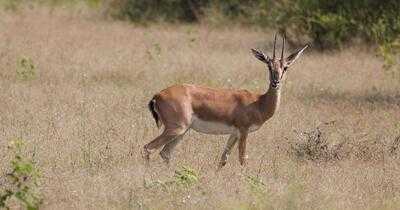
The Indian gazelle, also known as chinkara, found across the subcontinent’s drylands, carries a quiet sense of security. Protected under Schedule I of India’s Wildlife Protection Act and listed under the least concern category by the IUCN, it is not an obvious candidate for a conservation crisis. However, a new study published in the Journal of Wildlife Management by researchers from the Zoological Survey of India, challenges that assumption.
The study projects that under the worst-case emissions pathway, RCP 8.5, where temperatures rise by 4°C or more by 2100, the chinkara could lose nearly 89% of its suitable habitat by 2070. When climate alone is isolated as a driver, projected habitat loss climbs to almost 96.5%. Under RCP 2.6, which aligns with the Paris Agreement’s 2°C target, habitat losses were lower, but still severe.
“A loss of 89%-96% of habitat within roughly 50 years represents a biodiversity emergency for this species in India,” said lead author of the study Amar Paul Singh. The study is among the first to examine these risks at a national scale for a dryland ungulate.
Mapping a shrinking futureThe researchers compiled more than 200 verified chinkara records from field surveys, published literature and biodiversity databases spanning between 2000 and 2022. They layered those records...
Read more