Quick Take: Bhagyaraj helped women understand the ordinary men in their lives better
ETimes June 30, 2026 11:39 PM
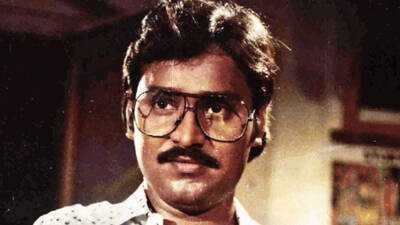 In almost every obit for K Bhagyaraj , one point has remained common: he represented the common man. While that’s true, it’s only half the story.
The other half has to do with his core audience — middle-class women. Veterans in the film trade often recall how Bhagyaraj ’s films drew packed matinee shows because married women would send their husbands off to work and head to the theatre in groups to catch his latest release.
That’s because women found someone recognisable in him. He was the husband who has no time to help with something as simple as fasten a bra hook ( Mouna Geethangal ) or the elder brother who doesn’t want his sisters to catch a racy scene at the theatre and makes them search for a nonexistent coin under their seats ( Dhavani Kanavugal ). He was the married neighbour trying to ogle at the newest girl in the locality ( Chinna Veedu ) or the middle-aged man trying to be a do-gooder for vanity’s sake by offering to pull up a cart, only to make a complete fool of himself ( Sundara Kaandam ).
His flaws weren’t cinematic. They were domestic. And that was his appeal among the women.
The other male stars of the day were selling them a fantasy... MGR with his larger-than-life stature, Sivaji Ganesan with his majestic persona, Rajinikanth with his magnetic style and Kamal Haasan with his lover-boy looks. Women could admire all of these actors, who had the qualities of the heroes from fairy tales and folk tales, but Bhagyaraj was something else. Rather than Prince Charming, he was Prince Paavam! Even the women in his films understood this. Take Indru Poi Naalai Vaa . Bhagyaraj’s character gets a fortune teller to announce within the heroine Radikaa’s earshot that the man of her dreams will walk into her life the following morning. Knowing exactly what he’s up to, she deliberately mixes up the description of his clothes the next day, leaving him flustered, confused and crestfallen. As he walks away after yet another failed attempt to impress her, she can’t help but smile and say, “ Acho ... paavam .”
That, in many ways, is the Bhagyaraj template. His women, who were far from being perfect themselves, weren’t damsels in distress waiting to be rescued. They saw through his bluff. They scolded him, outsmarted him, forced him to confront his own immaturity. And then, despite all his imperfections, they chose him. Because, he was just a man who was trying (and most often failing) to be a better version of himself.
Perhaps that’s why women embraced Bhagyaraj so wholeheartedly. His films didn’t ask them to fall in love with an ideal man. They simply helped them understand and even empathise with the ordinary one in their own homes better.
Bhagyaraj helped women understand the ordinary men in their lives better