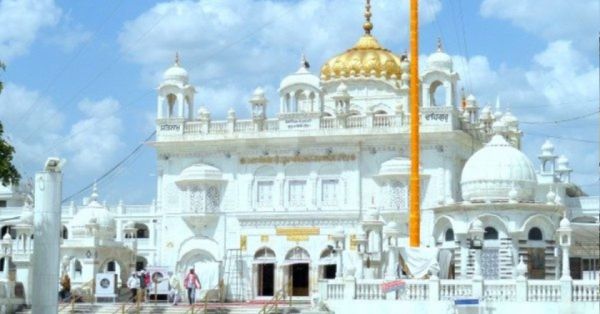
Five Takhts are considered to have special significance in Sikhism. The sixth Guru of the Sikhs, Guru Hargobind Singh Ji, established the Akal Takht on June 15, 1606 and is the first and highest Takht of Sikhism. The orders given by the five Takhts of Sikhism, especially the Akal Takht, are binding on every Sikh, no matter in which part of the world he lives. On these boards, major decisions to religion, dignity and important matters to community are considered. These five Takhts are to the history of Sikh Gurus and their teachings.
The story of the five Takhts of Sikhism begins from the time of Guru Hargobind Sahib Ji. Guru Hargobind Singh Ji established Akal Takht on June 15, 1606. After this, four more Takhts were established in different parts of the country. These five Takhts are the highest centers of temporal power and religious authority in Sikhism. These five Takhts together represent the supreme institutional authority of Sikhism.
Sri Akal Takht was established in 1606 in front of Sri Harmandir Sahib. It was established by Guru Hargobind Sahib Ji. Guru Hargobind Singh Ji established it in 1606 as a symbol of political sovereignty and a place where the Sikh community could address both spiritual and worldly concerns. This place is considered the most important Takht in Sikhism.
From here, Guru Hargobind Sahib Ji gave the message to the Sikhs to protect the religion and stand against injustice. Along with religious matters, decisions to society have also been taken at Akal Takht. The orders issued from here are given special importance in the Sikh community. This Takht has the most importance among Sikhs.
Takht Sri Kesgarh Sahib is located in Anandpur Sahib, Punjab. This place is associated with the life of the tenth Sikh Guru Guru Gobind Singh Ji. It was at this place that Guru Gobind Singh Ji established the Khalsa Panth on the Baisakhi of 1699 AD. On the day of Vaisakhi, 14 April 1699, the tenth Guru invited volunteers willing to sacrifice their lives. His five disciples came forward and Guru Gobind Singh Ji established the Khalsa by making them drink nectar. This place holds special significance in Sikh history due to the origin of the Khalsa Panth and is considered the birthplace of the Khalsa.
The third Takht Sri Damdama Sahib is located in Talwandi Sabo, Punjab. This place is associated with Guru Gobind Singh Ji. It is believed that Guru Ji spent time here studying and writing religious texts. For this reason, Talwandi Sabo is also seen as a center of knowledge and education in Sikh history. Later it was included in the five major Takhts.
Fourth Takht Sri Patna Sahib is situated in Bihar. This place is famous as the birthplace of Guru Gobind Singh Ji. Guru Gobind Singh Ji was born in Patna Sahib in the year 1666. This place is considered very important for the Sikh community because of the memories to the childhood and life of Guru Ji. Patna Sahib is a major religious center for the Sikh community. A large number of devotees from across the country and the world come here for darshan.
The fifth Takht Sri Hazur Sahib is located in Nanded, Maharashtra. It is to the last time of Guru Gobind Singh Ji. In the year 1708, Guru Gobind Singh ji spent his last time in Nanded. In October 1708, when it became clear that Guru Gobind Singh Ji would not survive an earlier assassination attempt, he declared the Guru Granth Sahib as his eternal heir. Maharaja Ranjit Singh built the present structure between 1832 and 1837. The Takht houses the Guru Granth Sahib and the Dasam Granth, as well as the sacred relics of the tenth Guru. Gurudwara Hazur Sahib located here is included in the major religious places of Sikhs.
The five Takhats of Sikhism play an important role in religious matters. Here topics to Sikh dignity, traditions and community are considered. The Jathedars of the five Takhts play an important role in the religious leadership of the Sikh community. Religious programs and decisions to different Takhats are considered important for the Sikh society. Akal Takht is considered to be the highest religious place. The orders and decisions issued from here get special respect in the Sikh community and are also binding on the Sikhs. After the Guru tradition, now in Sikhism the decisions of these boards are considered supreme.