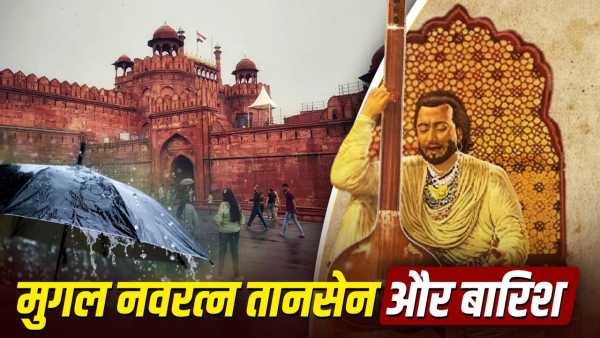
Tansen was considered a prominent musician in Akbar's court.
Monsoon is awaited in many states. Amidst the heat, people are expecting heavy rains. That rain which has been claimed in stories to rain due to Tansen's ragas. The name of Tansen alias Ramtanu is very big in classical Hindustani music. He was born in Gwalior and died there. He started taking music lessons from a very young age. Later, due to his spiritual practice, he reached the court of Mughal ruler Akbar. Akbar included him among the Navaratnas. This was a very important thing at that time.
He was also given the title of Mian by Mughal emperor Akbar. Mian means scholar. Many stories about him are told through generations. The most famous story is that Tansen started singing and as soon as he sang the tune, it rained. Come, in this monsoon season when everyone is worried about the possibility of less rain. Let us examine this story from the perspective of truth.
The story of rain as soon as a raga is sung is a part of folk tales. In many regional stories, Tansen has been shown to have extraordinary strength. In some stories of Raga, he is also said to have extinguished the fire or lit the lamp. Such things were widely prevalent in popular rumor and idioms. Such stories became popular in literature also. The stories kept changing and growing with time. Sometimes the new incarnation added additional colors.
Tansen was considered a prominent musician in Akbar's court. He was one of the Navratnas of Akbar. He was a very famous singer of classical ragas. His deep influence on music has been mentioned in history. There is slight variation in his biography in different sources. But there is no question about his being a musician. Everyone is unanimous on this. Some details are disputed and even uncertain.
In Hindustani music, some ragas are linked to the weather. Ragas named Megh and Malhar are considered to be associated with rain. There is a popular belief that listening to these reminds us of monsoon. This cultural and emotional connection with music is legitimate. But, it is a different matter that a raga can actually call clouds or rain. Music can affect the mind. Through emotions one feels a connection with nature. This is an experiential and cultural, not a physical reason.
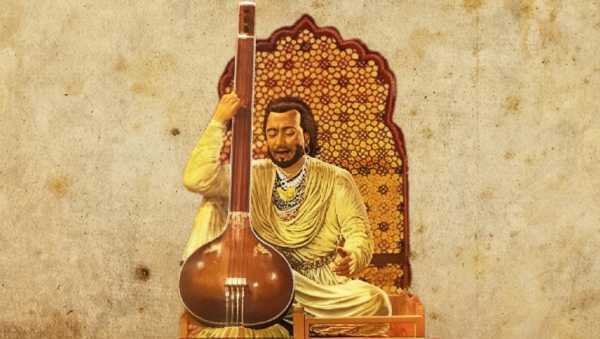
Mughal Navratna Tansen.
Modern historians and classical texts praise Tansen's art. But, there is no direct evidence of rain calling in the available historical accounts. Contemporary writers of the court mention his music. But they do not provide concrete documentation of miraculous events like controlling the weather.
Such things became more prevalent in later writings and folklore. Historians have many times raised questions on the reliability of the sources. A mixture of folklore and imaginary accounts is found in the sources.
A large part of the story is mythological. In myth, psychological and cultural layers are added to real events. When an artist is considered very great, the stories related to him also increase. Historians generally consider these stories to be symbolic or anecdotal. The shared conclusion is that this is a folktale, not direct historical truth. We can see this as a cultural monument, not as a scientific fact.
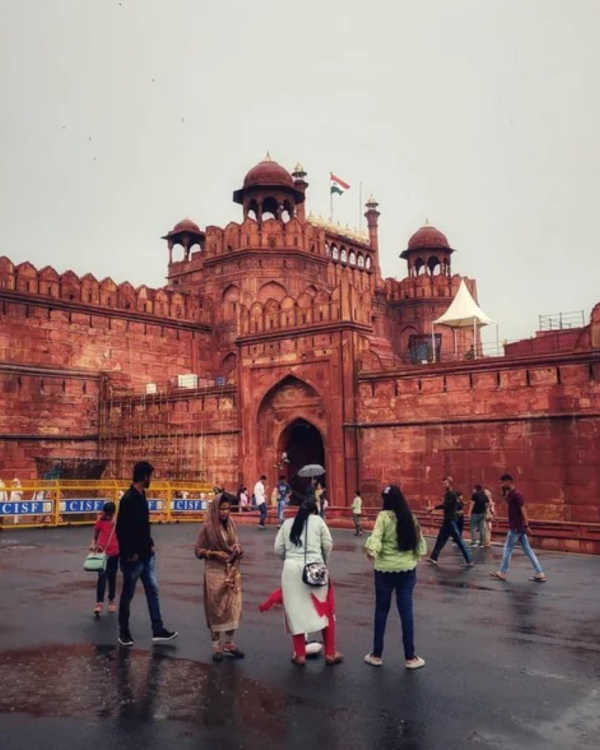
Red Fort of the Mughals. Photo: Pexels
Rain is caused by atmospheric processes. Water vapor, condensation and nucleation are necessary in clouds. Human voices cannot create clouds by creating droplets. Excessive noise can affect particles in some circumstances. But, this is not possible with normal singing. In relation to the current knowledge of science, it seems impossible to make it rain by singing a raga. Among the scientific methods of rain making, measures like cloud seeding have definitely come to the fore in recent years. In many parts of the world, incidents of causing rain through cloud seeding are often heard. Headlines are made. They also depend on weather, materials and technology. The singing of one person cannot be enough to change the weather.
One explanation is that the story may be a combination of concurrent events. For example, a music festival took place during monsoon. It started raining shortly after the song. People consider this accidental correlation as cause-effect. The second possibility is that the story may have been expanded to show the greatness of the music. Exaggeration is common in cultural contexts. Memories also make the story dramatic. Human beings have a nature of finding patterns. So he finds the reason, even if it is just a coincidence.
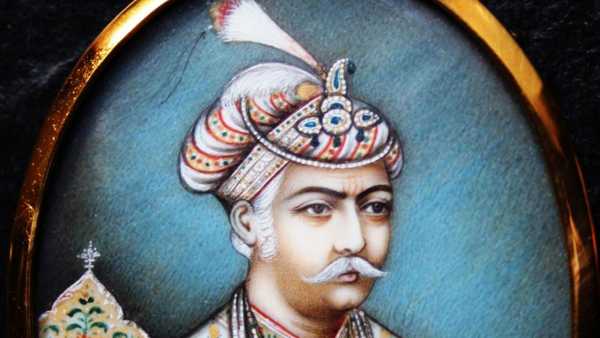
Mughal emperor Akbar.
The Mughal court, especially the reign of Akbar, was historically a center of artistic sensibilities. At that time literature, art and music were highly respected. Applause, praise and gifts were common. The language of such praise was sometimes filled with exaggeration. Such praises and stories remained prevalent about Tansen also. The crafts and creative plans of the court gave a special status to the artists. Such environments give birth to stories.
Such stories spread through oral tradition. Widely spread. Poets put it into songs. Plays and later films popularized it. The story changed slightly in every presentation. In this way it became a very popular myth. With time the difference between truth and imagination disappeared. Such stories appeared again and again in folklore. For this reason this story remained alive in the public memory. This illusion of art keeps truth and imagination together. This story became a medium to show the greatness of music. Besides, it also became a part of cultural identity. Tansen sings Raga-Malhar in the 1943 film Tansen. And his singing power creates a dramatic scene of rain coming. Baiju's singing in Baiju Bawra, released in 1952, brings rain in times of drought. Here the performance of Raga-Malhar is shown. Both these scenes are part of the narrative and drama of the cinema. They are based on folkloric belief and the symbolic significance of music, not on scientific truth.
According to legend, Tansen made it rain by singing a raga. But, historical and scientific evidence does not support this claim. The relationship between raga and season is emotional and cultural. From scientific point of view, it is impossible to cause real rain by singing. Therefore this story is exciting and culturally important. But, it would not be right to accept it as historical truth. It is okay to enjoy the story, but it would be inappropriate to take it as history.