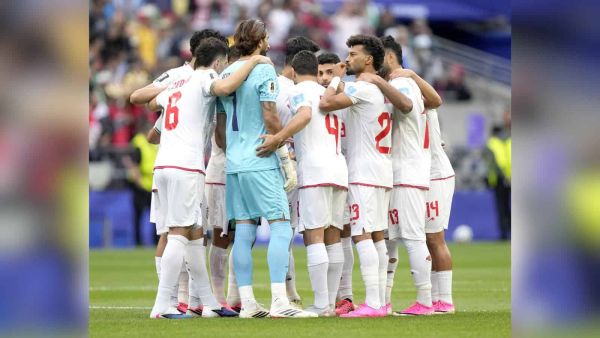
Throughout the course of history, the FIFA World Cup has always carried political undertones. Way back in 1938, it was alleged that dictator Benito Mussolini had used his power to influence the referees in favour of Italy. In 1978, the event was hit by political controversy in the host country Argentina when the country’s dictator General Jorge Rafael Videla kidnapped and tortured thousands of political opponents.
So, the world’s biggest sporting event has never existed in complete isolation from politics and its adverse effects.
But perhaps the 2026 FIFA World Cup has demonstrated more clearly than ever how political rivalries can spill into sport, with the experience of the Iranian national team becoming the tournament’s most striking and shameful example. Ultimately, Iran was eliminated from the tournament, after not only competing against their opponents on the field but also struggling with the administrative system that was prejudiced against them.

FIFA proudly proclaims that football unites the world regardless of politics, religion or nationality. But the reality is different. The events surrounding Iran’s participation at the World Cup of 2026, have led many observers, including the famous former footballer and well-known commentator Gary Lineker, to question whether that principle has been upheld by FIFA.
It was not only Iran which suffered. At the very beginning, the first controversy erupted when referee Omar Artan of Somalia, who was adjudged Africa’s Referee of the Year 2025, was detained by US immigration authorities and deported from the country. He missed the tournament entirely.
For football lovers of several African countries, getting a visa was a big hurdle. After the start of the US-Israel war with Iran, America suspended routine consular services in some countries. Fans from Arab nations travelled to neighbouring Jordan to try to get a visa at the US embassy there.
These people were not only young men and women but also families with children in tow. The children were all excited that they may get a chance to see the world’s most famous players in action.
But when they arrived, the embassy staff told them that only Jordanian citizens could apply for US visas from Jordan. Moreover, they also faced financial losses. The tickets (which they had purchased before the conflict started) and expenses for the trip to Jordan cost each person about USD 1,800.
According to some reports, 57 per cent of US visa applications from Jordan were refused. And Jordan is a country that has friendly ties with the US. The plight of other nations was worse. The situation is not so bad in Canada and Mexico, which are joint hosts of the tournament, but the majority of the matches are in the USA.
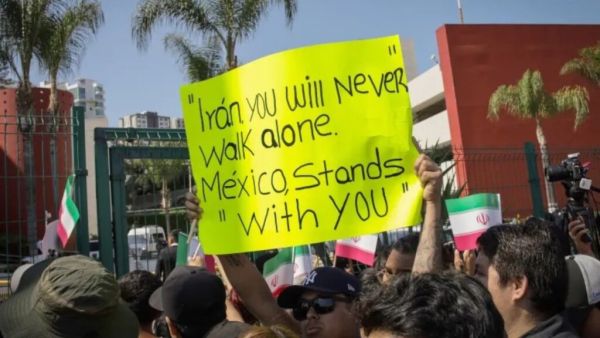
Unlike most participating nations, Iran entered the tournament under extraordinary circumstances. Relations between the host country United States and Iran had deteriorated rapidly in the months leading up to the competition. As a result, what should have been a straightforward sporting campaign became entangled with disputes and security concerns.
Iran’s preparations were disrupted long before the opening match. Instead of establishing a training base inside the United States like many other teams, the squad was forced to relocate to Tijuana in Mexico. This meant repeated cross-border travel before and after matches, adding unnecessary physical and mental strain on the players. Each time the players arrived in the USA, their baggage was searched and many formalities had to be undergone.
Head coach Amir Ghalenoei publicly criticised the tournament organisers after Iran’s opening match, claiming that the squad was instructed to leave Los Angeles immediately after the game instead of remaining in the country to rest and recover like all the other teams. Never before in the history of the World Cup has any team faced as much harassment as the Iranians did in 2026.
Players also complained that they were allowed to arrive only shortly before matches, disrupting their normal preparation routines. They hardly got adequate time to practice and plan strategy. Ghalenoei went so far as to describe Iran as “the most oppressed team” at the tournament, while captain Mehdi Taremi argued that such treatment undermined the spirit of fair competition.
Iran’s football federation subsequently announced its decision to lodge a formal complaint with FIFA, arguing that the restrictions placed upon the team had compromised the spirit of sportsmanship and fair play.
Ideally, once a nation has qualified for the World Cup, its athletes deserve treatment that is as equal and impartial as possible, regardless of diplomatic disagreements between governments.
Long ago, in ancient Greece, whenever the Olympic Games were held, all conflicts would pause. All participants and spectators would be allowed free and secure passage to and from the venue of the Games. But now, in the 21st century, political leaders seem to have forgotten the wisdom of the ancient Greeks.
The whole Iran episode illustrates a broader challenge facing international sport nowadays. As political tensions around the world intensify, sporting competitions are increasingly becoming extensions of international conflict. Athletes, who have devoted years to reaching the world’s biggest stage, often find themselves carrying burdens that have little to do with sports.
The 2026 FIFA World Cup has produced memorable matches and outstanding performances, but it has also reminded the sporting world that the dark shadow of political conflicts will always be hovering over sports events. Therefore, football cannot completely escape global politics.
The difficulties have raised uncomfortable questions about fairness, neutrality and FIFA’s ability to shield football from political interference.
If the World Cup is truly to remain a celebration of the world’s most popular game, FIFA and future host nations must ensure that every qualified team competes under conditions that are as equal, impartial and free from political influence as possible. Only then can football genuinely claim to unite the world rather than highlight its divisions.