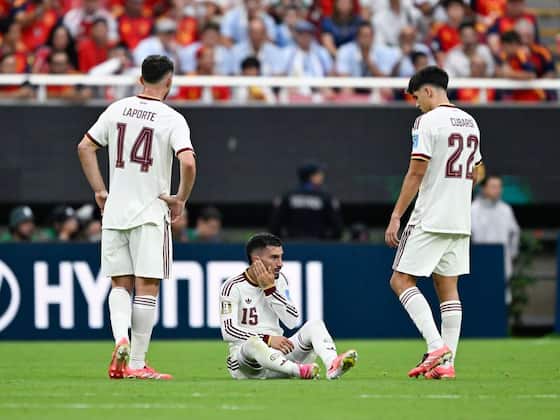
On Thursday night, Spain effortlessly dismantled Austria’s pressing game with precision passing and tactical intelligence, yet it was easy to overlook that Unai Simon quietly achieved a historic milestone. The goalkeeper set a new all-time World Cup record by going 520 minutes without conceding a goal — surpassing Italian legend Walter Zenga’s 96-year-old record by just two minutes. This remarkable feat came as Spain finally ended a surreal 16-year drought for a World Cup knockout victory, a wait that dated back to their 2010 triumph. They now join Italy and Switzerland as the only teams to have played five consecutive World Cup matches without conceding a goal.
What makes Simon’s achievement even more extraordinary is that he has barely been tested. Across Spain’s four matches so far, he has faced only six shots on target, none truly demanding. Spain, alongside Mexico, remains one of just two teams yet to concede a goal. The closest scare came when Sasa Kalajdzic’s powerful header sailed over the bar early in the second half — the only genuine chance from open play that the Spanish defence has allowed so far.
Much of the discussion around Spain has centred on their struggle to rediscover the fluid rhythm and creativity that defined their play when Nico Williams and Lamine Yamal burst onto the scene during Euro 2024. Perhaps this is a result of a more deliberate approach to possession, as open play no longer favours La Roja as much as before. Nevertheless, it is undeniable that under Luis de la Fuente, this is the most solid defensive unit Spain has fielded since his appointment.
Opponents, who once sensed vulnerability and believed that one counter-attack could undo Spain, now find themselves starved of opportunity. According to Opta, the only area where Spain’s rivals have more than 55% of ball touches is inside their own penalty area. Despite maintaining an average of over 68% possession, Rodri ranks ninth in tackles with 13, while Aymeric Laporte is joint-fourth in interceptions with nine and fifth in successful aerial duels with 14. No team presses as high as Spain, who lead the tournament with 43 high turnovers. In terms of passes per defensive action, only Germany (7.6) rank ahead of Spain (8.1), yet while Germany have conceded 3.25 expected goals in their four matches, Simon’s expected goals conceded stand at a mere 0.4.
The earlier criticism directed at Rodri Hernandez was fair — his ball distribution had been slow and predictable. Pedri Gonzalez, too, appeared more cautious than commanding. However, Spain’s pressing game has been outstanding. The sight of Pau Cubarsi and Laporte comfortably retrieving possession ahead of a weary striker has become routine. What was once considered Spain’s weakest link — their defence — has now become their most dependable asset. Against Austria, La Roja finally seemed to regain their signature rhythm with the ball, and the confidence from their backline gave their attacking players the freedom to thrive.
“It’s very hard to play against Spain; they didn’t make a single mistake,” Austria’s manager Ralf Rangnick admitted after the game. “They’re extremely efficient, like clockwork — it’s impossible to challenge them tactically.” And that’s before even mentioning Marc Cucurella, who has impressed more for his adventurous forward runs than his defensive duties. For perspective, Zenga’s 1990 record came behind a legendary Italian defence that included Alessandro Costacurta, Franco Baresi, and Paolo Maldini — a much less aggressive setup compared to Spain’s current high-pressing approach.
Of course, skeptics may point out that Spain have yet to face a truly formidable attacking opponent. That test arrives next in the form of Portugal. If Pau Cubarsi and company manage to neutralise Portugal’s attack with similar composure, it will be hard to deny that Spain’s technically gifted side is now being anchored by the best defensive line in this World Cup.