Why are some Indian parents saying no to conventional schools? Meet the families choosing homeschooling and other alternatives
ETimes July 04, 2026 04:39 AM
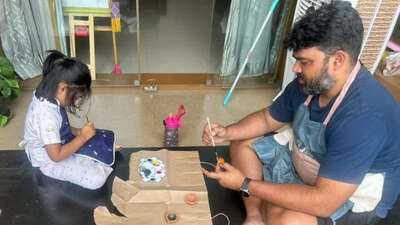 For Pune resident Shivani Bansal’s 4-year-old daughter, a typical morning routine doesn’t include putting on a school uniform. The IT professional hopes that the routine will remain the same for the next 12 years or so. This is because Shivani and her husband are homeschooling their child. If all goes according to plan, she may one day follow a path similar to that of Vishruti Shah’s 10-year-old son Vedarth, who has been unschooled since the beginning. A resident of Surat, Gujarat, Vedarth has already authored a book at the age of 10.
The decision to homeschool or unschool a child reflects a much deeper question: Are some parents beginning to question the conventional education system? In an exclusive conversation, two mothers shared what inspired them to choose this path.
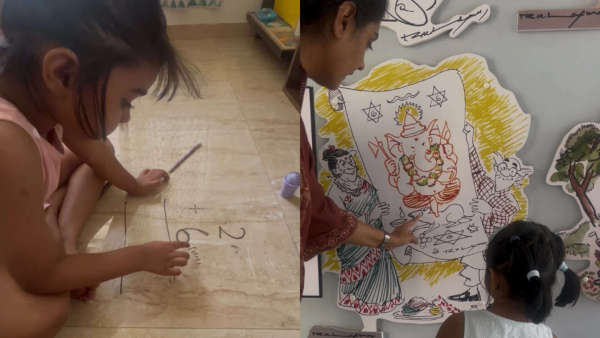
Shivani Bansal says, "We don't understand or trust a system that makes a three-year-old sit still, perform, and be evaluated. We wanted her childhood to be preserved, while also giving her the freedom to learn and grow.” Vishruti echoes a similar sentiment. " Unschooling is not just about questioning the education system. It is about questioning everything in life. Why impose lessons and theories on children? We believe they are natural learners, and their curiosity will guide them," she says.
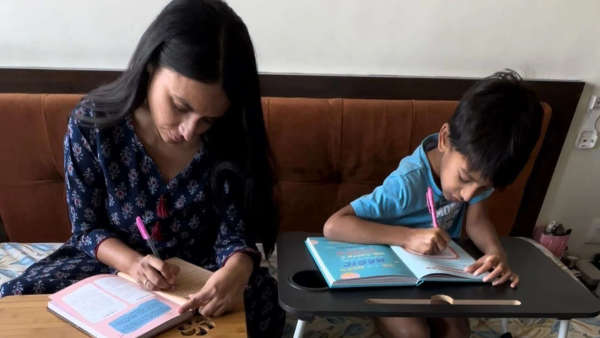
What exactly are these alternative forms of education?At their core, homeschooling and unschooling share a common belief- learning does not need to be limited to classrooms, timetables, or standardized tests. In these alternative forms, parents play a more active role in educating the child, and the focus shifts from completing a syllabus to nurturing curiosity and critical thinking through everyday experiences such as conversations, creative activities, travel, nature and everyday life.
But then again, there’s no fixed philosophy in homeschooling or unschooling a child.
What does a typical day look like?
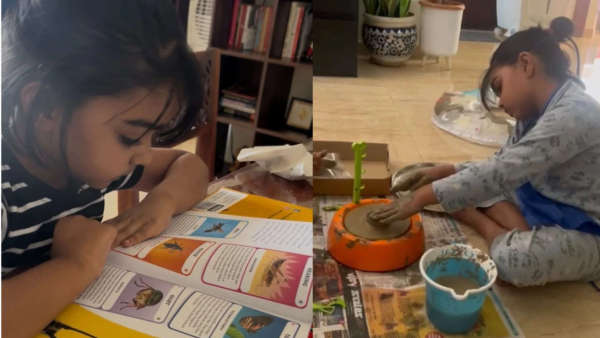
For Shivani Bansal, homeschooling doesn't mean recreating a classroom at home. Her four-year-old's day begins with books and painting, followed by two focused 15 to 20-minute sessions of maths and phonics. The rest of the day is spent in free play, theme-based learning, outdoor play, gymnastics, and bedtime reading. "There is no fixed time for waking up, but there is a fixed bedtime," she says, adding that they allow flexibility within a healthy routine.
What led them to this path?For Shivani, the decision came when her daughter reached preschool age. What initially began as a search for the right preschool gradually evolved into the decision not to send her to school at all.
“We wanted to follow her natural curiosity instead of a fixed curriculum. We wanted her childhood to be preserved while allowing her to learn and grow,” she says.
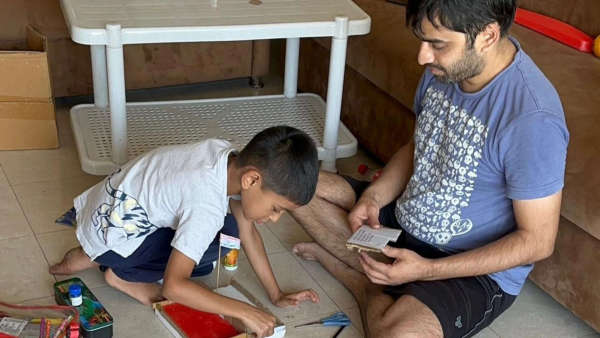
For Vishruti, the journey towards unschooling began even before her son was born. Despite excelling academically and studying architecture, she felt that little of what she had learnt in school translated into real life. These experiences led her to explore parenting, child psychology, and human development, ultimately embracing unschooling. Vishruti believes every child is born a natural learner, and it’s up to them on how and what they want to explore. “Curiosity is the heart of Unschooling. If I’m not curious, then I’m not learning,” she says.
What about college admissions and careers?
One of the biggest questions surrounding homeschooling is how children will obtain recognised qualifications for higher education and future careers. While India does not have a dedicated regulatory framework for homeschooling, parents say there are several recognised pathways available.
"We haven't finalized anything yet, but we're considering options such as the National Institute of Open Schooling (NIOS) and Cambridge. There are multiple avenues available for homeschooled children to earn recognised qualifications," says Shivani.
The biggest challenge is self-doubt and societal pressure
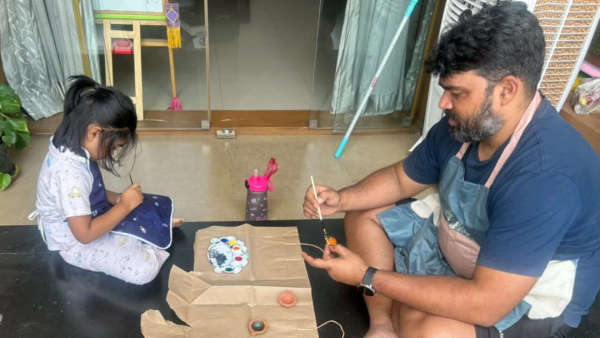
Alternative education may offer flexibility, but parents say it comes with its own challenges.
“Self-doubt and societal pressure are the biggest challenges. People constantly question our decision, but we navigate it through the clarity we've had from the beginning. We've also learnt to accept that some days may feel like nothing has been achieved, and that's okay," says Shivani.
As an IT professional working from home, she shares her workspace with her daughter during the day and often completes much of her work after bedtime or while her daughter attends gymnastics classes.
While these families may seem like an exception, they are a part of the small growing number of parents in India who are exploring alternatives to conventional schooling. Although the exact number of homeschoolers and unschoolers in the country is difficult to determine, largely because there is no official requirement to register. However, there’s a growing shift among Indian parents.
Be it Shivani’s practice of homeschooling her daughter or Vishruti’s approach of unschooling her son, both these mothers don’t see them as an alternative to school. For them, it’s a different way of thinking about childhood and learning. As Vishruti puts it, "It’s not just about education. It is a way of life."