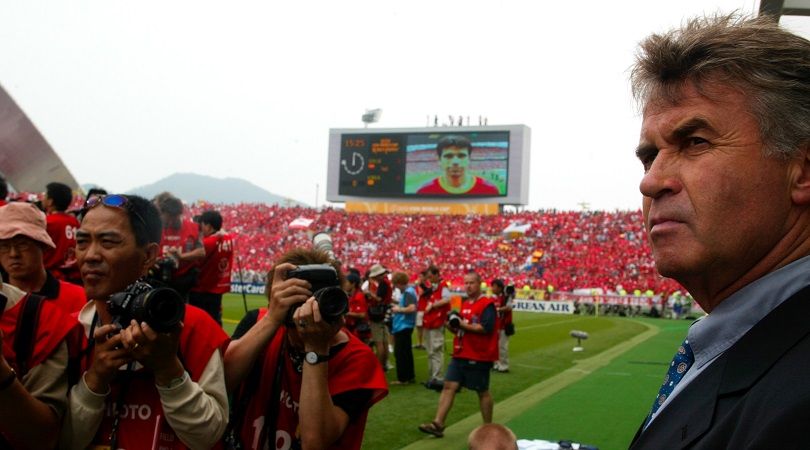
Guus Hiddink’s path to becoming South Korea’s national football coach began long before his official appointment in 2001.
A chance meeting during the 1998 World Cup set off a sequence of unexpected events involving mysterious phone calls, bold exchanges, and a unique approach to team management that ultimately saw the Dutch coach lead the Taegeuk Warriors to historic success.
When Hiddink finally accepted the position, he guided South Korea to an unprecedented semi-final finish at the 2002 World Cup, co-hosted by Japan and South Korea.
“My first experience with South Korea came in 1998, during the World Cup in France,” recalled the veteran Dutchman in an interview with FourFourTwo. “I was the head coach of the Netherlands, and South Korea happened to be in our group.”
“The day before our match in Marseille, we got an hour of training on the Stade Vélodrome pitch, with South Korea scheduled to train afterward. My players were training with such energy that I thought, ‘Let them continue a bit longer.’ The South Koreans were standing in a neat line on the sidelines, waiting patiently.”
“We exceeded our time slot by about 15 minutes when a FIFA official approached. I said, ‘Give us five more minutes.’ That turned into ten, then fifteen. We might have stormed the pitch, but South Korea’s team manager just stood quietly. Later, I came to realise that was part of their culture.”
“Over a year later, I received a phone call from an unknown number. The voice said, ‘Hello Mr Hiddink, we met in Marseille. I’m Ka Sam-hyun, one of South Korea’s team managers from 1998. I’m staying at the Amstel Hotel in Amsterdam, just across from your house. Could we meet?’”
“I wondered, ‘How does he know where I live? How did he even get my number?’ He explained that he wanted to discuss preparations for the 2002 World Cup, which was to be co-hosted by Japan and South Korea. It was November 2000 at the time. Out of curiosity, I decided to walk over to the hotel.”
“He turned out to be the right-hand man of the Hyundai CEO. He said, ‘We must reach the last 16, or we will lose face.’ I thought to myself, ‘The last 16? Where are you ranked now—70th in the FIFA standings?’ South Korea had participated in previous World Cups but had never won a single match. Still, the idea of managing at another World Cup, after my experiences at Euro 96 and the 1998 World Cup with the Netherlands, intrigued me.”
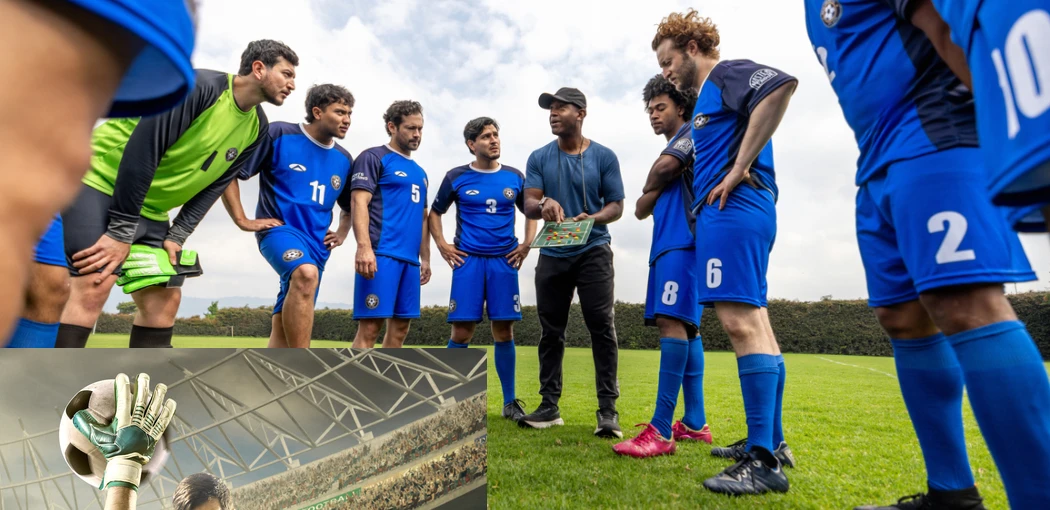
“As our conversation progressed, I gave him two pieces of advice. First, I said, ‘If you’re serious, you must take a completely new approach to World Cup preparation.’ I proposed that the national team should be run like a club team. The domestic players should be released from their clubs for 12 to 18 months so they could train together consistently.”
“My second suggestion was to allocate a budget that would allow the team to travel around the world, playing friendlies against top footballing nations. In the past, South Korea had prepared for World Cups by facing teams like Malaysia and Singapore.”
“When they won those matches, people assumed the team was in good form. But World Cup opponents are of a completely different calibre. The players needed to travel, experience new cultures, and face stronger competition. They might take a few hard knocks, but those experiences would push them beyond their comfort zone.”
“I also suggested refreshing the squad. In South Korea, there was a tendency to hold on to players aged 34 and above. It was time to bring in younger blood and inject new energy.”
“I wasn’t sure whether they could actually implement what I proposed. I didn’t think, ‘I’m definitely going to work for South Korea.’ In truth, I wasn’t particularly eager at first. We parted ways, and about ten days later, he called again. ‘I’m back at the hotel,’ he said. ‘Can you come by?’ When I arrived, he told me, ‘Point one: the international players can stay together full-time. Point two: the travel budget has been approved. Point three: here is your contract.’”
“I thought, ‘What is happening?’ His decisiveness and his passion to make things work impressed me deeply. I didn’t sign right away, but soon I knew I wanted to take on the challenge.”
“And so, off I went to Seoul.”