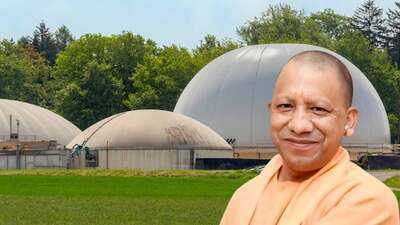
A team of professors, researchers, and technical experts from IIT Delhi's Biogas Development Training Centre will assist the state in designing, installing, and maintaining biogas plants in villages.
The project is being led by Professor Virendra Kumar Vijay, along with researchers Ratnesh Tiwari, Akshay Srivastava, Chintan Dave, and Dr. Mangaram, who will provide technical guidance throughout the implementation process.
The first phase of the programme has already been launched in Palinda village of Jhansi, where 18 biogas plants have been installed.
The state government plans to transform the village into a Natural Farming Village, with biogas generated from cow dung supplying clean cooking fuel to households while encouraging eco-friendly farming practices.
Building on the success of the Jhansi pilot, the Uttar Pradesh government intends to develop at least one model village in every district.
The initiative seeks to integrate renewable energy, organic farming, and efficient waste management to create self-sustaining rural communities. ALSO READ: Uttar Pradesh Emerges Top Performer in India's 100-Day TB-Free Campaign, Detects 1.85 Lakh TB Cases
According to Uttar Pradesh Cow Service Commission Chairman Shyam Bihari Gupta, the widespread installation of biogas plants is expected to reduce dependence on chemical fertilizers by providing farmers with nutrient-rich organic manure.
He said the initiative would also encourage the production of chemical-free agricultural products while strengthening the rural economy through better utilization of cattle waste.
The IIT Delhi-supported model is expected to improve clean energy access, promote sustainable agriculture, and enhance village sanitation.
State officials believe that expanding the project across Uttar Pradesh will create a replicable model of energy-efficient, environmentally friendly, and self-reliant villages while supporting the government's cow conservation and rural development initiatives.