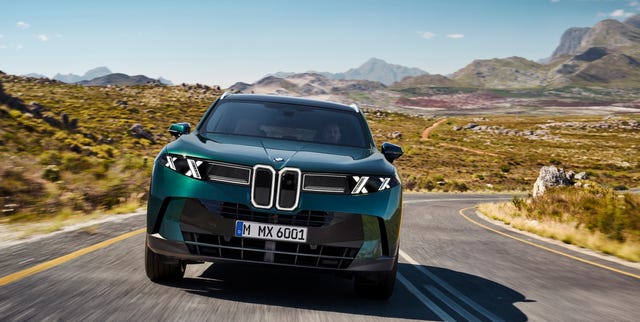
In an era where crossovers and SUVs dominate global sales, the fifth-generation BMW X5 lineup continues to be a central pillar of the company’s global strategy. The iconic SUV remains BMW’s top revenue contributor across more than 120 international markets. The new X5 is designed to offer customers unprecedented flexibility, with five distinct powertrain options expected to be added over the next few years. Developing a vehicle that accommodates such diverse propulsion systems is no small feat, but it aligns with BMW’s evolving philosophy of being ‘technology neutral.’
The idea of offering a wide range of propulsion options isn’t new for BMW, and the X5 serves as a strong example of that approach. The upcoming 3-Series, for instance, will feature both electric versions based on the Neue Klasse platform and internal combustion variants built on an upgraded version of the existing CLAR architecture. Similarly, every variant of the new X5 will share the same underlying structure, engineered to support 48-volt mild hybrids, plug-in hybrids, full-electric models, diesel engines, and even a hydrogen fuel-cell powertrain. These powertrain options will be distributed across markets depending on local requirements and regulations. This flexible strategy, in theory, should help BMW navigate the unpredictable shifts currently affecting the global automotive industry.
“Electrification has taught us that relying solely on government regulations, subsidies, and such measures can be risky because they can appear and disappear at any time,” explained Phillip Koehn, Vehicle Line Director for BMW Luxury Class, Rolls-Royce, and BMW Alpina models, during a recent media interaction. “That’s why the technology neutral approach, which Oliver Zipse [former Chairman of the Board of Management] really championed, makes perfect sense. In this rapidly changing world, it’s the only sustainable path forward for a company aiming to remain a successful premium manufacturer.”
While it’s difficult to say if BMW would have adopted this strategy without the regulatory uncertainty across different regions, the company is determined to position itself for long-term success. If the United States doesn’t follow Europe and Asia in aggressively adopting EVs, BMW won’t force its customers in that direction. Nor will the brand gamble everything on future policy shifts, as several automakers have done in the past decade. The company recognises that the political environment is too volatile to build a stable business strategy based solely on regulations.
“This is why the technology neutral approach is so important to us,” Koehn added. “From the start of a vehicle’s development to the end of its production run, the process easily spans a decade. A lot can change in ten years — new administrations come and go in Washington, tariffs are introduced and lifted, and policies like the [Inflation Reduction Act] evolve. If we tried to react to every shift in these external conditions, we’d never keep up. Being technology neutral means we’re prepared. Even if electric propulsion isn’t favoured everywhere at the same time, I can assure you that our electric X5 will still capture a significant share of sales in certain markets. Could that be North America? Maybe not. Could it be California? Very likely.”
BMW is confident that designing a universal platform for the X5 won’t compromise the SUV’s overall performance or appeal. In fact, Koehn views this as an opportunity to simplify the buying process for customers by removing the powertrain from the decision-making equation. Whether a buyer wants a petrol, diesel, hybrid, or electric model, the X5 will deliver a consistent premium experience across all variants. That is the essence of the technology neutral philosophy — every version offers the same luxury, capability, and practicality, regardless of what’s under the hood.
“We’ve almost managed to separate the decision of choosing an X5 body style from the question of ‘Which powertrain do I need?’” said Koehn. “Our goal was to take away the customer’s worry about selecting a specific powertrain. The X5 now gives you every option without sacrificing interior space, luggage capacity, or towing capability. It’s still an X5 — it just comes in multiple propulsion forms.”
Designing a vehicle without a single dedicated powertrain focus presents unique engineering challenges. Could the X5 have been more dynamic if it were built exclusively for combustion engines? Or could it have been a more efficient BEV without the need to accommodate traditional powertrains? Perhaps. But BMW’s technology neutral approach ensures that customers worldwide can find a version of the X5 that suits their preferences and regional realities. It’s a strategy that is expected to shape future BMW models, and its ultimate success will be revealed in the years to come.