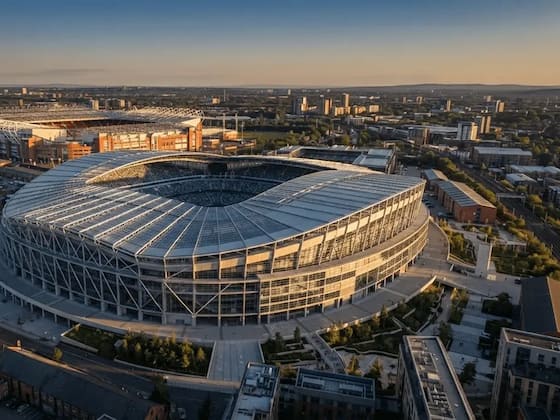
Manchester United have officially confirmed the site for their new 100,000-seat stadium, marking one of the most significant infrastructure moves in the club’s history since Old Trafford was expanded to its present capacity of 74,500.
The proposed stadium will be located about 350 metres to the north-west of Old Trafford, on land reportedly purchased from industrial property owner Indurent – part of Blackstone – in June 2026. This acquisition reportedly allowed United to avoid a more costly deal linked to rail logistics firm Freightliner, thereby reducing financial and logistical risks that had previously hindered planning.
Architectural firm Foster + Partners, led by Norman Foster, has been appointed to design the stadium. Construction is expected to take around five years, with the club aiming to move into the new venue by the 2030–31 season.
With a seating capacity projected at 104,000, the new stadium would become the second-largest football ground in Europe, behind only Barcelona’s Camp Nou. Around 15.5 percent of the seats are planned for hospitality areas, a proportion likely to attract attention from fan groups concerned about maintaining traditional match-day culture while ensuring commercial profitability.
The project’s estimated cost stands at roughly £2 billion. Given United’s current debt of over £700 million, the financial structure – once disclosed – is expected to face intense scrutiny alongside the architectural details.
The stadium will be part of a larger 370-acre redevelopment zone, which includes plans for approximately 15,000 new homes and upgraded transport links, such as a rebuilt Old Trafford railway station. Urban planners and local authorities will be keen to ensure these community commitments are fulfilled and not reduced once the headline project advances.
According to current plans, Old Trafford will not be torn down. Instead, the existing ground will be adapted to serve as the home venue for Manchester United Women and the club’s academy, ensuring a symbolic connection to a site the club has occupied since 1910.
The new stadium is also being considered as a possible host venue for the 2035 FIFA Women’s World Cup, a factor expected to influence design and planning decisions during the next phases of consultation with fans and stakeholders.
This announcement signals the clearest expression of Manchester United’s long-term structural and sporting ambitions. The next major milestone will be the formal planning application, which will clarify legal timelines and community obligations.