
The tech world had another action-packed week, with AI giants, smartphone makers, and regulators all making major moves.
The battle for AI leadership has intensified as OpenAI and Anthropic continue to push the boundaries of frontier artificial intelligence. While Anthropic’s Claude Fable 5 established itself as the leader in practical software engineering by scoring an impressive 80.3% on the SWE-Bench Pro benchmark during its June launch, OpenAI has responded with a strong comeback. Its newly unveiled GPT-5.6 Sol now claims the top position on the Artificial Analysis Coding Agent Index with a score of 80, narrowly edging out Fable 5 while using significantly fewer tokens and completing tasks in less time. The benchmark-by-benchmark rivalry highlights how closely matched the two AI giants have become. Instead of one company dominating across every category, each model now excels in different real-world applications, making the competition more exciting for developers, enterprises, and researchers. As both firms continue rapid innovation, the race is increasingly being decided by efficiency, coding performance, and practical usability rather than raw model size alone.
Credits: Fortune
OpenAI has introduced ChatGPT Work, a new AI-powered productivity agent designed to make advanced coding capabilities accessible to everyday professionals without requiring expensive software tools. Combining the conversational abilities of ChatGPT with the coding expertise of Codex, the service can create documents, presentations, websites, and automate a variety of workplace tasks. Powering the platform is OpenAI’s latest flagship model, GPT-5.6, which also made its debut this week. Interestingly, the model’s release had been delayed at the request of the U.S. government due to national security concerns, adding an unusual geopolitical angle to the launch. With ChatGPT Work, OpenAI is expanding beyond chatbot functionality into becoming an all-in-one workplace assistant capable of handling coding, content creation, and productivity workflows. The move also places the company in direct competition with enterprise productivity platforms that increasingly rely on AI to streamline professional tasks.
Google has challenged a recent Indian court ruling that held the company responsible for allowing advertisers to bid on competitors’ trademarked names as advertising keywords. The May judgment, if upheld, could significantly alter the country’s digital advertising landscape, where Google generated approximately $4.1 billion in gross advertising revenue last year. The technology giant argues that preventing advertisers from using trademarked keywords would reduce competition, make it harder for consumers to discover alternative products, and ultimately hurt user choice. The legal battle also comes as Google faces increasing regulatory scrutiny in India, including multiple antitrust investigations and court cases targeting its dominance in digital markets. The outcome of the appeal could have lasting implications not only for Google’s advertising business but also for how online advertising platforms operate in one of the world’s fastest-growing digital economies.

Credits: Outlook Business
Meta has officially released developer access to Muse Spark AI alongside its upgraded Muse Spark 1.1 model, marking a significant expansion of its artificial intelligence ambitions. The new release places Meta in direct competition with OpenAI and Anthropic by adopting a commercial model that charges businesses to access its AI capabilities. According to the company, Muse Spark 1.1 is its most capable model yet for coding, reasoning, and agentic AI tasks, reinforcing Meta’s broader vision of building what it describes as “personal superintelligence.” By making the model available to developers, Meta hopes to encourage businesses to build AI-powered applications while generating new revenue streams from enterprise adoption. The launch reflects the industry’s growing shift from simply developing advanced AI models to monetising them through developer platforms and enterprise services.
Nothing has expanded its smartphone portfolio in India with the launch of the Nothing Phone 4b, the first device in its newly introduced ‘b’ series. Positioned as the most affordable model in the company’s fourth-generation lineup, the Phone 4b is intended to serve as an entry point for consumers looking to join the Nothing ecosystem. The smartphone sits below the Phone 4a, Phone 4a Pro, and flagship Phone 4, giving buyers more choices across different price segments. By introducing a budget-friendly option, Nothing aims to attract first-time users while strengthening its presence in India’s highly competitive smartphone market. The strategy mirrors the approach adopted by several leading smartphone manufacturers that offer multiple variants catering to premium, mid-range, and entry-level consumers within a single product family.
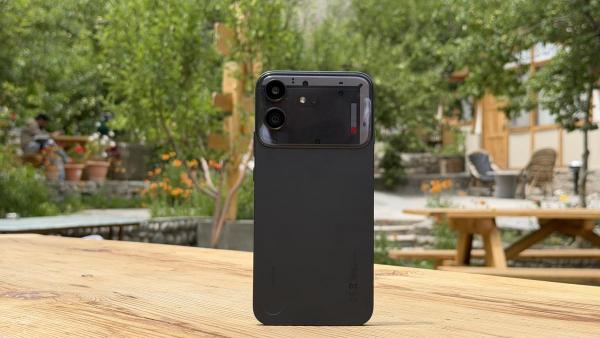
Credits: The Hindu
Truecaller has publicly criticised new directives issued by the Telecom Regulatory Authority of India (TRAI) that prevent the company from displaying spam warnings for phone numbers belonging to the 140 and 160 series. These number ranges were designated last year for telemarketing and banking communications, but Truecaller argues that fraudulent and unwanted calls can still originate from them. The dispute marks a sharp change in the company’s relationship with Indian regulators. Earlier this year, Truecaller CEO Rishit Jhunjhunwala had praised the government’s efforts to tackle spam and highlighted the firm’s close collaboration with the Department of Telecommunications in sharing fraud- data. However, the latest TRAI directive has created friction, with Truecaller warning that restricting spam labels could reduce transparency for users and potentially expose them to more unwanted or deceptive calls. The disagreement underscores the broader challenge of balancing regulatory policies with consumer protection in India’s rapidly evolving telecom ecosystem.