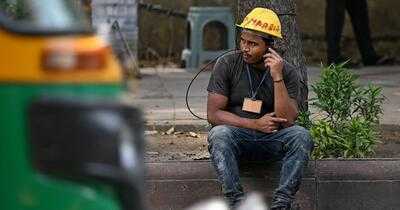
When the Covid-19 lockdowns stopped migrant workers in their tracks, with little money, work or means to go back home, governments of destination states struggled to figure out how many migrants they had, in order to provide free foodgrain, support and medical help.
India’s migrant workers are an amorphous group, scattered across several states, moving for a variety of push and pull factors. To understand the profile of the average migrant, researchers from Azim Premji University looked at different government databases, and found some interesting trends.
Informal workers with lower levels of education, especially from the eastern states, travel the farthest for work. Migration is largely distress-driven, but spatial variations show economic distress and traditional corridors can dictate where one travels to for work.
And finally, workers from states with lower per capita incomes – which also have higher fertility rates – move to richer states with low fertility rates, leading to what the authors call a rebalancing of India’s demographic dividend.
IndiaSpend spoke with Tamoghna Halder, co-author of the State of Working India report 2026. Halder has a PhD from the University of California, Davis and teaches economics at Azim Premji University.
Edited excerpts:
India’s census counts migrants both within and across states. Given that the census is now 15 years...
Read more