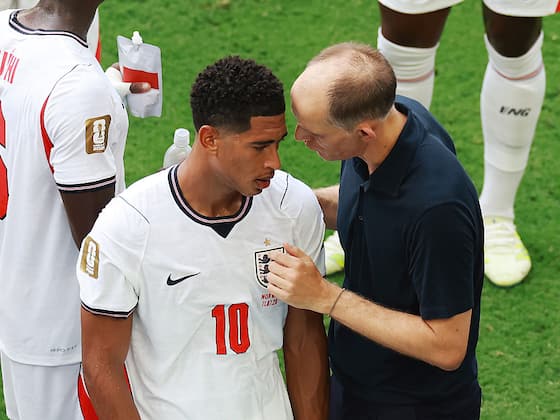
England were fortunate that their equalising goal against Norway was not disallowed following a highly unusual sequence of events.
In the moments leading up to Jude Bellingham’s equaliser, England benefited from an unexpected bounce of the ball – quite literally – that should have halted play under the Laws of the Game.
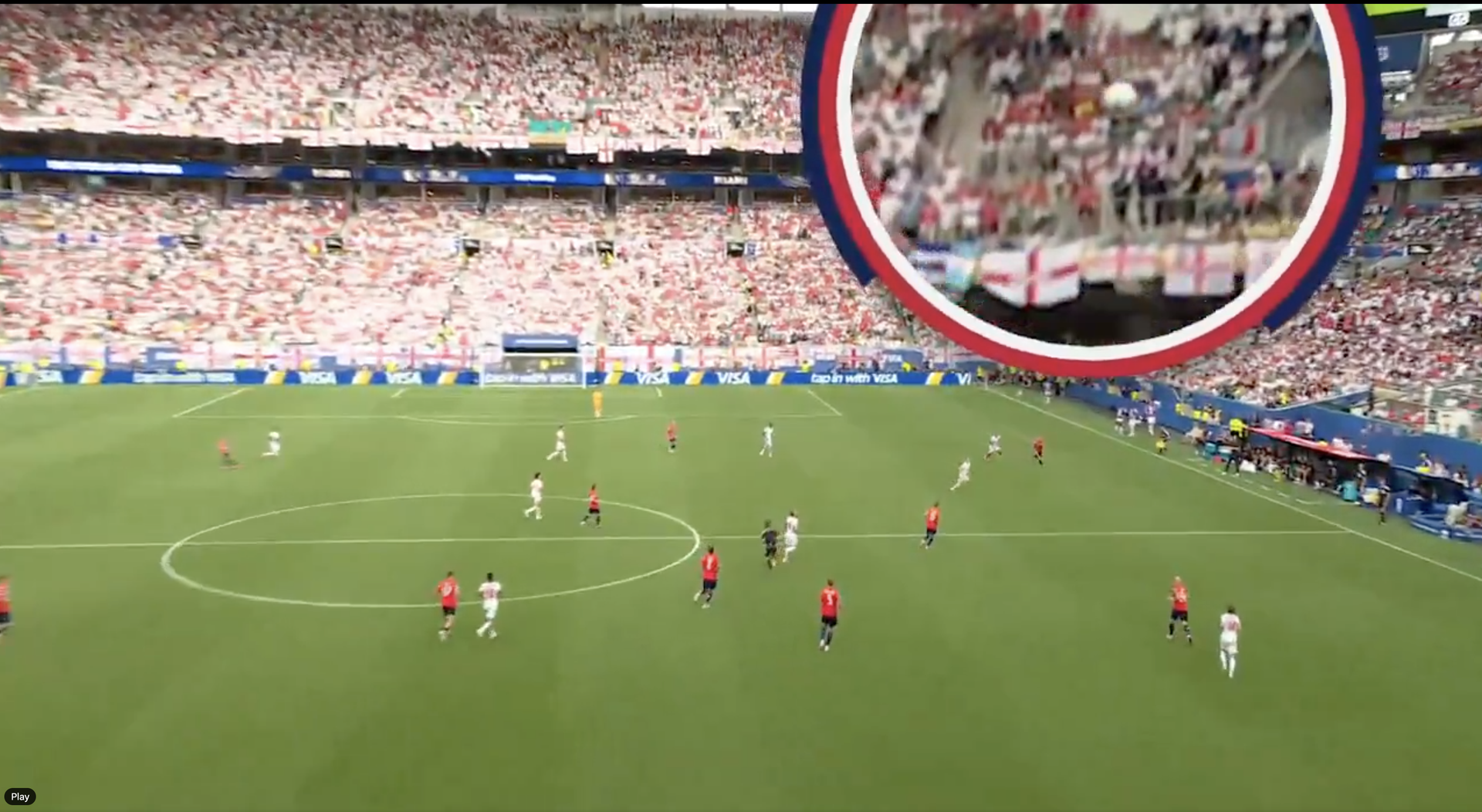
During the build-up, Norway goalkeeper Orjan Nyland’s goal kick appeared to strike the overhead cable supporting the television camera above the pitch. The ball then dropped sharply into the path of Elliot Anderson, and after two quick passes, it reached Bellingham, who slotted home the equaliser.
As per the official IFAB Laws of the Game, if the ball contacts any overhead fixture such as a cable or camera and remains in play, the match must be stopped immediately.
The referee is then required to restart play with a dropped ball awarded to the team that last touched the ball before it hit the fixture, from the exact spot where the contact occurred.
According to Fox Sports coverage, former referee Mark Clattenburg explained that any instance in which the ball touches the television cable should automatically result in the referee stopping play.
As relayed by presenter Rebecca Lowe, Clattenburg stated: “If the ball touches any outside object, then the whistle should go, and it should be a drop ball.”
He further elaborated: “Some will ask, why does VAR not intervene? They can do so if that contact with the cable forms part of a reviewable incident.”
Clattenburg concluded: “An attacking phase of play that leads to a goal is among the incidents VAR is permitted to review, so this should have been detected by VAR.”
Before extra time began, Fox presenter Lowe reported that FIFA denied the ball had struck the cable.
FIFA reportedly reviewed the data from the ball’s internal sensor and found no spike in the readings, which would have indicated contact with an external object.
The official Adidas match balls used in the tournament are equipped with microchips and employ ‘connected ball technology’, transmitting live data directly to the VAR system.
This microchip provides precise, real-time information on ball movement, speed, trajectory, and player touches. Adidas claims the innovation allows for “faster in-game officiating decisions and greater insight into gameplay than ever before.”
Nevertheless, Erling Haaland led strong protests to the referee at the time, insisting that the ball had hit the cable, but the goal stood.
Norway had looked the stronger side after the first hydration break and took the lead through a spectacular effort from Andreas Schjelderup, whose attempted cross looped into the top corner past Jordan Pickford.
They nearly doubled their advantage before half-time when Alexander Sorloth broke through and should have squared the ball to Haaland for a simple finish.
However, minutes later, Bellingham drew England level with a composed and well-taken goal.
England later benefited again when a Norwegian goal in the second half was disallowed. Haaland was adjudged to have pushed his future Manchester City team-mate Elliot Anderson during the build-up to a set-piece that ended in the net.
The match proceeded into extra time, where Bellingham struck again to secure his second goal of the night and send England through to the semi-finals.