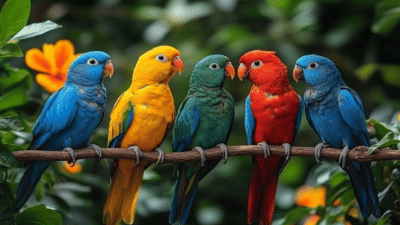
New Delhi: Scientists confirm the country’s first-ever detection of the highly contagious virus linked to a fatal disease in parrots, raising fresh concerns over the exotic pet trade and the protection of endangered bird species.
For years, the virus silently stalked parrots in several parts of the world. Now, it has officially reached India. In a significant scientific breakthrough with major implications for animal health and wildlife conservation, researchers have confirmed the first-ever detection of Parrot Bornavirus-4 (PaBV-4) in the country. The virus, notorious for causing the often-fatal Proventricular Dilatation Disease (PDD) in parrots and other psittacine birds, has been identified in captive birds across multiple Indian states, prompting experts to call for stronger disease surveillance, responsible bird trade practices, and heightened biosecurity measures.
What is Parrot Bornavirus-4Parrot Bornavirus-4 is a single-stranded RNA virus belonging to the species Orthobornavirus alphapsittaciforme. It is considered the most clinically significant genotype of parrot bornaviruses and is the primary cause of Proventricular Dilatation Disease (PDD)—a progressive neurological and gastrointestinal disorder affecting parrots, macaws, cockatiels, parakeets, cockatoos, lovebirds and other members of the parrot family.
The disease damages the bird’s nervous system, particularly the nerves controlling the digestive tract. As a result, affected birds may gradually lose the ability to digest food properly while also developing neurological abnormalities. There is currently no specific antiviral treatment or commercially available vaccine for PaBV-4, making prevention and early detection crucial.
First detection in IndiaThe landmark discovery comes from a multi-institutional team of Indian scientists whose findings were published in Scientific Reports. The researchers screened 83 captive psittacine birds collected between 2020 and 2024 from Assam, Karnataka and West Bengal, confirming 44 birds positive for PaBV-4 through molecular testing and genetic characterization.
The study marks the first confirmed evidence that PaBV-4 is circulating in captive birds in India, making it a significant milestone in the country’s veterinary and wildlife disease surveillance.
Findings that have worried expertsThe study revealed several alarming findings:
Scientists say the presence of asymptomatic carriers makes disease control particularly challenging, as infected birds may unknowingly spread the virus within aviaries, breeding facilities and through commercial bird trade.
Symptoms of Proventricular Dilatation Disease (PDD)The disease caused by PaBV-4 often progresses slowly but can become fatal. Common symptoms include:
However, not every infected bird develops clinical disease immediately. Some remain symptom-free for extended periods while continuing to shed the virus.
How does the virus spreadResearchers believe PaBV-4 spreads primarily through:
The international movement of exotic birds and captive breeding programmes are considered major pathways for global transmission.
Is there any risk to humansCurrent scientific evidence indicates that Parrot Bornavirus-4 is a disease of birds, particularly parrots and related species. The recent Indian study focuses exclusively on infections in captive psittacine birds, and there is no evidence from this research that PaBV-4 poses a public health threat to humans.
What bird owners should doVeterinary experts recommend that bird owners:
The confirmation of PaBV-4 in India is more than just a scientific first—it serves as an early warning for veterinarians, conservationists and bird enthusiasts alike. While the discovery reflects advances in disease surveillance, it also highlights the growing challenges posed by wildlife trade and the movement of captive animals across borders.
With no cure currently available and the potential for silent transmission among birds, experts say proactive monitoring, responsible pet ownership and stronger conservation measures will be critical to limiting the virus’s spread and protecting both captive and wild parrot populations