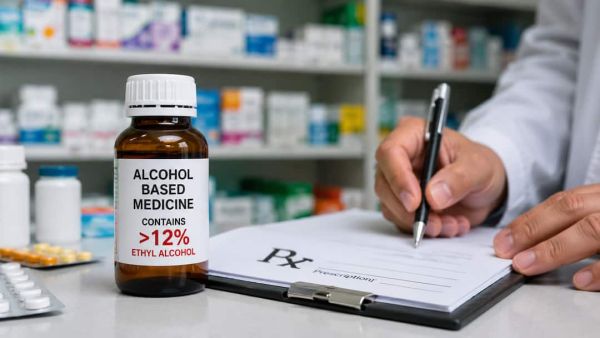
If you often buy medicines directly from a medical store without consulting a doctor, this latest rule is worth knowing. The Central Government has tightened regulations governing the manufacture and sale of medicinal formulations containing more than 12% ethyl alcohol. Such medicines will now be subject to stricter oversight and will no longer be available for over-the-counter purchase. The government has brought these products under Schedule H1 of the Drugs Rules, 1945, making them subject to the licensing provisions of the Drugs and Cosmetics Act, 1940. As a result, these medicines can now only be sold against the prescription of a registered medical practitioner, while pharmacists will be required to maintain detailed records of every sale. According to the Ministry of Health, the move aims to curb the misuse of medicinal products containing high levels of ethyl alcohol.
The revised regulation applies to oral medicinal formulations containing more than 12% ethyl alcohol and sold in packs larger than 30 ml. This includes certain tinctures and herbal liquid preparations made using ingredients such as cardamom, ginger, and other aromatic substances. Earlier, several of these products were exempt from licensing requirements under the Drugs Rules. However, investigations found that some formulations contained 60% to 90% ethyl alcohol, making them vulnerable to misuse. To prevent such abuse, the government has withdrawn the exemption and brought these medicines under stricter regulatory control.
With the new amendment, the manufacture and sale of these medicines will only be permitted under a valid licence. Since they have been included in Schedule H1, they can only be purchased with a prescription issued by a registered doctor. Medical stores will also have to maintain records of every sale, and only licensed manufacturers and authorised pharmaceutical supply chains will be allowed to produce and distribute these medicines. The government has announced that the new rules will come into force six months after their publication in the Official Gazette, giving manufacturers and retailers adequate time to comply.
According to the Ministry of Health, several tinctures and herbal preparations made from ingredients such as cardamom and ginger were originally intended for therapeutic use, including the treatment of digestive ailments. However, authorities found that some products contained 80% to 90% ethyl alcohol, leading to their misuse as a substitute for alcoholic beverages. To prevent abuse while ensuring genuine patients continue to have access through proper medical supervision, the government has decided to place these products under a stricter licensing and prescription-based system.