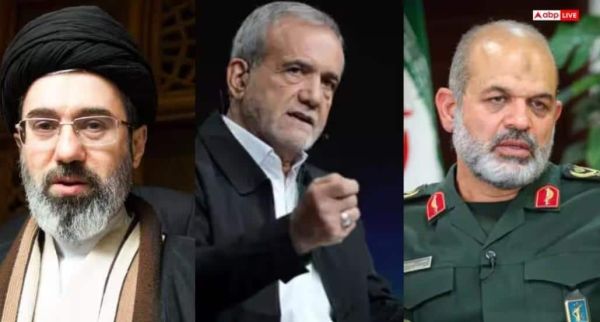
As tensions between Iran and the United States continue to rise, divisions within Tehran's leadership are becoming increasingly visible. The main disagreement centres on the Strait of Hormuz, one of the world's most strategically important shipping routes. While Iran's powerful Islamic Revolutionary Guard Corps (IRGC) is pushing for a hardline approach to strengthen its control over the waterway, President Masoud Pezeshkian's civilian government is advocating diplomacy.
According to Middle East analyst Kenneth Katzman of the Soufan Center, two distinct schools of thought are shaping Iran's response. The IRGC and conservative hardliners view control of the Strait of Hormuz as one of Iran's strongest strategic assets. They believe maintaining leverage over the vital shipping lane would increase pressure on the United States and deter future military action.
The hardline camp is also said to favour a more forceful response to recent developments involving Iran's leadership. Its broader objective is to demonstrate that any action against Iran will come at a significant cost, reinforcing deterrence against future threats.
In contrast, President Masoud Pezeshkian and Parliament Speaker Mohammad Bagher Ghalibaf are believed to support a diplomatic path. They favour reopening indirect talks with Washington, with Oman expected to play a key mediating role in efforts to reduce tensions and prevent further escalation.
US Launches Fresh Strikes On Iran After IRGC Attacks Cyprus-Flagged Ship, Shuts Strait Of Hormuz
The United States has repeatedly reaffirmed that keeping the Strait of Hormuz open remains a strategic priority. Roughly one-fifth of the world's oil trade passes through the narrow waterway, making any disruption a major concern for global energy markets and international shipping.
Analysts believe Tehran's civilian leadership hopes renewed dialogue could ease regional tensions and help secure a peaceful understanding over the strait. However, the differing views within Iran's leadership suggest that reaching a unified strategy may prove challenging.
With both Washington and Tehran standing firm on their core interests, the internal debate in Iran extends well beyond domestic politics. Decisions made over the Strait of Hormuz could influence global oil prices, maritime trade and wider regional security, making developments in Tehran a matter of international significance.
Pakistan, Saudi Arabia Call For Restraint Amid Renewed US-Iran Conflict, Push For De-Escalation