Why some people hate eating insects may have started 9,000 years ago, DNA suggests
ETimes July 13, 2026 05:39 PM
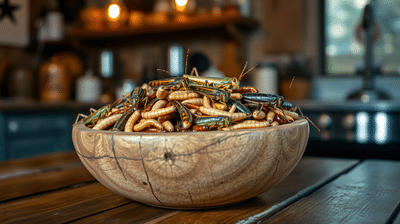 Eating insects is completely normal in large parts of the world, yet in Europe and North America the idea still makes most people cringe. For a long time this was chalked up to culture alone, just something certain societies got used to and others did not. But a new study suggests the real story goes much deeper, all the way back through genetics, ecology and what our ancestors actually ate thousands of years ago. As food systems come under pressure from climate change and a growing population, scientists have been looking more seriously at insects as a possible source of protein. Understanding why so many of us instinctively recoil from the idea might actually be written into our own DNA.
Why do people hate eating insects: New study explains
Researchers at the Institute of Evolutionary Biology, a joint centre run by the Spanish National Research Council and Pompeu Fabra University, set out to trace insect eating habits across thousands of years using genetic data. Their findings, published in the journal , suggest that eating insects was rare and mostly accidental among modern humans living across Europe, Central Asia and East Asia, while it was likely a much more regular part of the diet in tropical regions and among Neanderthals.
What ancient dental plaque reveals about early diets
To dig into this, the research team examined 745 samples of dental calculus, essentially ancient tartar, taken from the teeth of modern humans, with some samples dating back as far as 33,000 years. This tartar can trap tiny traces of DNA from foods a person ate regularly, making it a genuinely useful record of ancient eating habits. The analysis showed that modern humans living across northern Eurasia simply did not eat insects on a regular basis, a pattern that held steady across thousands of years.
The gene mutation behind why humans cannot digest insects
Beyond just diet, researchers also looked at genes tied to digesting chitin, the tough material that makes up an insect's outer shell. In populations across northern Eurasia, the genes responsible for producing chitin-digesting enzymes carry mutations linked to a reduced ability to break this material down. According to study lead Pablo Librado, a researcher at the Institute, this pattern has stuck around for roughly 9000 years, dating back to around when agriculture first began, suggesting the avoidance of insects is not just a recent cultural habit but something with much deeper ecological roots.
Why Neanderthals may have eaten insects more often
Neanderthals tell a noticeably different story. Even though they lived in many of the same environments as early modern humans, their dental tartar contained far more insect DNA, at levels closer to what is seen in western chimpanzees, animals known to eat insects to get through tough periods like droughts. Most of the insect DNA found in Neanderthal remains came from flies and mosquitoes, which supports an existing idea that Neanderthals regularly ate meat that had already been infested with fly larvae. The presence of mosquito DNA also hints that carcasses may have been stored near ponds or marshy areas where mosquitoes typically breed. Interestingly, Neanderthal genes linked to chitin digestion were far better suited to breaking down insect material, and a similar pattern turned up in the one Denisovan sample researchers were able to study.
Why people near the tropics can digest insects better

The study also found that people living closer to the tropics, both in ancient times and today, carry gene variants linked to higher activity of two enzymes involved in breaking down chitin. According to Manuel Piñero, a researcher on the study, insects have to be eaten in fairly large quantities to be worth the energy spent collecting them, and tropical regions simply offer more of them, with termites and locusts available in large enough numbers to be a reliable, sustainable food source year round. As populations moved further from the tropics, the activity of these digestive enzymes gradually dropped off, and this genetic pattern has remained largely unchanged for roughly 9000 years.
Could insects become a common food in Europe again
Librado suggests that beyond religious or cultural reasons, the simple lack of insects available in non tropical regions may have played a real role in why people eventually stopped eating them, which in turn led to a weaker ability to digest their exoskeletons over generations. That said, modern food processing could change this equation going forward, since industrial methods can strip away much of the chitin beforehand, making it far easier to include insects in food without needing the digestive tools our ancestors once relied on. This also opens the door to farming insects at scale as a genuine food source.
What comes next in insect diet research
Librado's research group at the Institute is now turning its attention to domestication, using insect species that have recently been approved for human consumption as a case study. By comparing the genomes of farmed insects with those collected before domestication began, the team hopes to better understand how domestication itself works at a genetic level, insight that could eventually help improve how insects are farmed and used, whether as animal feed or as food for people directly.