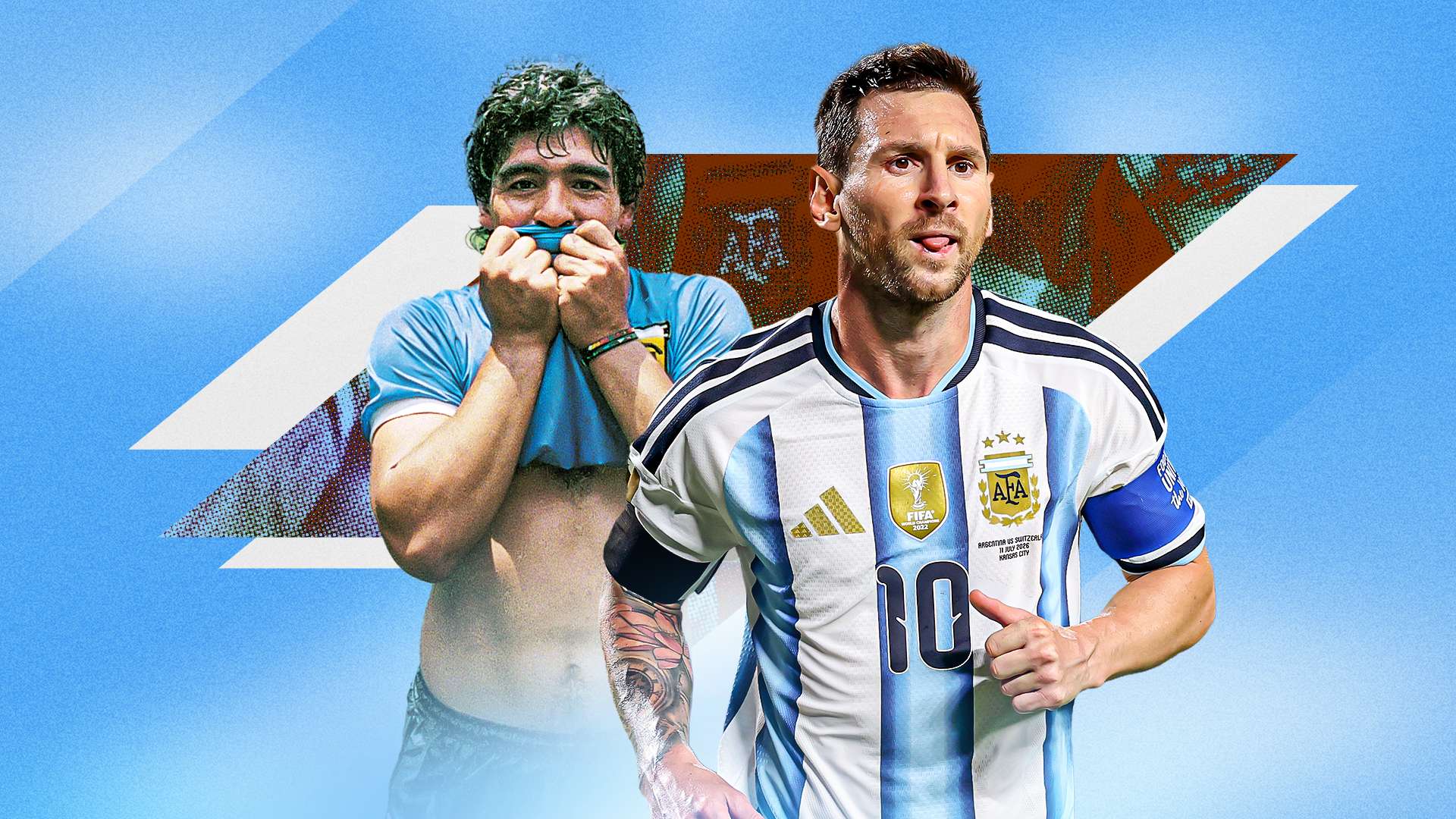
Before Lionel Messi began his sixth World Cup campaign, many believed he had already achieved everything possible in football. Having effectively conquered the sport four years ago in Qatar, there were doubts about whether, at 39, he could add anything new to his legacy without risking his reputation. Yet, Messi – who has spent his entire career defying conventional expectations – has further strengthened his claim as the greatest footballer of all time. During Argentina’s journey to the semi-finals, he not only guided his team with brilliance but also became the World Cup’s all-time leader in both goals and assists.
Remarkably, Messi is now poised to do something unprecedented in his career. Despite earning 205 caps for Argentina, he has never faced England before. That changes on Wednesday in Atlanta.
“Obviously, playing against England is special because they are a powerhouse, and matches against powerhouses are always special,” Messi told reporters following Argentina’s quarter-final win over Switzerland. “Personally, it’s the first time I’ll play against them. I’ve played against everyone except England, so it will be nice for that reason too.”
For Messi, however, a World Cup semi-final against England represents far more than a mere milestone — it’s a chance to etch his name into the narrative of one of football’s most storied rivalries.
Messi has mirrored Diego Maradona in numerous ways and even surpassed him in several respects. Before finally lifting the World Cup trophy with a Maradona-esque dominance in Qatar 2022, he had already led Argentina to Copa America glory at Brazil’s Maracana – the home of their fiercest rivals. Yet, a World Cup victory over England would stand apart, representing something truly extraordinary.
Argentina coach Lionel Scaloni has been quick to play down the historical weight of Wednesday’s semi-final opponents.
“This is just a football game, OK?” Scaloni said. “That’s what I can say. It’s a football game, and we’ll be facing a very tough opponent with an excellent coach. That’s all.”
While technically correct, such words barely capture the emotional gravity of Argentina versus England. As midfielder Jose Manuel Lopez put it after the 3-1 victory over Switzerland, “From an off-the-pitch perspective, it’s a match-up with a lot of history, a lot of pain, and a lot of emotion behind it.”
The rivalry between England and Argentina at the World Cup dates back to 1962, but tensions truly intensified after their fiery 1966 meeting, when England manager Alf Ramsey infamously branded the Argentine players “animals” following a contentious match at Wembley decided by Geoff Hurst’s disputed goal.
Younger fans might recall David Beckham’s red card at France ’98 and his later redemption in Japan and South Korea. But for most, the mention of England versus Argentina immediately evokes memories of their legendary 1986 World Cup quarter-final in Mexico – arguably the most iconic and controversial clash in tournament history.
Messi himself has often spoken about that game: “Everything I have seen and remember [about that match] is from videos and images that Argentinians keep watching and reliving.” The reason, of course, is Maradona.
Reflecting on his enduring fame in his autobiography ‘Touched by God’, Maradona wrote, “There are still 10-year-old kids out there today with my name on their backs. And that kind of madness can only be explained by one goal. Or maybe two…” And indeed, there was never any doubt which goals he meant.
On June 22, 1986, Maradona scored two of the most famous goals in football history. The first came in the 51st minute when he used his hand to nudge the ball past England goalkeeper Peter Shilton into the net.
“We all saw it,” recalled former Liverpool winger John Barnes. “Everyone on the bench – the players, the coaches, the manager – we all knew he’d handled it. But I don’t blame Maradona; I blame the referee and officials for missing it. I never held anything against him. He was the best player in the world, and I was just watching everything he did. Even his warm-up was mesmerising. And, you know what, his second goal wasn’t bad either.”
Indeed, Maradona’s second strike remains widely regarded as the greatest individual goal ever scored — a breathtaking run past five England players, capped with an 11-touch finish in just 11 seconds.
His teammate Jorge Valdano later said, “At first, I went along with him, but then I realised I was just another spectator. It was his goal, his personal adventure, completely spectacular.” Valdano even compared Maradona’s journey to that of Ulysses, writing, “The same traits – intelligence, cunning, bravery, and creativity – defined Diego. That day, he scored one goal that was divine and another that was deceitful. He was, truly, above good and evil.”
Not everyone in England shared that sentiment. The controversial nature of the first goal left many feeling robbed, especially as Gary Lineker’s late header gave England hope. Manager Bobby Robson and his players were furious, believing they might have won had Maradona not cheated. Their anger only grew when Maradona famously described his goal as being scored “a little with the head of Maradona, and a little with the Hand of God.”
The animosity was intensified by the political backdrop. The match came just four years after the Falklands War between Argentina and the United Kingdom. Though Maradona insisted before the game that it was “only about football,” both Valdano and Lineker later admitted that the shadow of the conflict was impossible to ignore. In Asif Kapadia’s documentary, Maradona confessed that beating England felt like “a beautiful, symbolic revenge for the Malvinas.” He even told his teammates afterward, “Those who steal from a thief deserve a hundred years of forgiveness.”
Wednesday’s semi-final in Atlanta will not carry the same political undertones, but Argentina’s players have reportedly pledged to play “For the Malvinas, for Diego, and for Leo’s last World Cup.” The stakes are immense for both sides. England have not reached a World Cup final since their 1966 triumph, and many believe Argentina have looked vulnerable despite their progress.
Yet, Messi has been magnificent. While some teammates have struggled for form, he continues to defy time and expectation. His tally of eight goals and two assists in six games is astonishing for any player — let alone a 39-year-old whose physical pace has waned but whose footballing mind remains unmatched.
Every time we think we’ve seen everything from Messi, he surprises us again. His story is not yet complete. One more chapter remains — possibly his most defining one. Although he may never quite match the mythic aura of Maradona, a World Cup victory over England would add a new layer to an already unparalleled legacy. It’s the one missing piece of his extraordinary career.
Admittedly, the odds may not favour him. England’s Harry Kane and Jude Bellingham are more likely to be the match-winners in Atlanta. But just as the 1986 quarter-final was “all about Maradona,” as Barnes put it, this 2026 semi-final could well be remembered as the stage for another Argentine genius on a one-man mission — Lionel Messi’s quest for a second World Cup and footballing immortality.