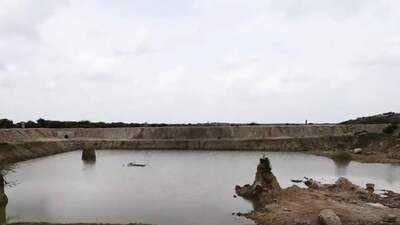
During the last five financial years, the Uttar Pradesh government has undertaken water conservation projects worth more than Rs.16,000 crore. These initiatives have significantly transformed rural areas by improving water availability, strengthening agriculture, raising groundwater levels, and boosting the rural economy.
The large-scale conservation effort is already showing visible results in farming productivity, environmental sustainability, and village livelihoods.
To expand water conservation, the state has increased the number of eligible water-related works under its rural development programmes.
Earlier, under MGNREGA, 78 out of 266 permissible works were linked to water conservation. Under the Vibrant Village–Gramya Rural Mission (VB-GRAM-G), 107 out of 318 approved works now focus on water security and conservation.
Key activities include:
The Yogi government has transformed the Amrit Sarovar initiative from a construction programme into a community-driven movement.
Across villages, old ponds are being revived, new water bodies are being created, rainwater harvesting is being promoted, and local communities are actively involved in protecting water resources. These efforts have improved water availability and provided long-term solutions for drought-prone and water-stressed regions.
The extensive network of Amrit Sarovars and restored ponds has delivered substantial benefits to the agricultural sector.
Improved irrigation facilities have reduced water shortages for farmers, while groundwater levels have shown noticeable improvement. Increased greenery around water bodies has enhanced biodiversity and strengthened local environmental conservation efforts.
The water conservation campaign has also created new livelihood opportunities in rural areas.
Activities such as fish farming, livestock rearing, irrigation-based farming, and other water-dependent enterprises have expanded around the Amrit Sarovars. Rural employment has increased through development programmes, while improved water availability has contributed to higher agricultural output and increased farmers' incomes.
By integrating water conservation with rural development, environmental sustainability, and economic growth, Uttar Pradesh has developed a model that is now being studied by other states.
The large-scale construction of Amrit Sarovars, restoration of traditional ponds, and widespread community participation demonstrate how strategic planning and effective implementation can provide long-term solutions to water scarcity. Under Chief Minister Yogi Adityanath's leadership, Uttar Pradesh has established itself as a national leader in water conservation.