Manchester United’s summer transfer window has begun to show both clarity and purpose, bringing a sense of footballing logic back to Old Trafford. In a marketplace often dominated by hype and panic, the club now appears to be responding to genuine needs. As reported by The Athletic, United are acting decisively in midfield, with Youri Tielemans close to signing and Andrey Santos already secured—two moves that reflect necessity as much as ambition.
The wide-ranging report covered much of the Premier League, but the United section stood out for focusing on the area that required urgent attention. One line summarised the situation perfectly: “Manchester United accelerated their midfield rebuild and are now set to finalise a deal for Youri Tielemans.” It encapsulates a club finally confronting its weaknesses with determination.
Tielemans, available due to a “£35 million release clause”, represents a smart opportunity in the current market. United have “identified an opportunity to land the 29-year-old midfielder” who, importantly, “favours a move to Old Trafford.” That willingness matters deeply. Successful rebuilds depend not only on tactics and quality but also on players who genuinely want to wear the shirt and contribute meaningfully to the project.
For too long, United’s midfield has oscillated between being overworked and underpowered. The report outlined the situation bluntly: “Following the departure of Casemiro as a free agent and Manuel Ugarte’s serious knee injury, Kobbie Mainoo would have been their only senior, recognised and available central midfielder heading into the new campaign.” That description reads less like imbalance and more like an alarm bell.
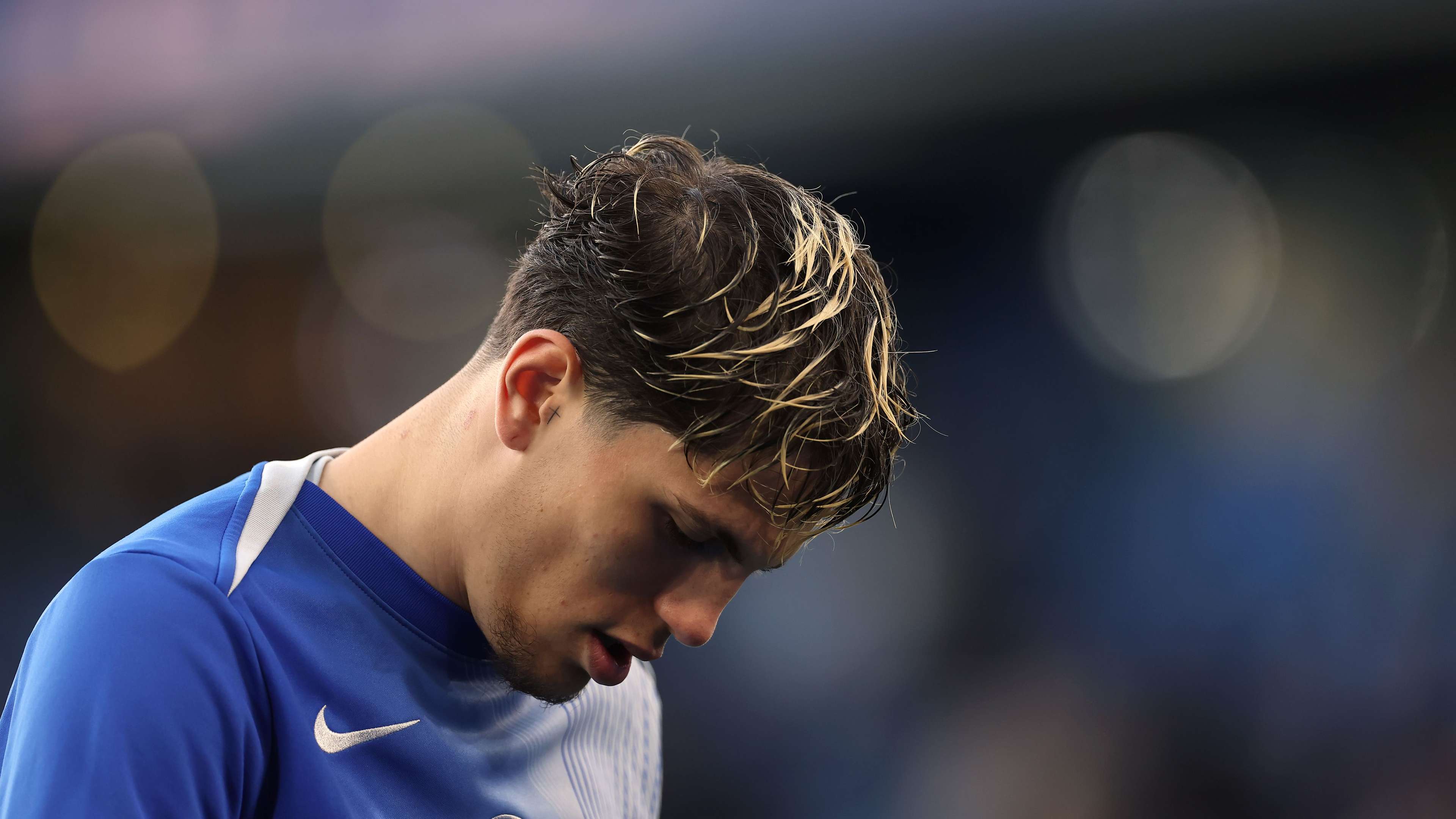
This urgency explains why the club has strengthened so aggressively in this area and why Santos’s arrival must be viewed alongside the Tielemans pursuit. The Brazilian midfielder joins from Chelsea for a fee “worth £48 million, with a further £2 million in add-ons,” on a five-year deal. His potential is widely admired, but he will also face immediate demands, arriving in a department desperate for energy, depth, and dynamism.
The report further highlighted that “Reinforcements were necessary regardless, however, given Bruno Fernandes’ redeployment as a No 10 under Michael Carrick.” This tactical adjustment is noteworthy. While Fernandes can still influence games from deeper roles, his creative instincts thrive closer to the attack, where he can craft openings and dictate tempo. If Carrick intends to keep him high up the pitch, the midfield behind must be more secure, progressive, and self-reliant.
This context makes Tielemans a particularly logical target. The Athletic’s analysis described him as “one of the Premier League’s best progressive passers, having led the division’s midfielders in lines broken per 100 pass attempts with 18.3.” In an era where pressing systems smother central play, that capacity to advance possession intelligently is invaluable. It’s not just about retaining the ball—it’s about propelling the game forward with clarity and courage.
Tielemans’s contribution would extend beyond metrics. His game has matured; the flair of youth now paired with measured control of tempo, spacing, and responsibility. As the report stated, “His passing range is varied and can help open up defensive blocks, while defensively, the 29-year-old makes up for a lack of explosivity by picking his moments to win the ball back.”
This is the profile of a cerebral midfielder—one who compensates for physical limitations with anticipation and intelligence. At a club where matches can become emotionally charged, his ability to slow the game down mentally before executing the right pass could prove vital. Tielemans would not be a luxury signing but rather a structural one, expected to bring order and rhythm.
Still, there are valid concerns. “The Belgium international’s injury record—calf, groin and ankle issues during his three seasons at Villa—will raise some concerns.” It’s a fair point. Every signing carries risk, and durability remains a key trait. Yet, in a market where ideal options are rare and valuations inflated, a £35 million fee for a proven Premier League performer with technical quality and experience looks pragmatic rather than reckless.
While midfield remains the priority, the report added that United “may still seek to strengthen the left-hand side of their attack, with Crysencio Summerville a leading target.” However, that pursuit is linked to a familiar, delicate situation: “Any move for a left-winger may hinge on the future of Marcus Rashford.”
Rashford’s situation continues to shape the club’s attacking plans. “The 28-year-old is set to be reintegrated into first-team training after Barcelona decided against taking up their €30 million (£25.6 million) option to buy, although an exit before the close of the window is still possible.” This could mean a fresh start, a temporary resolution, or a strategy to maintain market value. The outcome will hinge on pre-season form, internal discussions, and Rashford’s own mindset.
Overall, the emerging picture of United’s summer feels more coherent. It would be unrealistic to claim that two midfield signings alone restore the club’s former dominance, but there is a reassuring sense of logic underpinning these moves. Tielemans brings composure, vision, and Premier League experience; Santos adds youth, drive, and long-term potential. Together, they address a glaring weakness that had persisted far too long.
For a club constantly judged against its illustrious past, progress often feels understated. True rebuilding rarely begins with grand gestures—it starts with smart, purposeful decisions. Judging by this report, Manchester United appear to be making precisely those kinds of choices.
From a supporter’s viewpoint, this approach feels refreshingly honest. The club seems to have assessed its shortcomings realistically. Too often in recent years, United have attempted to mask rather than mend their flaws. This time, the midfield is being treated as the priority it should be.
At £35 million, Tielemans looks a shrewd investment—experienced, technically gifted, and well-suited to controlling matches that too often slip into chaos. Santos brings youthful hunger and upside. Combined with Mainoo and Fernandes, United’s midfield finally appears to have the potential for balance, diversity, and healthy competition.
While no one is suggesting the job is done, this transfer strategy shows rare coherence. If United continue to make sensible, football-driven decisions, optimism may slowly return to Old Trafford.