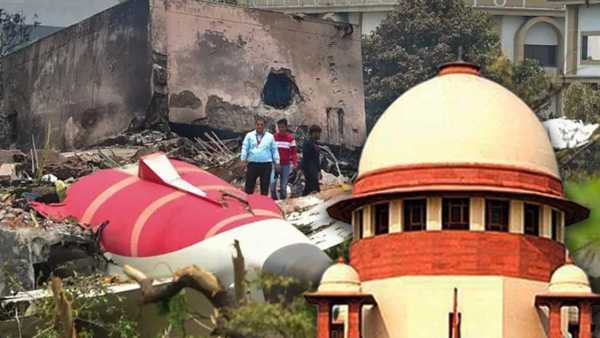
Aircraft Accident Investigation Bureau (AAIB) has filed an affidavit in the Supreme Court. AAIB said in the affidavit that the cockpit voice recording (CVR) and other important evidence of the Air India plane crash in Ahmedabad last year cannot be made public. AAIB told the Supreme Court that Indian law does not allow release of many sensitive information including CVR audio.
It has been said in the affidavit that it is necessary to keep the footage during the flight, statements of crew members, conversations related to the operation and personal information of the victims confidential. The Bureau said that these legal restrictions are to ensure fair and transparent investigation. AAIB has filed this affidavit in response to the petition filed by Pushkar Raj Sabharwal, father of the deceased pilot.
Standard operating procedure for investigating aircraft accidents has been described in Annex 13. Article 26 obliges the country where the accident occurs to initiate an investigation into the circumstances of the accident. At the same time, under Annex 13 and Aircraft (Investigation of Accidents and Incidents) Rules, 2025, there is a clear provision for participation of 'State of Registry', 'State of Operator', 'State of Design' and 'State of Manufacture'. All of them have fixed rights and responsibilities in the investigation process through recognized representatives and technical participation.
“As such, this investigation is not limited to municipal-level actions, but takes the form of an internationally designed and treaty-led investigation conducted by the country where the incident occurred and includes all relevant countries that have a legally recognized connection to the aircraft, operator, design or manufacture,” the AAIB said in the affidavit.