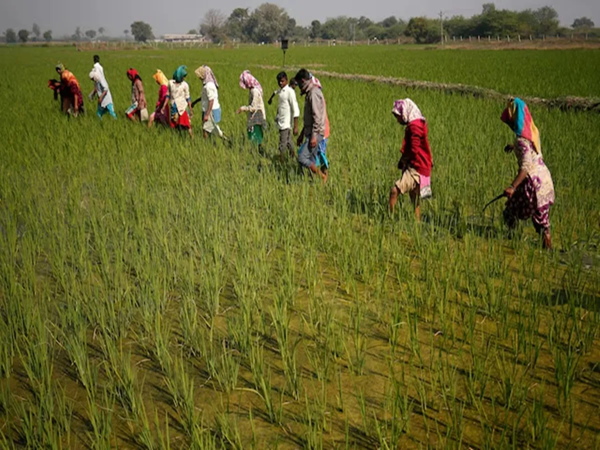
The historic ‘Comprehensive Economic and Trade Agreement’ (CETA) between India and the UK, concluded under the leadership of Prime Minister Narendra Modi, has now come into effect. This agreement is being hailed as a major milestone for the Indian agricultural sector. While it opens up the vast UK market for Indian agricultural products, it also fully safeguards the country's food security and the interests of its farmers.
**Direct benefits for these Indian products**
Under this agreement, the UK will grant duty-free entry to Indian agricultural products in its market. The following sectors in India are expected to benefit the most:
**Direct competition in a $90 billion market**
The UK imports agricultural and processed food products worth approximately $90 billion (over ₹7.5 lakh crore) annually. With zero-duty access, Indian exporters will now gain a direct competitive edge over rivals (such as Vietnam and other nations) in the global market.
**Fortunes to rise for agri-clusters in these states**
The country's major agricultural states stand to gain the most from this deal. Key agri-export clusters in Maharashtra, Gujarat, Andhra Pradesh, Tamil Nadu, and Punjab will receive a significant boost. It is anticipated that this will generate large-scale employment opportunities in rural areas, particularly within Farmer Producer Organizations (FPOs), packhouses, food processing units, and the logistics (transportation) sector.
**Full protection of Indian farmers' interests**
Mindful of the interests of small and medium farmers, the Government of India has excluded certain highly sensitive agricultural products from this agreement; meaning, goods from the UK falling under these categories will not be granted duty exemptions.
**Protected products:** Dairy products (milk, cheese, butter, ghee), cereals, edible oils, and fruits such as apples, pineapples, oranges, and pomegranates. Additionally, vegetables like tomatoes, garlic, cauliflower, peas, and pumpkins remain fully protected. Special Exemption: Zero-duty access has been granted to all agricultural products; however, chicken, pork, eggs, rice, and sugar have been excluded to safeguard the country's food security and rural economy.
This agreement marks a significant step towards realizing the vision of an 'Atmanirbhar Bharat' (Self-Reliant India) and the goal of doubling farmers' income. It will not only boost India's exports but also further strengthen the global standing of Indian agriculture.
Disclaimer: This content has been sourced and edited from TV9. While we have made modifications for clarity and presentation, the original content belongs to its respective authors and website. We do not claim ownership of the content.