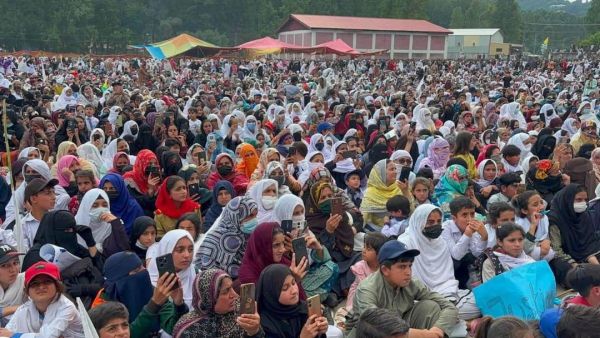
Pakistan-occupied Kashmir (PoK) has once again come under the spotlight as protests continue across several parts of the region. Demonstrations have been underway for weeks, with people taking to the streets over issues including inflation, unemployment, power outages, governance and political rights. Protesters have also raised slogans against the Pakistani government and security forces in several places, while reports of violence and clashes have emerged during the agitation.
At the same time, social media has linked the protests to claims that PoK is seeking to merge with India or is "about to return to India". However, these claims have not been independently verified.
Protests have been reported from Rawalakot, Muzaffarabad, Bagh and other parts of PoK.
The demonstrations initially centred on inflation, the power crisis and demands for employment, education and basic public services. Over time, the movement broadened, with protesters also questioning the policies and administrative system of the Pakistani government.
Clashes were reported between protesters and security forces at several locations. Local organisations have alleged that force was used to suppress the protests, while Pakistan has maintained that the situation concerns law and order.
The key demands raised by protesters include:
Several local organisations, including the Joint Awami Action Committee (JAAC), have said these demands have remained unaddressed for a long time.
The protests have also intensified ahead of the July 27 elections.
Some organisations have alleged that reserved seats and the limited participation of local people in the political process are inadequate. As a result, calls have been made to boycott the elections.
During this period, election campaigns of some political parties have also faced opposition, leading to tense situations in several areas.
Videos from the protests have shown anti-Pakistan slogans and demands for independence in some instances. However, it would be inaccurate to describe the entire movement as being centred on a single demand.
Different groups are pursuing different objectives. While some organisations are seeking administrative reforms, others are demanding greater political rights, and some have called for separation from Pakistan.
In this context, describing the entire movement as a demand for a merger with India cannot be considered factually correct.
India has consistently maintained that the entire region of Jammu and Kashmir, including Pakistan-occupied Kashmir, is an integral part of India.
Several senior leaders, including Defence Minister Rajnath Singh and Home Minister Amit Shah, have publicly reiterated that PoK is part of India and will remain so. India has also repeatedly raised concerns over the alleged use of force against protesters and human rights violations in the region.
The continuing unrest presents a challenge for Pakistan as PoK has long witnessed political and economic discontent.
The economic crisis, rising inflation, the energy shortage and dissatisfaction with the administrative system have contributed to growing public anger.
While the protests reflect deepening discontent in Pakistan-occupied Kashmir, claims that the entire region is about to merge with India or will soon be handed over to India are not supported by available and verifiable facts. At present, the movement remains centred on political, economic and administrative issues, and its future direction remains uncertain.