Nissan is making significant adjustments to its product strategy in the United States, but one familiar nameplate isn’t disappearing just yet. After reports suggested the Nissan Altima was nearing the end of its road, the automaker has officially confirmed that the midsize sedan will continue into the 2027 model year.
The clarification comes as Nissan reshapes its American portfolio, balancing customer demand with changing market trends while preparing for its next generation of electrified and body-on-frame vehicles.
Speculation about the Altima’s future intensified after industry reports indicated the sedan would be discontinued to make room for the redesigned Nissan Sentra. However, Nissan has now dismissed those claims, stating that the Altima remains an important part of its lineup.
According to the company, customer demand for the sedan remains healthy enough to justify another model year. Nissan also confirmed that a 2027 Altima will be introduced later this year, reinforcing its commitment to offering affordable sedans alongside newer models like the recently unveiled 2026 Sentra.
While the company acknowledged that its lineup will continue evolving, it stopped short of revealing long-term plans for the Altima beyond the upcoming model year.
Although the Altima survives for now, Nissan’s sedan range has already undergone major changes in recent years.
The Nissan Maxima ended production after the 2023 model year, while the budget-friendly Versa exited the U.S. market following the 2025 model year. The Versa, however, continues to be sold internationally in a newer generation.
These changes reflect a broader industry trend as automakers shift investments toward SUVs, crossovers, and electrified vehicles, even as a dedicated group of buyers continues to prefer traditional sedans.
Nissan has also decided to cancel two previously announced electric sedans that were expected to be built in the United States.
Company executives believe consumer demand for electric sedans remains too limited to justify production at this stage. Instead, Nissan expects the market to become more favorable closer to the end of the decade, when battery costs are expected to decline, and EV affordability improves.
The decision signals a more cautious approach to electrification, with the company prioritizing products that align with current buying patterns.
Another surprising move involves the Rogue Plug-In Hybrid.
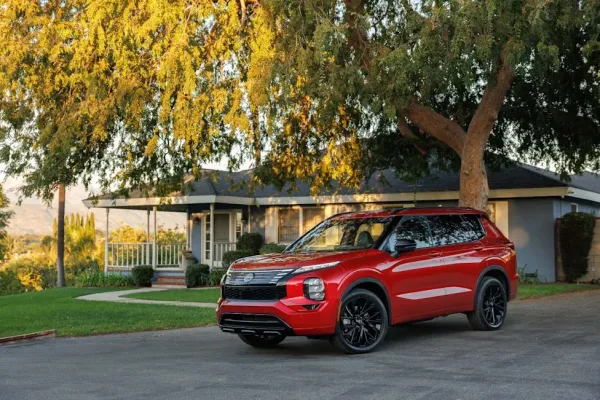
Despite arriving as a 2026 model, Nissan has confirmed that the plug-in hybrid crossover is only a temporary offering. Based on the Mitsubishi Outlander Plug-In Hybrid, the vehicle was introduced to give Nissan an immediate presence in the plug-in segment while its own hybrid technology was under development.
The model will eventually be replaced by the all-new Rogue E-Power, expected to debut for the 2027 model year with Nissan’s proprietary electrified powertrain.
Looking ahead, Nissan is preparing a broader expansion of its SUV lineup.
The long-rumored return of the Xterra is progressing, with the off-road SUV expected to ride on a new body-on-frame platform shared across several future models. The architecture could underpin the next-generation Frontier pickup, a three-row Nissan SUV, and multiple Infiniti SUVs.
Nissan says the revived Xterra will target adventure-focused buyers and is expected to feature a V6 engine, while hybrid versions of future body-on-frame models remain under consideration.
Nissan’s latest product decisions highlight a company carefully balancing legacy nameplates with future technologies. While the Altima earns a temporary extension, the cancellation of planned EV sedans and the brief lifespan of the Rogue Plug-In Hybrid demonstrate Nissan’s willingness to adapt its strategy as market conditions evolve.
For now, sedan buyers can expect the Altima to remain part of Nissan’s showroom, while the brand gradually shifts its attention toward hybrid systems, rugged SUVs, and a more measured path to electrification.