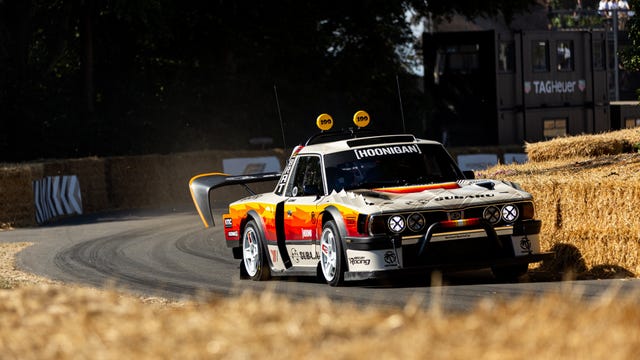
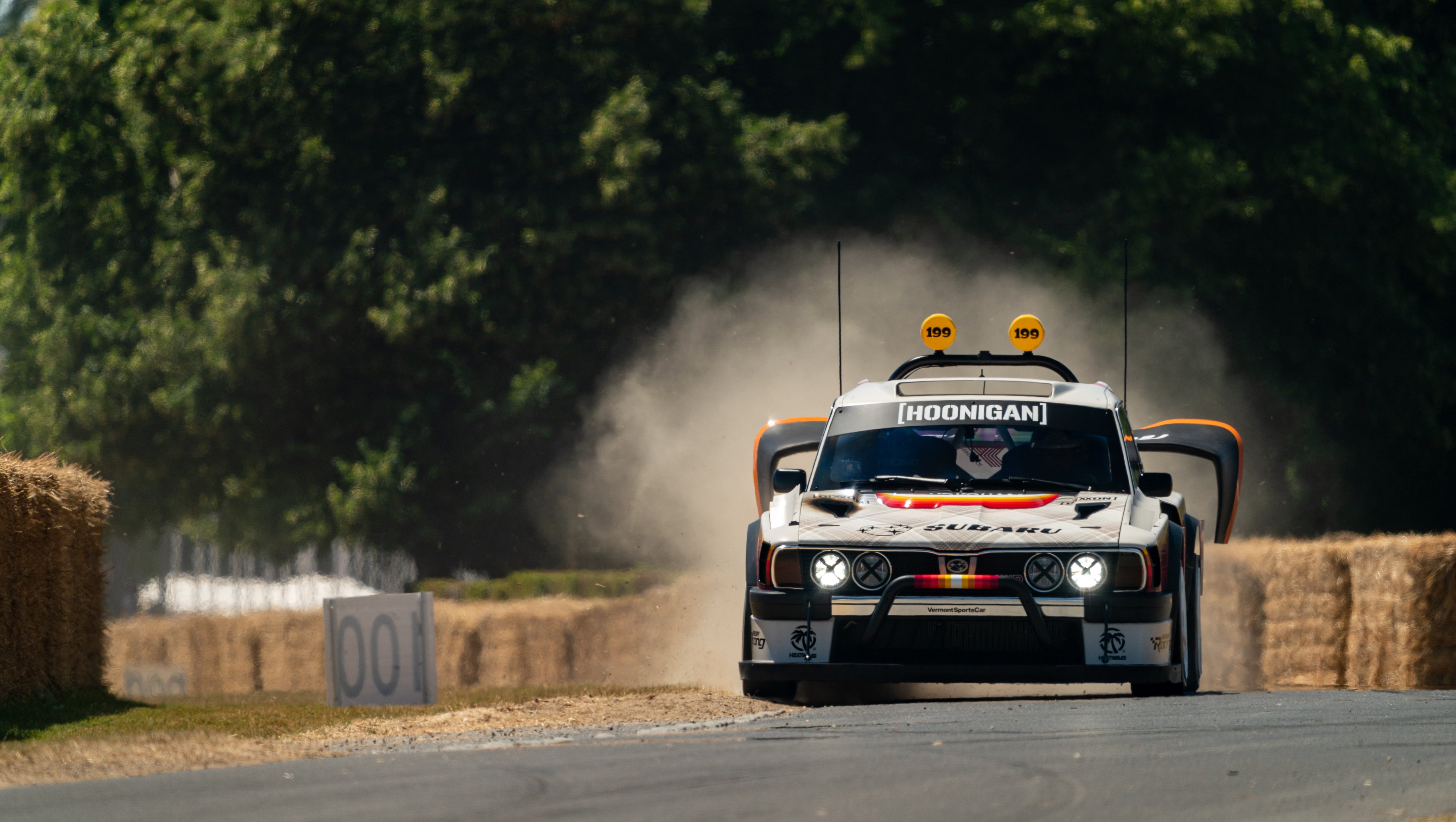
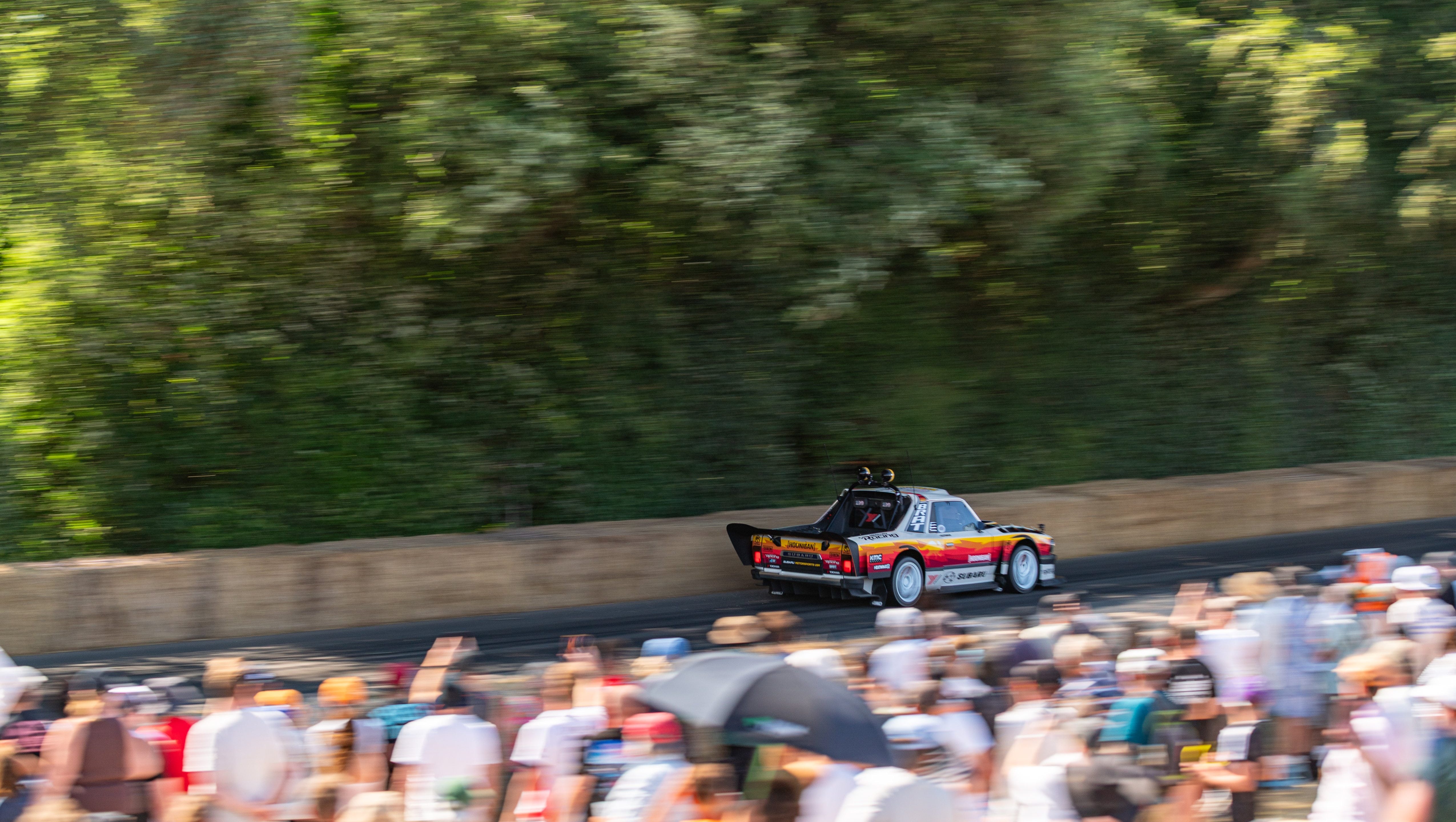
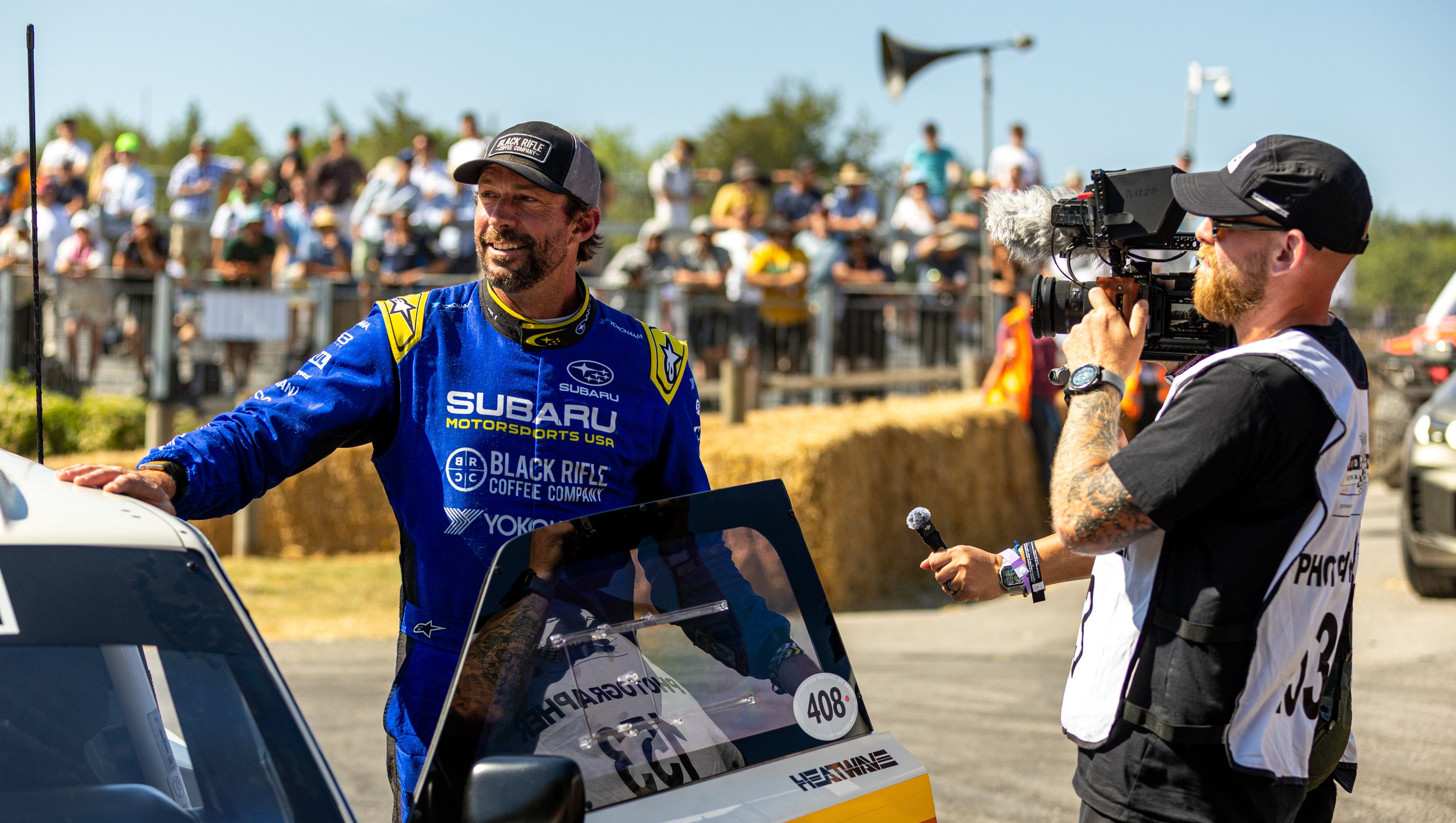
Travis Pastrana hardly needs an introduction anymore, having achieved remarkable success across a wide range of motorsport disciplines. His recent focus, however, was the hillclimb at the Goodwood Festival of Speed, where he competed behind the wheel of his Subaru Brataroo 9500 Turbo Gymkhana race car. Taking part in the event’s timed shootout, Pastrana clocked an impressive 46.77 seconds, securing sixth place overall.
Prior to his run, Road & Track had a conversation with Pastrana to discuss the wild Subaru pickup truck he was about to send up the Duke of Richmond’s iconic driveway, along with a few other topics. For this event, the Subaru Motorsports team prepared the Brataroo with a larger turbocharger that increased output to 750 horsepower, recalibrated gear ratios, a retuned suspension setup, and a more aggressive front splitter.
Pastrana, often known for his signature sideways-driving style in Subarus, was focused entirely on speed this weekend. When approached, he was deeply engrossed in studying braking zones and analysing every opportunity to shave fractions of a second from his hillclimb time. Here’s how the discussion unfolded.
Road & Track: What’s your favourite feature of the Brataroo?
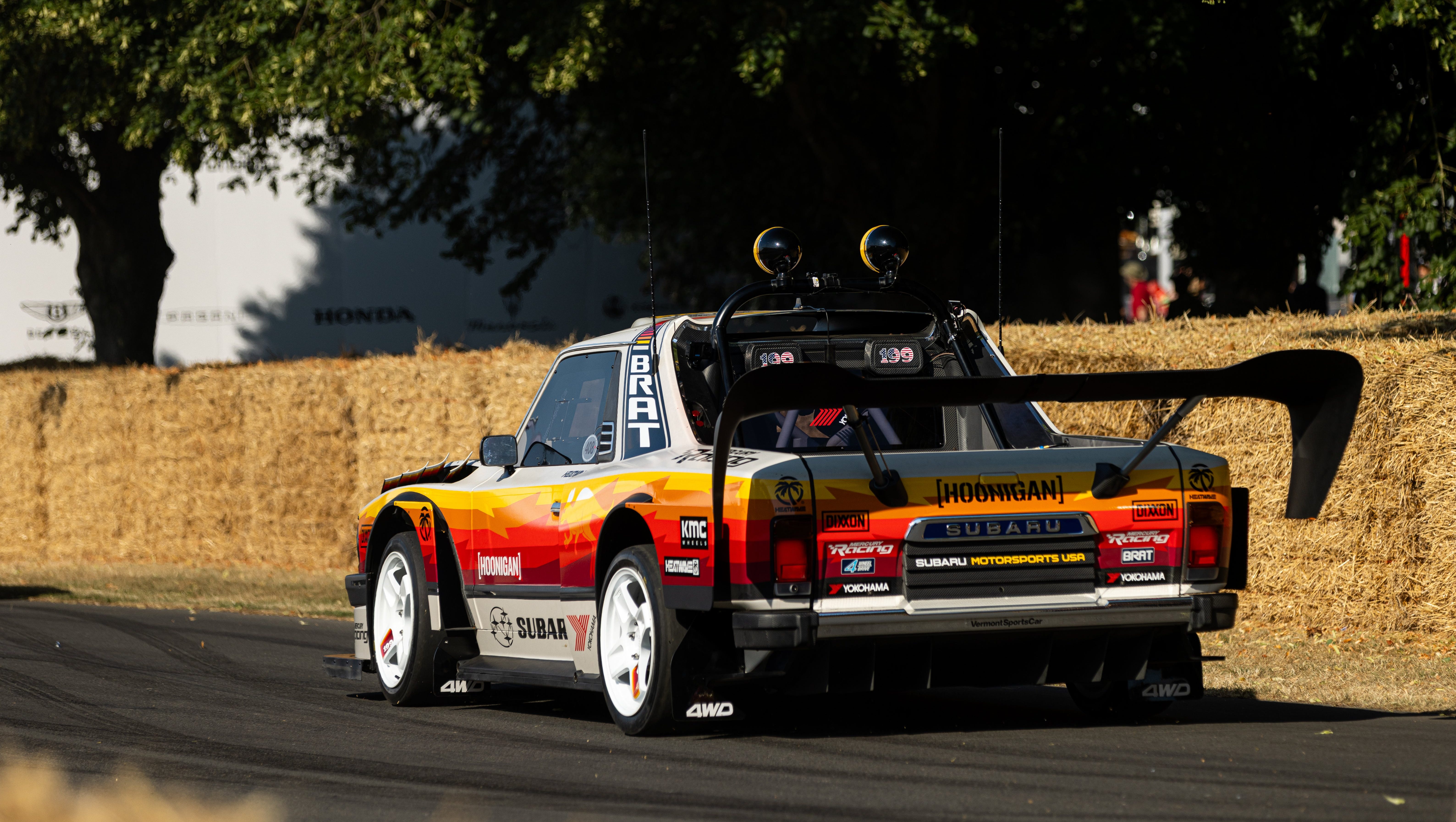
Travis Pastrana: For me, the coolest thing is how wide the car gets and the amount of downforce the rear wing generates. It practically glues the car to the tarmac. Then, with the press of a button, I can retract the wing like a Transformer so the car can squeeze through the section called Flint Wall.
The second thing I love is the engine. I have to shift three times more going up and down the hill because it needs to be driven at high revs—it can spin up to 9500 rpm. At those revs, it sounds just like a Formula 1 car blasting down the road. The sound alone is incredible; it reminds me of a two-stroke engine, which feels nostalgic in a way.
R&T: How does the pickup body style affect the way this Gymkhana car behaves?
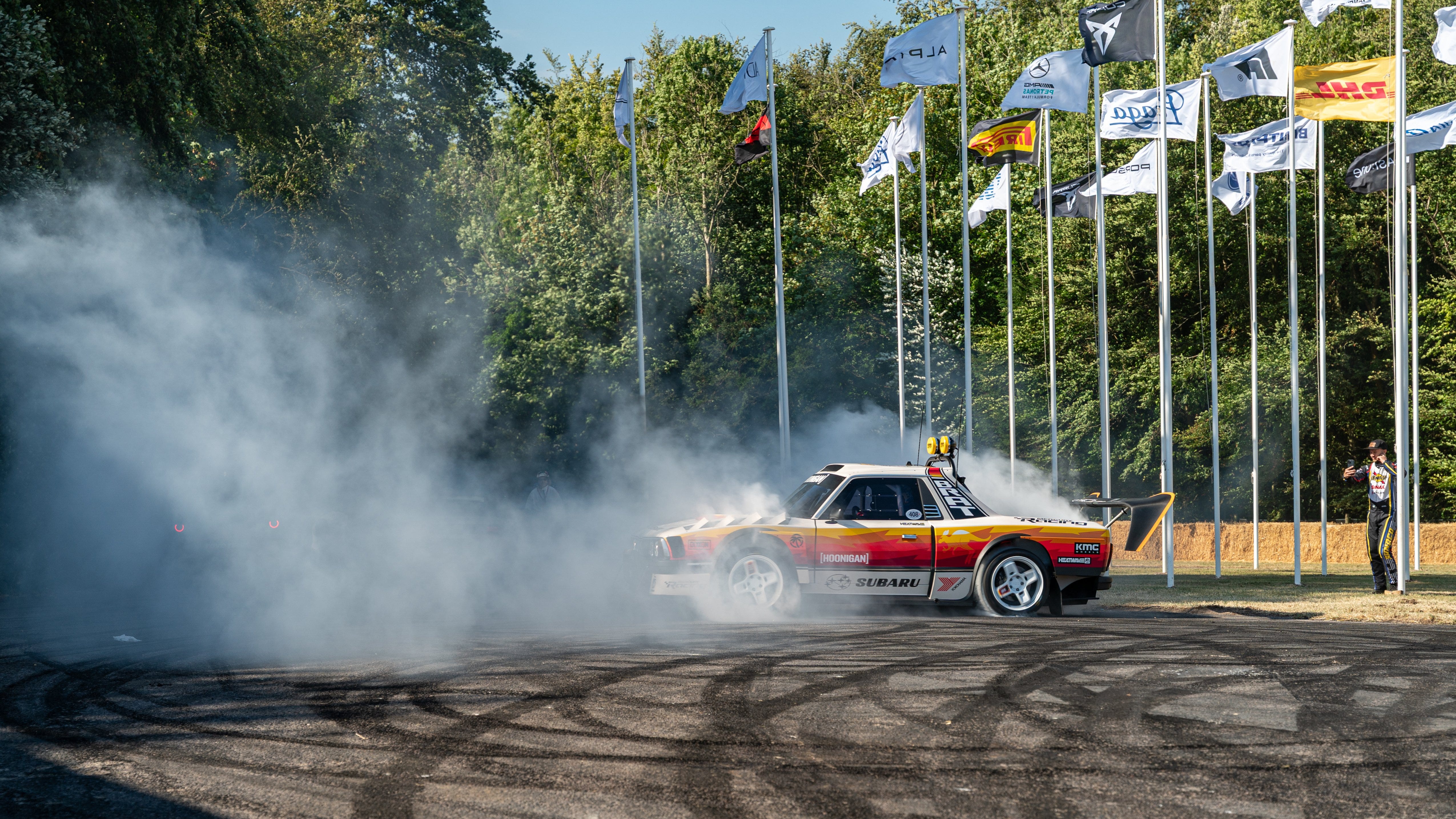
TP: This vehicle has about four percent more weight at the front compared to the Airslayer. That might not sound like much, but it changes the handling a lot. With the Airslayer, you’d pull the handbrake and it would rotate instantly. With the Brataroo, pulling the handbrake makes the front pull itself around, which helps with big drifts because it’s more predictable. However, that extra weight up front also brings a bit more understeer. I actually thought more front weight would improve turn-in, but instead, it made turn-in slightly tougher while making reverse-entry drifts easier to manage.
R&T: How are you improving the jumping capability with this build?
TP: None of these Gymkhana cars are designed specifically for jumping, but we always end up flying them anyway. With the Airslayer, I could use the handbrake to drop the nose mid-air and then deploy the rear wing to help it land smoothly—it was like piloting an aircraft. The Family Huckster had some aero features that flipped up at the rear, but we didn’t account for how much lift the front hood would create. When the front caught air, it would suck the nose downward, which made landings tricky.
We kept that in mind when designing the Brataroo. This one features active aero flaps on the front, allowing the hood to lift for downforce or flip for lift. We wanted the hood to serve a functional aerodynamic purpose rather than just being a hood.
R&T: The active aero components sound fascinating. How do they help, and how do you control them?
TP: We can now move the wings independently on either side to help with cornering and load distribution. For instance, in a left-hand turn with too much body roll, you can raise the wings on the inside to keep the car balanced and maintain grip on the front-left tyre, improving turn-in response. I control all this manually through levers—there’s no GPS automation yet, though that could be a cool addition in the future. Formula 1 cars already use similar systems, so it absolutely makes sense.
For the Flint Wall section, I retract the “Transformer” setup to make the car narrower. Yesterday, I activated it slightly early, and it started moving right as I was passing through, so I gave myself a bit more margin during the qualifying run.
R&T: Why did you choose the Subaru Brat as the base?
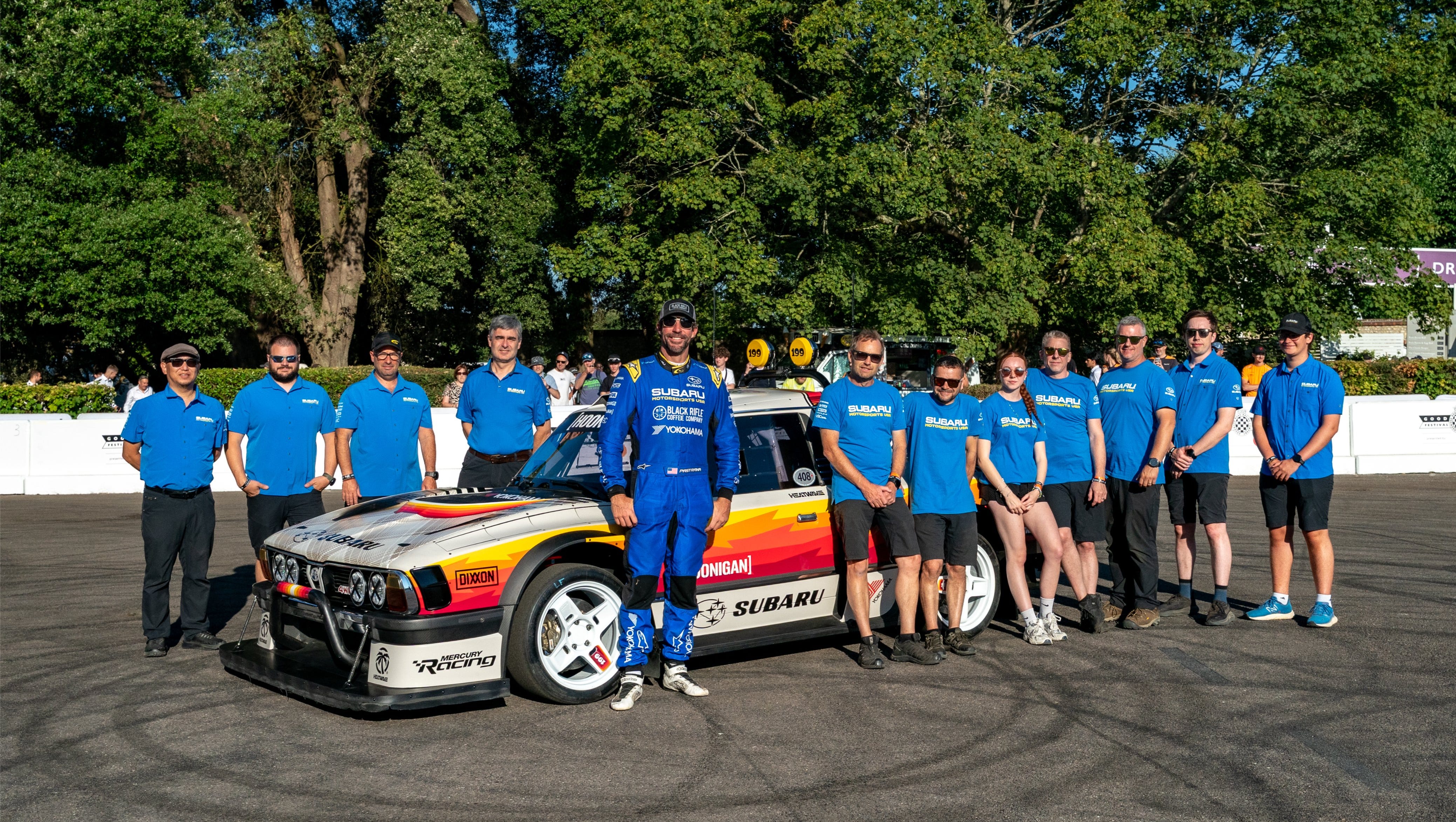
TP: When I first signed with Subaru back in 2004, I visited their headquarters and saw this mint red Subaru Brat with white stripes. I immediately thought, ‘Someday, I’m going to have one of these.’ I’ve always loved the rear seats in the bed—it’s such a fun design.
For my first Gymkhana, I asked for a Brat, but Subaru wanted to focus on the WRX to set new records, which made sense. For the second car, they said they weren’t really into building trucks anymore, so we went with the wagon, which turned out to be a huge success. By the time we got to the third one, Subaru said, ‘You’ve earned it. This time, you get the car you’ve always wanted.’ That meant a lot to me.
We also filmed in Australia, where the vehicle—known there as the Brumby—is quite popular.
R&T: How does Ken Block’s legacy live on through this build and the Gymkhana series?
TP: The biggest influence from Ken was the trust he gave me to carry the Gymkhana torch. He wanted to see if the series could continue with a different driver. He told me, ‘If your video gets more than 20 million views, you get three.’ We even planned a head-to-head Gymkhana showdown between us, which sadly never happened, but it was something we were both incredibly excited about. Ultimately, Ken wanted to pass the series down to his kids, Lia and Mika, who are both passionate about driving.
Ken always emphasised “close proximity with high risk”—driving near cliffs, trees, or buildings with precise control. He’d say, ‘A few jumps are fine, but don’t turn it into a full Nitro Circus show.’ He also believed in creating an ‘amazing build in an unbelievable location.’ So for us, the key elements are the car, the place, and the proximity. When building these machines, we aim to make something truly unique—something that looks spectacular and performs to the high standards Ken set for Gymkhana cars.