India and Japan have reached an agreement to expedite the Mumbai-Ahmedabad high-speed rail project. Before the completion of Japan's next-generation E10 Series Shinkansen trains, operations will commence with Indian high-speed trains. This decision reflects the shared commitment of both nations to launch India's first bullet train corridor as swiftly as possible, with construction progressing rapidly.
Japan has committed to providing its next-generation E10 Series Shinkansen trains by the early 2030s, once the model is fully developed and ready for use.
Meanwhile, the construction of the corridor is advancing quickly, with expectations that the first section will be operational by 2027. To facilitate early service, India and Japan have agreed to initiate operations on the initial segment using Indian high-speed trains until the E10 Series trains arrive. This arrangement aligns with their mutual goal of launching high-speed rail operations as soon as possible.
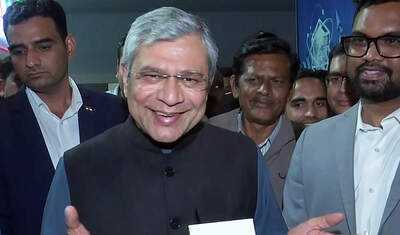
Union Rail Minister Ashwini Vaishnaw announced that India plans to commence the first phase of its bullet train service on August 15, 2027. The initial route will cover the 508-kilometer Mumbai-Ahmedabad high-speed rail (MAHSR) corridor, specifically the Surat-Bilimora section, with additional sections being opened in phases as construction progresses. Speaking at the HYSEA GCCS and IT Roundtable at the Novotel Hyderabad Convention Center, Vaishnaw stated that the Mumbai-Ahmedabad high-speed rail corridor will be launched in stages, starting with the Surat-Bilimora route. Subsequently, services will expand to Vapi, Ahmedabad, Thane, and ultimately cover the entire Mumbai-Ahmedabad route.
The minister noted that approximately 80% of the bullet train project is complete and expressed confidence that it will commence on schedule. Once the entire corridor is operational, trains are expected to travel at speeds of up to 320 kilometers per hour, significantly reducing travel time between the two cities to about 2 hours and 7 minutes. The project is primarily funded through an Official Development Assistance (ODA) loan from the Japan International Cooperation Agency (JICA), while Indian Railways will bear an additional cost of around ₹90,000 crores through gross budgetary support, with no plans for further funding from Japan.