Spain lifted the coveted trophy, signalling the close of Lionel Messi’s remarkable era, as FIFA emerged wealthier than ever. With record-breaking attendance, soaring television viewership, unprecedented ticket prices, and an increased commercial edge, the 2026 FIFA World Cup may go down as the tournament that permanently transformed football’s landscape.
Spain completed their mission.
Under Luis de la Fuente’s guidance, Spain overcame Argentina in a one-sided final that stretched into extra time before Ferran Torres netted the winner in the 106th minute, sealing La Furia Roja’s second FIFA World Cup title. Despite the narrow scoreline, the match was completely one-sided. Spain dominated with 20 shots to Argentina’s 3, commanded nearly 70% possession, and dictated the rhythm from start to finish.
This Spanish team defied simple description. Their football was often dazzling, yet it also carried a cold, mechanical precision. Every move seemed choreographed, each pass executed with mathematical efficiency. It was elegant and exact, but sometimes lacked the raw emotion and intensity that defined past champions. Having dismantled France in the semifinals and Argentina in the final with the same tactical formula, there was simply no need for deviation.
It is ironic that such a polished, streamlined team triumphed in a World Cup co-hosted by the United States, Mexico, and Canada. Spain’s brand of football mirrored the tournament’s consumer-friendly identity — efficient, marketable, and easy to celebrate — much like the commercial culture surrounding it.
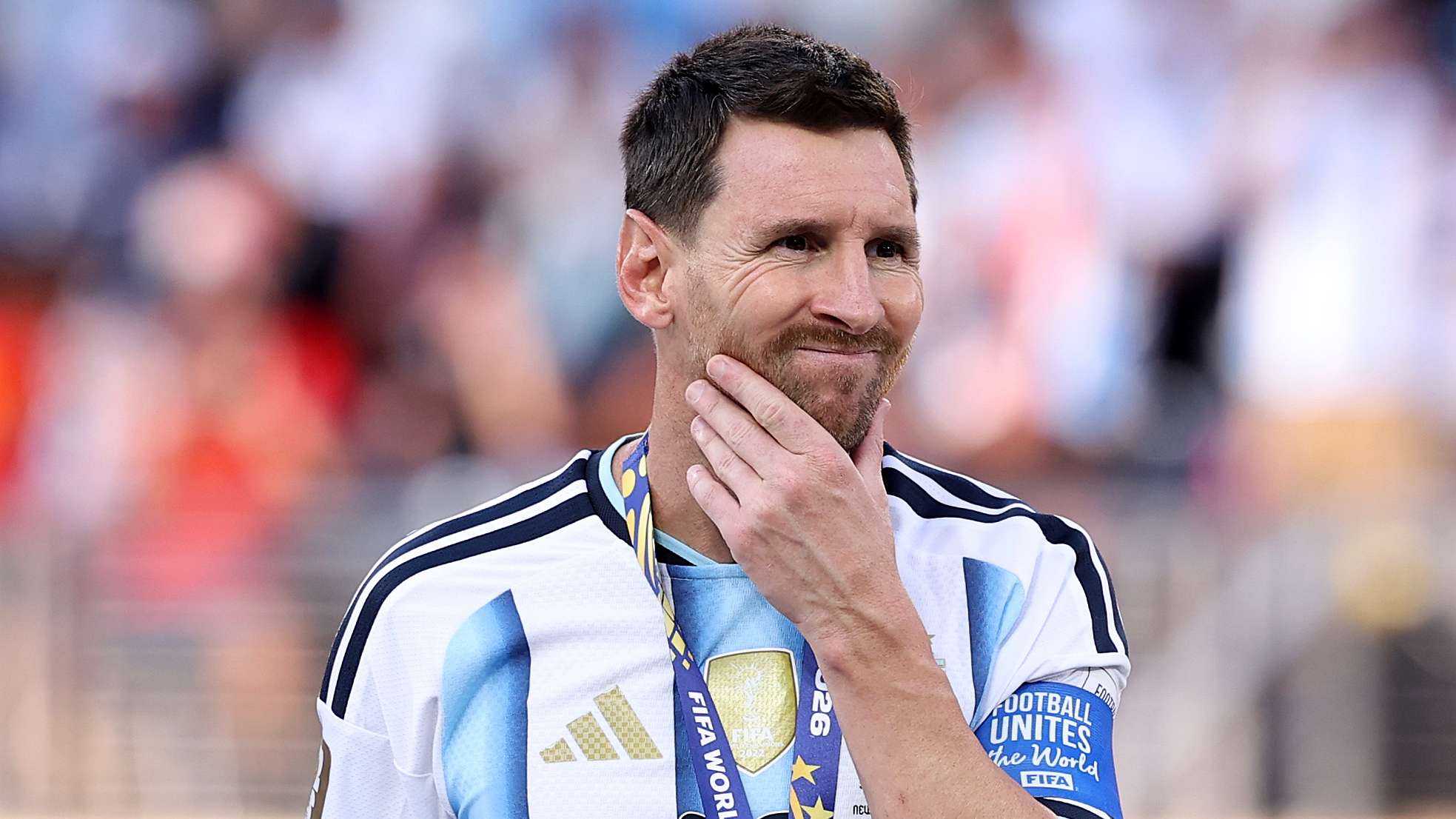
As Lionel Messi’s street football-inspired artistry fades into memory, a new era begins. Whether it proves better or worse remains uncertain, but one thing is clear: football has changed.
So, what legacy does the 2026 FIFA World Cup leave behind?
FIFA achieved nearly everything it set out to accomplish. From dynamic ticket pricing and record attendance to unprecedented television audiences and booming commercial revenue, the organization’s ambitions materialised fully. Despite scepticism over high ticket prices, the tournament’s success silenced its critics.
The event averaged 65,490 spectators per match, drawing over 6.81 million fans across venues in the United States, Canada, and Mexico — smashing the previous record of 3.59 million set in 1994. Stadiums operated at an astounding 99.7% capacity, making it one of the best-attended World Cups in history.
The final between Spain and Argentina became the most heavily bet-on football match ever, as fans flocked to capitalize on promotional betting offers.
Financially, the scale was even more striking. Reports suggest FIFA earned approximately $15 billion in revenue during the tournament.
The 32 participating nations will share $691 million in prize money. Spain will receive $50 million for their triumph, while the United States earned about $15 million for reaching the Round of 16.
FIFA’s coffers are overflowing once again, but the real question is how much of that wealth will reinvest into the sport itself.
The future of hydration breaks remains uncertain. While leagues like Major League Soccer have adopted them when needed — minus the overt commercialisation seen during the World Cup — experiments in Argentina and the Copa Libertadores were swiftly rejected by fans.
At the World Cup, these so-called hydration breaks often resembled three-minute television timeouts. They disrupted match flow and created extra advertising slots. Ironically, some of the loudest criticism came during U.S. games, where supporters expressed frustration at seeing promising attacks interrupted by compulsory ads.
FIFA has since admitted the policy was unpopular and pledged to review it. Yet with broadcasters reportedly earning over $1 billion in ad revenue during the tournament, it is clear where future priorities may lie. Whether FIFA maintains its stance once temperatures — and criticism — rise again at the 2030 World Cup remains to be seen.
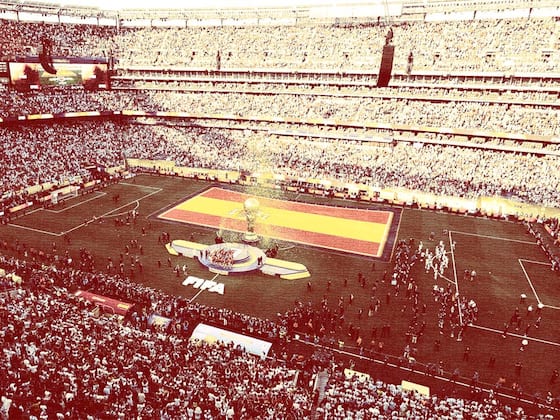
Another contentious innovation was FIFA’s attempt to transform the World Cup Final into an event akin to the Super Bowl. Traditionalists reacted with scepticism to the halftime show, but it symbolised the growing fusion of sport and entertainment. FIFA, once cautious about adopting Hollywood-style spectacle, now fully embraces the American model.
This trend has been clear throughout Gianni Infantino’s presidency. His vision has been to position football alongside mainstream entertainment, blending sport, music, celebrity culture, and social media in ways unseen in earlier FIFA regimes.
The result was a World Cup filled with celebrity appearances, influencer tie-ins, halftime performances, and corporate sponsorships. Cameos from figures like IShowSpeed, Tom Cruise, and Jason Sudeikis (as Ted Lasso) became part of the broadcast spectacle — at times entertaining, at times awkward.
Whether this represents progress or a distraction depends on perspective. For as long as Infantino remains in charge, this is the brand of football the world will see.
The 2030 FIFA World Cup, marking the tournament’s centenary, promises to be monumental on paper but increasingly complex in reality. Officially, there will be six host nations: Spain, Portugal, and Morocco as primary hosts, with Argentina, Uruguay, and Paraguay staging commemorative openers to honour the first World Cup held in Uruguay in 1930.
All six will qualify automatically.
Yet the biggest question surrounds FIFA’s proposal to expand the competition to 64 teams. With qualifying to begin in 2027, the organisation still has time to push through what would be the largest format change in history.
Such an expansion would not merely increase participation; it would further consolidate FIFA’s power and reinforce the status quo under Infantino.
Although he faces no immediate threat to his leadership, a quiet power struggle continues between FIFA and UEFA. Both understand football’s enormous commercial potential but envision divergent futures. FIFA seeks global expansion and revenue growth, while UEFA prefers preserving its elite competitions’ prestige.
Whether this rivalry produces a genuine challenger to Infantino — possibly UEFA President Aleksander Čeferin — remains uncertain. For now, the divide between the two football giants continues to widen.
Before debating whether a 64-team format would enhance quality, one must consider a more pressing issue: it risks making World Cup qualification largely irrelevant. The 48-team expansion already reduced much of the tension that defined qualifying, and a 64-team version could dilute it further. With new regional tournaments like the UEFA Nations League and CONCACAF Nations League taking prominence, international football is becoming fragmented, and many fixtures have lost their former weight.
Ironically, FIFA’s quest for expansion could undermine the very tradition that made the World Cup unique.
The 2026 tournament captivated millions, inspired new fans, and motivated young players worldwide. Yet whether it sparks a lasting football revolution remains to be seen.
In the United States, participation has never been the issue — football consistently ranks among the most popular youth sports. The real challenge is converting players into lifelong followers and regular viewers.
Television and media dynamics have shifted. Networks no longer spend freely on sports rights. Consolidation, mergers, shrinking cable audiences, and the rise of streaming have made broadcasters more cautious with investments.
Current audience figures reflect this reality. Liga MX, the UEFA Champions League, and the Premier League attract between 500,000 and 800,000 U.S. viewers per major broadcast. Major League Soccer’s reach remains difficult to measure with its Apple TV partnership, while La Liga often struggles to cross 100,000 viewers per game.
When compared to the NHL, football occupies a similar niche, with national broadcasts drawing between 450,000 and 650,000 viewers — respectable numbers, but still trailing the NBA and Major League Baseball by a wide margin. The NFL, meanwhile, remains unmatched.
Still, football’s growth is undeniable. Clubs are expanding, competitions proliferate, and fans enjoy unprecedented access. But growth alone does not equal cultural integration. Until the sport becomes embedded in America’s everyday sports dialogue — not just during major tournaments — it will remain an event-driven spectacle.
The onus now rests with Major League Soccer. The league has its best-ever chance to harness World Cup momentum. Its success will determine how much of the 2026 excitement carries into the next decade.
Football also faces a uniquely American challenge: convincing advertisers to invest heavily when Liga MX remains the country’s most-watched domestic league. Until that changes, securing full media support will be difficult.
From an American perspective, football has never been more prominent. The sport now features in national conversations involving icons like Mike Tyson, LeBron James, and Tom Brady. Celebrities attend matches, social media overflows with content during major events, and football has carved a niche in mainstream culture.
That alone marks remarkable progress. Yet football’s popularity in the U.S. remains volatile — surging during major events, then fading. The World Cup proved Americans will embrace the sport when the moment demands it. The challenge is sustaining that enthusiasm once the tournament ends.
Football cannot achieve that alone. Broadcasters, streaming services, and media outlets must treat it as more than a periodic spectacle. If the sport is only promoted every four years, it is no surprise that casual fans return just as rarely.
Building a genuine football culture requires sustained investment and long-term vision — qualities often absent in the modern media landscape.
Hollywood offers a parallel example: an industry once known for originality now relies heavily on sequels and reboots because they’re safer commercial bets. Sports media behaves similarly, often favouring proven properties over nurturing new ones. Despite football’s global dominance, it still needs that commitment in America.
What happens over the next four years depends largely on American media’s choices. Will they treat football as a fleeting summer attraction, or as a year-round sport deserving constant attention?
Major League Soccer holds the chance to build on the World Cup’s momentum, while FIFA must protect the tournament’s prestige instead of expanding it for profit’s sake. Both decisions will shape the game’s future.
Expanding to 64 teams might boost revenue, but it risks weakening football’s greatest tradition — the challenge of qualification itself. Diluting that journey could make the road to the finals as forgettable as the destination.
Football ruled the summer of 2026. But as always in the U.S., attention will shift — the NFL season will start, political dramas will unfold, and Hollywood will churn out new blockbusters. The cycle will continue, and football will once again fight for relevance in a crowded media world.
At the centre of it all stands FIFA — relentlessly reinventing in pursuit of profits and larger audiences, often at the expense of tradition and the everyday fan. The 2026 World Cup proved that such a strategy can succeed commercially. Whether it benefits football itself, however, is an entirely different question.
The answer may not come until 2030.