We may receive a commission on purchases made from links.
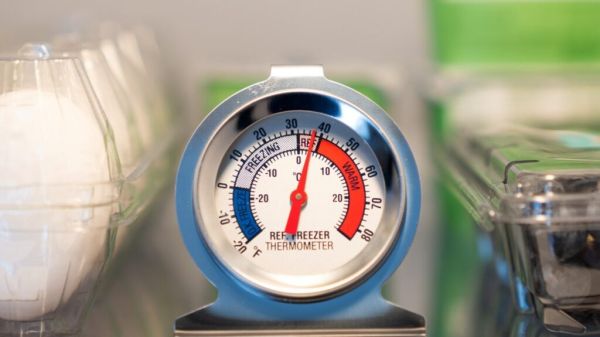
Official information regarding food safety from organizations like the United States Department of Agriculture (USDA) and the U.S. Food and Drug Administration (FDA) forms the basis of the “40-degree-rule for refrigerators.” The rule provides an easy way to remind people that 40 degrees Fahrenheit is the upper threshold of safe food storage temperatures inside their refrigerator.
While the FDA says that you should keep your fridge at 40 degrees Fahrenheit or below, it’s best to keep temperatures inside the refrigerator above the freezing mark. Experts, including Consumer Reportsagree that an internal refrigerator temperature around 37 degrees is ideal to curb the growth of harmful bacteria in stored foods, reduce the risks of damage caused by freezing, and limit electricity use.
Dialing in that perfect 37-degree setting inside your refrigerator can be difficult and often requires some trial and error. Many of the best-ranked major brand refrigerators offer models with digital controls that allow setting precise internal temperatures. Other models often use less reliable methods, like numbered dials, lighted bars, or snowflakes, requiring the user to consult the owner’s manual to determine which setting is colder versus warmer. Ultimately, these methods rarely correspond to a real temperature value.
How to follow the 40-degree rule for refrigerators
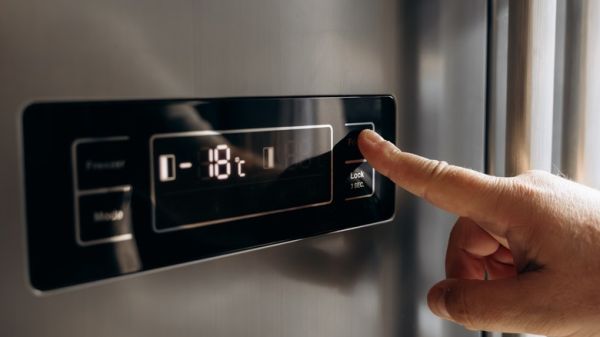
Whether your refrigerator has digital temperature controls or not, you shouldn’t simply set the temperature and hope for the best. The phrase “trust, but verify,” popularized by the late President Ronald Reagan, applies in this case.
A simple thermometer, found in a two-pack on Amazon for $7.99, is a cheap way to monitor the temperature inside your refrigerator and freezer. For consistent temperature monitoring, consider something like the GoveeLife WiFi refrigerator thermometer two-packpriced at $55.99 on Amazon at the time of writing. Both products are currently on sale, so their prices may change slightly over time.
Once you have the tools to monitor your refrigerator’s temperature, you’ll want to keep an eye on it periodically. Many of us keep our homes cooler in the winter and warmer during the summer months to lower our heating and cooling costs. Fluctuations in the ambient air temperature inside your home can affect the temperature inside your refrigerator.
Refrigerators kept outside of a climate-controlled area, even those that are considered “garage-ready”, can struggle to maintain safe internal temperatures in hot environments. They may also fail to protect their contents from freezing when external temperatures drop below 32 degrees Fahrenheit. In these situations, monitoring the refrigerator’s internal temperature is critical.
Tips for safe food storage
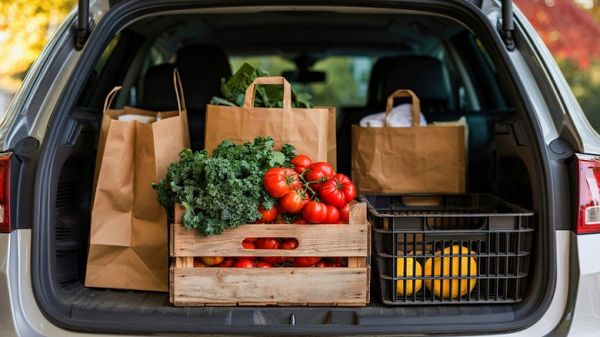
The FDA also has another rule for safe food storage, known as the “two-hour rule,” which relates to how long certain food items can be kept outside of the fridge. The two-hour timer applies to groceries, leftovers, restaurant take-out, and doggie bags, while marinated foods should always sit in the refrigerator. If any of the listed items must sit in the car or anywhere with temperatures above 90 degrees Fahrenheit, your time is cut in half to just one hour.
If you live far from your preferred grocery store, or you’re packing a picnic lunch for a road trip, you may consider incorporating an ice chest or cooler into your setup. It might even be worth switching to an electric cooler if you’d rather not have the hassle and potential mess associated with buying and using ice to keep your food cool.
Leftovers from home-cooked meals also fall under the 2-hour rule. However, refrigerating large quantities of hot food presents some special challenges. Placing a container filled with hot foods like soup, pasta, casseroles, or other dishes into your refrigerator can warm adjacent items to unsafe temperatures and leave the center of that container sitting in the danger zone for hours, even inside the fridge. While some people may attempt to cool their leftovers on a kitchen counter to combat that scenario, the FDA recommends dividing the leftovers into smaller containers and getting them into the refrigerator before the two-hour window closes.