
Loss of muscle mass in the body with increasing age is considered normal. Research says that after the age of 60, muscles start decreasing by 1 to 2 percent every year. But nowadays people start having this problem only after the age of 30. Scientifically it is called sarcopenia. Many researches have been done regarding this, in which it is said that those who have poor diet or have diabetes get affected by diseases like sarcopenia. When this happens, muscle loss is a major symptom, but there are many other health problems.
It has been seen that people assume that if their muscles are decreasing then it is because of increasing age. Whereas the story is different and most do not even know that they have sarcopenia. Let us tell you some interesting things related to this disease…
Sarcopenia… the problem of reduction or weakening of muscles which occurs with increasing age. This term was first used by Dr. Irwin Rosenberg in 1989. Sarcopenia was officially declared a disease in 2016. Ten years later, the Geriatric Society of India issued guidelines related to sarcopenia in India. Its objective was to enable people to detect muscle weakness early and start treatment early.
If we look at earlier figures, only 4 percent youngsters were its patients but gradually it has reached 35 percent. Experts say that there are many reasons for this, the biggest reason of which is diabetes. It is normal for it to happen with age, but the use of steroids in youngsters is also increasing the cases of sarcopenia.
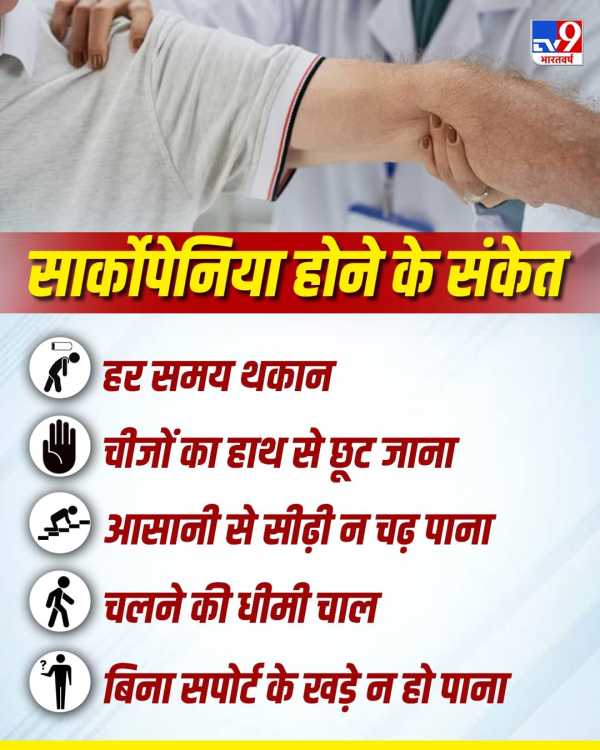
Talking about people with diabetes, sarcopenia starts occurring in type 1 and type 2. Insulin is an anabolic hormone which is used in the formation of muscles, fat and other tissues. In Type 1 people, when insulin starts decreasing, it is natural for the muscles to become weak or reduced. On the other hand, insulin resistance starts occurring in people with type 2 diabetes. In such a situation, this hormone is not able to work properly as it should. Experts say that due to this, catabolism starts increasing and this also damages the muscles.
Dr NK Soni (Senior Consultant & HOD, Internal Medicine & Diabetology, Yatharth Super Specialty Hospital) Says that diabetes can further increase this problem. When blood sugar remains high for a long time, it becomes difficult for the body to build new muscles and maintain them. The breakdown of muscles increases, the speed of formation of new muscles decreases, and sometimes the nerves that control the muscles are also affected.
Not taking protein properly- Dr. NK Soni says that the muscles in our body continuously break down and are also rebuilt. But to regenerate them, the body needs good quality protein every day. The problem is that most people are not able to get as much protein as their body needs from their daily diet. If this continues for a long time, it becomes difficult for the body to maintain muscles. Gradually the muscles start decreasing and strength also starts decreasing.
Sitting job is also the reason- Along with this, the lifestyle of most people nowadays is such that they work sitting for hours and do not do strength training or weight exercises at all. When muscles are used less, the body also gradually starts reducing them. Therefore, people may feel weakness, walking speed may decrease and muscles may appear thinner than before. This disease is called sarcopenia in medical science. Protein should be taken natural like pulses, sprouted gram, milk, cheese, eggs etc. Protein powder can also cause harm.
Keep these things in mind- Experts say that sarcopenia can be prevented to a great extent. If you take proper amount of protein daily, do regular strength training in the week, remain active and keep diabetes under control, then both your muscles and your strength can be maintained for a long time.