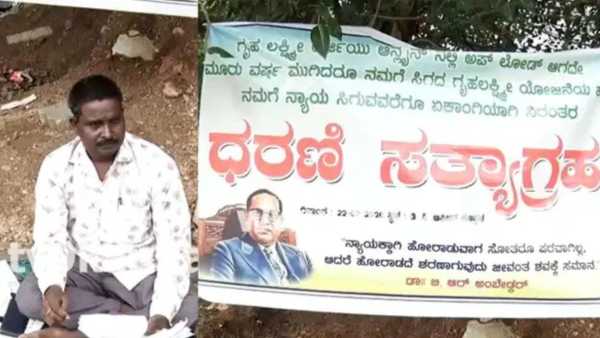
Karnataka News: A unique case has come to light in Koppal district of Karnataka regarding the state government's ambitious 'Grihalaxmi Yojana'. Angered by his wife not getting the scheme amount, a husband sat on a dharna alone in front of the district administration office. The protesting man alleges that despite continuous efforts for the last three years, his wife has not been able to get the benefits of the scheme. Even after applying several times, making rounds of officials and getting the technical flaws rectified, the problem was not resolved, due to which they got upset and took the path of protest.
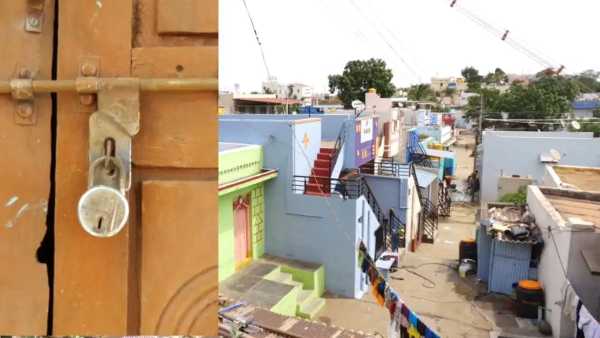
According to the information, Sharanappa Bhovi, a resident of Hablakatti village of Kushtagi taluka of Koppal district, has been trying for the last three years to get the benefits of Grihalakshmi Yojana to his wife Shilpa Bhovi. Shilpa Bhovi is working as a guest teacher in a government school. Sharanappa says that he applied online several times, but every time the application was pending citing some technical reason or the other.
Read this also- Murder of second husband along with first husband, killer wife hiding in disguise in 8 states; Both the accused were caught like this
Sharanappa alleges that the officials of the Women and Child Development Department did not release the amount of the scheme every time by making the excuse of technical glitch. So far he has spent around Rs 25,000 in the application process, correction of documents, online registration and repeated visits to government offices. Despite this, his wife could not get the benefit of the scheme.
Angered by the continuous neglect, Sharanappa has written a letter to the Chief Minister demanding his intervention in the entire matter. He also started protesting alone in front of the District Administration Building of Koppal. He says that he will continue to raise his voice until his wife gets the amount from the Grihalakshmi scheme.
This matter has now become a topic of discussion at the local level. Sharanappa says that the benefits of government welfare schemes should reach the needy on time. They allege that the common people are suffering the consequences of technical shortcomings and administrative negligence.