A response to Shashi Tharoor's The Indian Express Opinion, "Why an 850-seat Lok Sabha Threatens Indian Democracy" (30 July)
On 30 July, Congress MP Shashi Tharoor argued in The Indian Express that expanding the Lok Sabha to nearly 850 members after delimitation would weaken India's parliamentary democracy, reduce meaningful debate, and create an unwieldy legislature incapable of effective governance. His concerns deserve careful consideration because any structural change to Parliament must be debated seriously. However, his conclusions rest on assumptions that neither reflect India's constitutional obligations nor the realities of a rapidly evolving democracy.
At its core, the debate is not about whether Parliament should become larger. It is about whether India's democracy can continue to deny equal representation to millions of citizens simply because the country has changed while its electoral map has remained frozen for over five decades.
The principle of "one person, one vote" lies at the heart of every representative democracy. The Constitution envisaged periodic delimitation precisely to ensure that every Indian's vote carries roughly equal value. The freeze on parliamentary seats, first imposed to encourage population stabilisation, was never intended to become a permanent feature of Indian democracy. It was an exceptional measure adopted under exceptional circumstances.
India today is vastly different from the India of 1971. The population has more than doubled, urbanisation has accelerated, new economic centres have emerged, and citizens' expectations from their elected representatives have expanded enormously. Yet the composition of the Lok Sabha remains virtually unchanged. As a result, many Members of Parliament today represent constituencies exceeding two million people, making effective representation increasingly difficult.
Rather than weakening democracy, expanding the Lok Sabha restores its democratic legitimacy.
Mr. Tharoor argues that increasing the number of MPs will reduce opportunities for debate, with fewer members getting speaking time. This argument assumes that parliamentary effectiveness depends solely on speeches delivered inside the House. Modern legislatures, however, function very differently.
Across mature democracies, much of the serious legislative work occurs in committee rooms, expert consultations, policy research, constituency engagement, and digital scrutiny of legislation. Parliamentary committees examine bills clause by clause, summon experts, and hold governments accountable in ways that televised speeches often cannot.
The solution, therefore, is not to deny representation but to strengthen institutional mechanisms. India can expand the Lok Sabha while simultaneously reforming committee systems, improving research support for MPs, adopting digital legislative management, and modernising parliamentary procedures. Quantity and quality are not mutually exclusive.
A recurring criticism of delimitation is that it would politically disadvantage southern states that successfully controlled population growth while increasing representation for states in northern India. This concern deserves respect, but it should not become an argument against constitutional equality.
Delimitation is not a reward-and-punishment exercise. It is a constitutional mechanism designed to preserve equal representation. Every citizen, whether living in Kerala, Assam, Uttar Pradesh, Tamil Nadu or Gujarat, deserves comparable representation in the House of the People.
The challenge before policymakers is therefore not whether delimitation should occur but how it should be implemented while preserving India's cooperative federalism.
The BJP-led Union Government has repeatedly demonstrated its commitment to cooperative federalism through institutions such as the GST Council, increased capital investment in states, and regular consultations with state governments. Similar consensus-building can guide delimitation reforms through constitutional dialogue rather than political confrontation.
Mr. Tharoor also argues that a larger Parliament risks becoming an "echo chamber" that weakens scrutiny of the executive. Yet India's parliamentary history suggests that executive accountability depends far more on political culture, institutional rules, and committee oversight than on the numerical size of the House.
Even the present Lok Sabha has witnessed vigorous debates, lengthy discussions on major national issues, and intense committee work whenever parliamentary procedures have been effectively utilised. Strengthening accountability requires procedural reforms, not freezing democratic representation.
Indeed, technological advancements provide opportunities unavailable to earlier generations of legislators. Electronic document management, digital research services, artificial intelligence-assisted legislative drafting, and virtual committee interactions can substantially improve parliamentary efficiency regardless of House size.
The argument that expanding Parliament would merely increase public expenditure also fails to appreciate the broader democratic context. The additional cost of several hundred MPs is insignificant when compared to India's national budget or the long-term value of stronger democratic representation.
Democracy is not an expense to be minimised; it is an investment in legitimacy, accountability, and national cohesion.
India has never hesitated to build institutions that match its scale. It conducts the world's largest democratic elections, manages one of the largest digital identity systems, operates one of the fastest digital payment ecosystems, and administers governance across extraordinary diversity. Suggesting that India cannot efficiently manage a larger Parliament underestimates both its administrative capacity and democratic maturity.
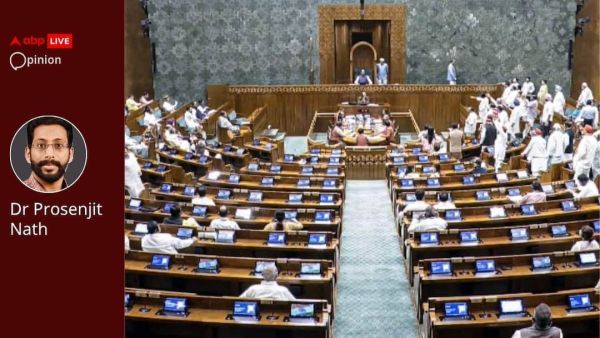
The inauguration of the new Parliament building further reflects this long-term vision. Designed with expanded seating capacity and modern legislative infrastructure, it recognises that India's democratic institutions must evolve alongside its demographic realities. The building was never merely an architectural project; it symbolises confidence in India's democratic future.
As India moves towards becoming a developed nation by 2047, governance structures designed for a population of the early 1970s cannot adequately serve a nation of more than 1.4 billion people. Representation must evolve alongside national transformation.
The BJP's vision of governance has consistently emphasised "Sabka Saath, Sabka Vikas, Sabka Vishwas, Sabka Prayas." These principles cannot remain meaningful unless every citizen enjoys fair and equitable democratic representation. Delimitation and the expansion of the Lok Sabha should therefore be viewed not as instruments of political advantage but as constitutional necessities that strengthen representative democracy.
Rather than fearing a larger Parliament, India should focus on building a better Parliament—one supported by stronger committees, modern technology, greater legislative research, and institutional reforms that enhance both efficiency and accountability.
Shashi Tharoor is right about one thing: India's democracy stands at an important constitutional moment. Where we differ is in our conclusion. Expanding the Lok Sabha does not threaten Indian democracy. Refusing to update democratic representation in a nation that has transformed so profoundly would pose the greater challenge.
A confident democracy does not freeze representation because change is difficult. It reforms institutions so that every citizen's voice continues to matter. An expanded Lok Sabha, accompanied by thoughtful parliamentary reforms and a spirit of cooperative federalism, is not a retreat from democracy; it is its natural evolution.
(The writer is a technocrat, political analyst, and author)