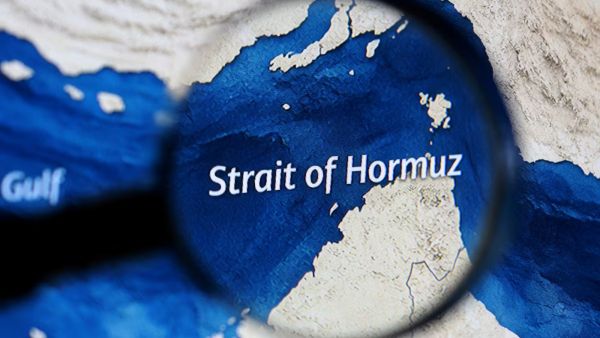
On the 46th day after the signing of the memorandum of understanding between Washington and Tehran, and 155 days after the outbreak of the war, Iran denied on Sunday, August 2, that it had agreed to reopen the Strait of Hormuz, contradicting US President Donald Trump’s claim that the outlines of a deal had been reached.
Iran’s IRGC-affiliated Fars News Agency, citing a source close to Tehran’s nuclear negotiating team, said there was no agreement to reopen the Strait of Hormuz.
The source said the strategic waterway would remain closed as long as the United States continued its “hostile actions”. Commercial vessels would only be permitted to transit through a designated route with authorisation from the Islamic Revolutionary Guard Corps (IRGC) Navy.

Fars also rejected Israeli media reports claiming that Foreign Minister Abbas Araghchi had accepted a US-Qatari proposal governing navigation through the strait, calling the reports “false”.
The denial came as Gulf leaders renewed calls for diplomacy to ease regional tensions, while Iranian officials issued fresh warnings of retaliation if the country came under attack.
Israel’s Channel 12, citing informed diplomats, reported that Araghchi had accepted a settlement proposal drafted by Qatari mediators on arrangements to reopen the Strait of Hormuz.
According to the report, vessels entering the Gulf through the strait would pass through Iranian territorial waters, while outbound ships would transit Omani territorial waters.
The report said Araghchi’s response was among the factors that prompted Trump to suspend a planned military strike on Iran. It added that Qatari mediators were continuing discussions with Tehran to secure the backing of the IRGC for the proposed arrangement.
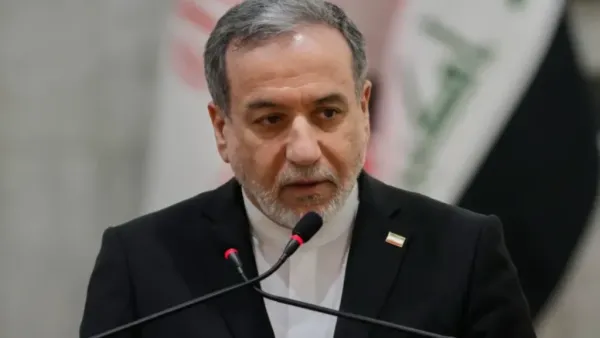
Qatari Prime Minister and Foreign Minister Sheikh Mohammed bin Abdulrahman Al Thani called for implementing the US-Iran memorandum of understanding, including guarantees for freedom of navigation through the Strait of Hormuz.
During separate telephone calls with Saudi Foreign Minister Prince Faisal bin Farhan and Jordanian Foreign Minister Ayman Safadi, Al Thani stressed dialogue and regional coordination to reduce tensions and preserve stability.
Saudi Crown Prince Mohammed bin Salman also urged diplomacy during a telephone conversation with Trump.
According to the Saudi Press Agency, the crown prince emphasised the need to prioritise dialogue, achieve a truce and prevent the region from sliding into a broader conflict. The leaders also reviewed bilateral cooperation.
Iranian media dismissed Trump’s assertion that Tehran had asked Washington to cancel the planned strike, describing the claim as a “new lie”.
The competing accounts from Washington and Tehran highlighted continuing disagreements over the status of negotiations.
Iran’s acting Defence Minister Majid Ebn Al-Reza warned that Tehran would neither remain passive nor be caught by surprise, saying any threat against the country was “real and significant”.
National security committee member Alaeddin Boroujerdi said Iran’s restraint was linked to the Arbaeen pilgrimage and warned that a “harsh response” would follow afterwards in response to recent US and Saudi strikes on Iran-backed groups in Iraq.
Lawmaker Hassan Ghashghavi said Iran would continue to control arrangements for passage through the Strait of Hormuz and accused Washington of pursuing diplomacy while simultaneously threatening military action.
Ebrahim Rezaei, a member of parliament’s National Security and Foreign Policy Commission, warned that any US attack would trigger retaliation extending beyond the Persian Gulf.
Two other lawmakers also called for retaliation against Israel and the United States over the killing of Supreme Leader Ali Khamenei, with one urging parliament to formally authorise military action.
Israeli Army Radio, citing Energy Minister Eli Cohen, reported that Iran had been deterred and had attacked countries across the region except Israel.
Cohen claimed Tehran was avoiding direct military action against Israel because of Israel’s deterrence capabilities and the threat of retaliation. He added that Israel would continue to prioritise its security and was prepared to act whenever necessary, even without coordination with the United States.
Hardline Iranian lawmaker Mahmoud Nabavian claimed around 600 US military personnel had been killed during the conflict with Iran, alleging Washington was concealing the actual death toll.
The claim has not been independently verified.
US Secretary of State Marco Rubio said Iran must face a “much higher price” for attempting to export its revolution, arguing that sustained pressure was the only way to change Tehran’s behaviour.
Speaking to Fox News, Rubio claimed recent US strikes had significantly weakened Iran’s conventional military capabilities, while acknowledging that Iran still possessed missiles and drones capable of causing damage.
Government spokesperson Fatemeh Mohajerani said state broadcaster IRIB should return to promoting national unity following criticism of its coverage of senior officials’ remarks.
She added that the government would continue using other media platforms to communicate with the public.