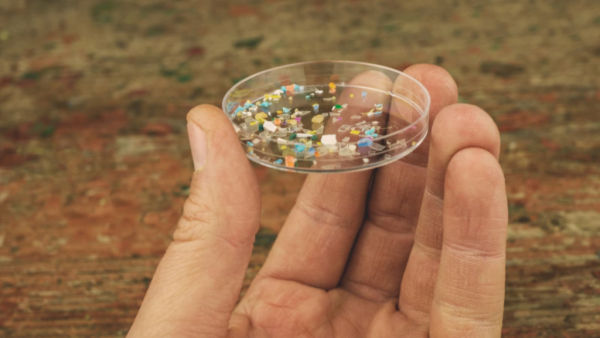
Microplastics have become one of the biggest food safety concerns in recent years. They have been found in drinking water, seafood, fruits, vegetables, salt, honey, tea, rice, meat, and even the air we breathe. Scientists have also detected them in human blood, lungs, the placenta, and arteries.
So, should you be worried? Well, scientists know we are exposed to microplastics. They are still trying to understand exactly what that means for our health.
Microplastics are tiny pieces of plastic that are smaller than 5 millimetres. Some are manufactured that way, but most come from larger plastic products, like bottles, food containers, packaging and synthetic fabrics, that slowly break down over time.
There are also nanoplastics, which are even smaller. These are so tiny that they cannot be seen with the naked eye and are believed to be able to travel deeper into the human body.
Almost every stage of the food chain can introduce microplastics.
They can enter food through polluted soil where fruits and vegetables are grown, rivers and oceans, where fish and shellfish ingest plastic particles, plastic food packaging, food processing and transportation, or airborne plastic dust settling on food while it is being prepared or stored.
According to the US Food and Drug Administration (FDA), microplastics have been found in many different foods. However, simply detecting them does not automatically mean they are causing harm.
Photo: Canva
According to the World Health Organization (WHO), many larger microplastic particles are likely to pass through the digestive system and leave the body through waste.
The concern is with the smallest particles, especially nanoplastics. Researchers believe these may be able to cross biological barriers and enter different tissues.
The United Nations Environment Programme (UNEP) says microplastics are now found almost everywhere, in oceans, rivers, soil, air and the food chain. That means avoiding them completely is nearly impossible.
However, there are some simple ways to reduce your exposure.
Until the true repercussions of microplastics in the human body are determined, experts recommend staying informed, reducing unnecessary exposure where you can, and follow simple habits.