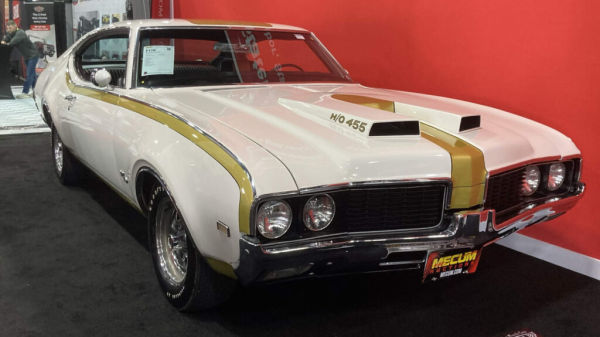
If you’ve been around old body-on-frame cars long enough, you’ve likely heard terms like “A-body” or “B-body” or any other letter of the alphabet followed by “body,” and unless you’re well-versed in your classic cars, it can get confusing fast. This only ramps up when you have multiple of the same letter “bodies” used by the same manufacturer, as is the case with the GM A-body. Which one is it? The 1964 one with the GTO? The pre-1960 A-body used on the Bel-Air, Nomad, and so on? Or the 1982-1996 A-body that had virtually nothing in common with the others?
It’s this latter frame that we’ll be addressing, because this is actually where it gets confusing. Back in the late-1970s, GM and its competitors were all pressed to develop ever-more efficient vehicles to comply with stricter government regulations, creating the X-frame chassis. The CliffsNotes history is that these were built in response to the rise of imports, which GM embraced readily — see the 80-series Toyota Corolla posing as a Chevrolet Nova, for example.
So GM had this FWD econobox platform, but what about the traditional RWD stuff? That’s where the G-body came in. This new G-body is a continuation of a premium-model A-body from the mid-70s, also called G-body; ostensibly the same platform, just updated to 1980s standards. In other words, think of the G-body as the continuation of your RWD muscle cars — Monte Carlo, Grand National, etc. The A-body, meanwhile, were those compact FWD cars built to sell by the pound. Still confused? Alright, let’s dive in and explore each platform’s individual history in detail.
History of the A-body
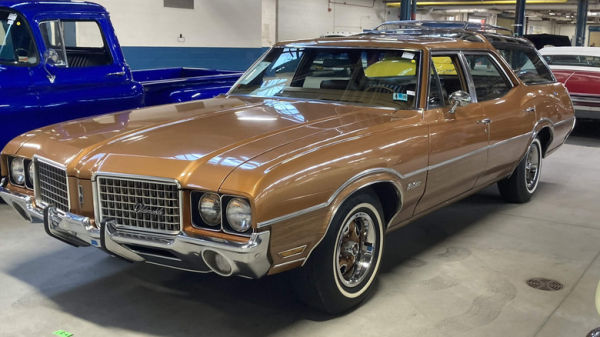
The GM A-body used to be the quintessential intermediate chassis associated with GM products during the 1950s through the 1970s, albeit in different iterations. These were your average front-engine, rear-wheel drive cars built for the mass-market, housing everything from more pedestrian Oldmobile Vista Cruisers and Buick Specials up to Chevrolet Chevelles and Pontiac GTOs. The A-body quickly became the face of the Muscle Car Era. If you ask the average person to name a generic muscle car, it’s likely they’ll name an A-body — a Chevelle SS 454, an Olds 4-4-2, a Buick Gran Sport, and many other memorable models.
The platform underwent several major revisions over its initial run, culminating in the 1973 redesign that marked the beginning of the Malaise Era. GM called it the Colonnade, referring to its three-pillar configuration with A, B, and C-pillars. However, the Malaise Era wasn’t kind on muscle cars of this vintage. They were beautiful, sure, but the automotive zeitgeist was quickly going to Japanese compacts in the face of crushing oil prices. Enter the X-body, the late-1970s predecessor to the new A-body. Designed for fuel efficiency, these were compact, frankly flimsy automobiles that really needed more time in the oven.
Further development lengthened and refined these early designs into their final iteration, GM’s last A-platform, introduced in 1982. These included midsize offerings from all the major brands, with similarly-varied lengths to accommodate coupes to wagons. Basically, 1982 A-bodies were FWD intermediates, as opposed to 1964 A-bodies, which were RWD intermediates. Same principle, different eras.
G-body enters the chat
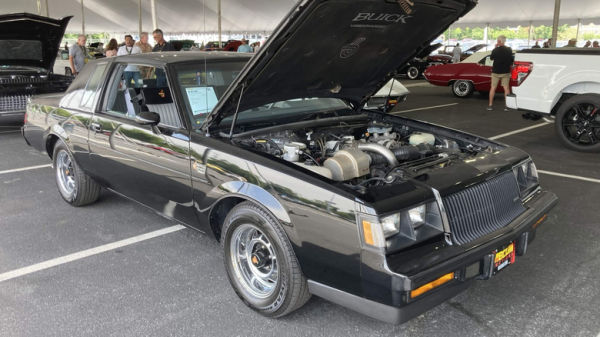
You have all these cool cars from the 1970s, but the Malaise Era hit them like a truck. You still have to make money, so you chase the trend of fuel efficiency, but you still had a loyal fanbase of customers who desired those personal luxury cars and muscle cars. That’s where the G-body earned its reputation.
The G-body shared many underpinnings with the RWD A-body from this timeframe, just with a longer wheelbase and more premium models. That all changed when GM started developing the FWD platform and the A-body veered to the left. The G-body went the opposite direction, remaining RWD throughout its lineup, and arguably features some of the most iconic cars of its era. The Buick Grand National and GNX, the Chevrolet Monte Carlo, the Oldsmobile Cutlass Supreme — these were your typical G-body cars. Handsome, svelte, and thoroughly outdated by the late-1980s.
Yes, there was the 1987 Buick GNX, which was frankly stupidly-fast accelerating, but Buick only made 547 of them. There were far more slow, lazy Monte Carlos available at the dealership, which didn’t stop the public from eating them up. These cars sold by the millions, and the robust platform was practically made for modification. These days, you’re hard-pressed to find a car meet without some classic G-bodies with 327 swaps or lowrider builds. Every GM brand except Cadillac got at least one as well — the Monte Carlo and El Camino, the Buick Regal, and even the GMC Caballero, to name a few iconic G-bodies.