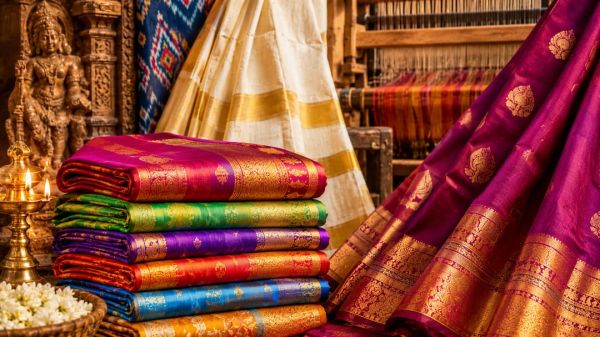
South Indian sarees reflect the variety of India’s handloom heritage, with each region bringing its own fabric, weaving method, colours and motifs. Tamil Nadu is known for rich silk traditions, Kerala for understated Kasavu, Karnataka for smooth Mysore silk, while Andhra Pradesh and Telangana are celebrated for distinctive weaving and dyeing techniques. These sarees remain closely linked with weddings, festivals, temple traditions and special occasions, while many styles have also found a place in everyday wardrobes. From the structured grandeur of Kanjivaram to the graphic appeal of Pochampally Ikat, here are some distinctive South Indian saree styles worth knowing today.
Kanjivaram, or Kanchipuram silk, is among the most recognisable sarees from South India. Traditionally woven in Tamil Nadu, it is known for mulberry silk, rich zari work, bold colours and clearly defined borders. Its firm texture and substantial drape make it a popular choice for bridal wear, weddings and major celebrations.
Koorai sarees have a strong connection with Tamil wedding traditions. Traditionally associated with ceremonial dressing, they are known for vibrant colours and silk fabric. The nine-yard version has particular significance in some Tamil communities, making the saree as much a part of wedding customs as it is a piece of clothing.
Konrad sarees are recognised for their woven checks, stripes and broad borders. Traditionally associated with Tamil Nadu, they offer a relatively understated alternative to elaborate bridal silks. Their structured designs and traditional motifs make them suitable for festive occasions and cultural functions.
Mysore silk from Karnataka is valued for its smooth finish, lightweight feel and neat drape. The fabric often has a subtle sheen, complemented by a simple gold zari border. Compared with heavier wedding silks, Mysore silk is easier to carry and works well for both formal and festive occasions.
The Kasavu saree is one of Kerala’s most recognisable traditional garments. Its cream or off-white base, paired with a gold-toned border, gives it a clean and understated appearance. It is particularly associated with Onam, weddings and other traditional occasions.
Pochampally Ikat from Telangana is known for its striking geometric patterns. The characteristic designs are produced through a resist-dyeing process in which yarns are dyed before they are woven. The resulting checks, diamonds and other patterns give these sarees a distinctive contemporary appeal.
Gadwal sarees traditionally combine a lighter cotton body with richer silk elements in the border and pallu. This construction gives them a practical balance of comfort and festive detailing. Zari work and traditional motifs add to their appeal, particularly for celebrations and religious occasions.
Narayanpet sarees are known for their checks, stripes and temple-inspired borders. They are produced in both cotton and silk varieties, depending on the style. Their relatively easy drape and simple patterns make them suitable for women looking for traditional handloom wear without the weight of elaborate silk sarees.
Uppada silk from Andhra Pradesh is known for its lightweight texture and intricate weaving. Many designs feature floral, geometric and peacock-inspired motifs. Its soft drape makes it a popular choice for festive dressing, especially for those who prefer silk that feels elegant without being excessively heavy.
Dharmavaram silk is associated with rich colours, broad borders and elaborate pallus. Originating in Andhra Pradesh, these sarees are especially popular for weddings and ceremonial occasions. Their heavier appearance and detailed weaving give them a distinctly grand look.
Kalamkari sarees stand apart from woven silk styles because of their artistic surface designs. Traditionally associated with Andhra Pradesh, Kalamkari uses hand-painted or block-printed motifs inspired by nature, flowers, mythology and traditional storytelling. Each design can give the saree a distinctly handcrafted character.
The Sado saree has a distinctive place in Mangalorean Catholic bridal traditions. Usually associated with red silk and wedding celebrations, it reflects the way regional communities have developed their own saree traditions around religious and cultural customs. Its ceremonial use makes it particularly significant within the community.
South Indian sarees offer a wide range of choices, from heavyweight bridal silks to lightweight handlooms and artistic prints. Kanjivaram, Kasavu, Mysore silk, Pochampally Ikat, Uppada, and other regional styles each carry distinct weaving traditions. Their continued popularity shows how traditional Indian textiles can remain relevant across generations while retaining their regional identity.