Few things are as refreshing as a cold slice of watermelon on a hot day, but a good-looking melon does not always taste as sweet as expected. According to seasonal buying guides from Simply Recipesseveral clues on the outside can reveal what the fruit is like inside.
Jordan Carter, head of sales and marketing at Georgia-based family farm Leger and Son, says shoppers can judge a watermelon’s ripeness and quality by paying attention to a few simple characteristics.
|
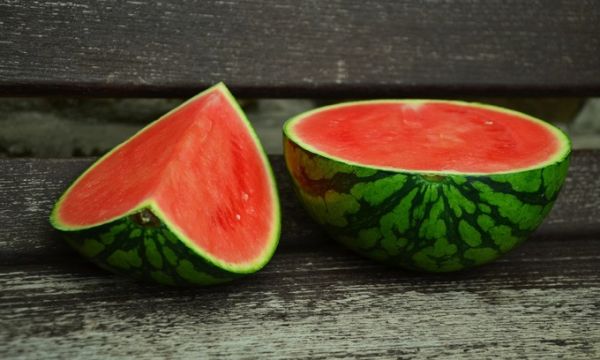
Watermelon is about 92% water, so extra weight is generally a sign that the fruit contains plenty of juice. Illustration from Pexels |
Check the field spot
One of the clearest signs of ripeness is the field spot, the patch on the underside of the watermelon where it rested on the ground while growing.
Carter says a ripe watermelon should have a slightly dull appearance and a creamy yellow patch on its underside, according to The Pioneer Woman.
Registered dietitian Lauren Manaker similarly recommends looking for a “buttery yellow” field spot. A white or pale green patch can indicate that the melon was picked too early and may lack sweetness.
Pick a heavy melon
When comparing watermelons of roughly the same size, choose the one that feels heavier. Watermelon is about 92% water, so extra weight is generally a sign that the fruit contains plenty of juice, Manaker told U.S. food and cooking website Delish. A melon that feels unusually light may have begun drying out inside.
Give it a tap
The familiar practice of tapping a watermelon can also offer clues about its ripeness, according to The Kitchn.
Carter says a ripe watermelon should produce a deep, hollow sound. A higher-pitched ringing sound may suggest that it is underripe, while a dull thud can indicate that the fruit has become overripe.
Inspect the rind
Another traditional test is to lightly scratch the rind with a fingernail. On a ripe watermelon, the outer layer should come away relatively easily and reveal a pale greenish-white layer underneath. An underripe fruit is more likely to show only a dark groove or indentation, according to Ohio State University’s College of Food, Agricultural, and Environmental Sciences.
Shoppers should also avoid melons with deep cuts, bruises or punctures, which can affect the flesh inside, Manaker says. Small superficial scratches, however, are generally not a concern.