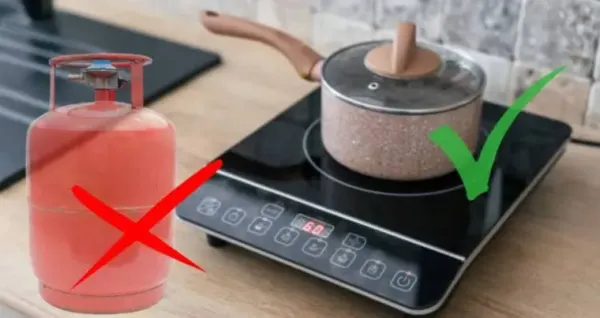
Amidst the ongoing instability in the international energy market, the Central Government is preparing to promote induction stoves on a large scale to reduce the import and increasing subsidy burden of LPG.
Business News: The central government is considering a plan to promote electric induction stoves on a large scale amid increasing uncertainty in the international energy market and efforts to reduce India’s dependence on imported cooking gas. Under the proposed initiative, steps like providing subsidy to consumers on purchase of induction stoves, reducing the cost of appliances and strengthening the power distribution infrastructure are being considered.
The objective of the scheme is to reduce the dependence on LPG cylinders for cooking in the country and to develop electric cooking as an affordable option. However, the final government announcement and detailed plan regarding this proposal is awaited.
Why increased need to promote induction stoves?
India is among the major LPG consumer and importer countries of the world. A large part of the demand for LPG in the country is met by imports. Fluctuations in the prices of crude oil and gas in the international market have a direct impact on India’s energy cost and LPG subsidy. According to the report, India’s annual LPG demand is about 33 million tonnes, of which about 65 percent of the requirement is met by imports. The bulk of imported supplies come from West Asian countries.
In such a situation, global geopolitical tension or any disruption in energy supply can affect India’s domestic LPG system and prices. To reduce this risk, electric cooking is being seen as an alternative solution.
Subsidy can be available on induction stove
The national plan that the government is considering may include several important provisions. Under the proposed model, there is a possibility of giving direct subsidy on the purchase of induction stove. Apart from this, changes in import duty on manufacturing of induction equipment or key components to them can also be considered. The aim could be to reduce the price of devices and make them accessible to more families.
However, the plan is still said to be in the discussion stage. Therefore, important information like subsidy amount, eligibility and number of beneficiaries will become clear only after the official announcement.
Target to reduce LPG dependence of 34 crore consumers
A large number of families in the country use LPG cylinders for cooking. Through the proposed scheme, work can be done to provide an alternative option to about 34 crore LPG consumers by promoting electric cooking. Policy makers believe that if more households adopt electric appliances like induction, the pressure on imported LPG could be reduced.
Another advantage of this is also seen in the form of increased diversity in energy sources. In the future, as the share of renewable energy in domestic electricity generation increases, electric cooking can also be developed as a relatively cleaner option.
How much cheaper can induction be compared to LPG?
Cost is also a major reason behind the promotion of induction cooking. According to available estimates, the cost of cooking on an induction stove can be reduced by about 33 percent compared to a conventional LPG stove. However, the actual expenditure will depend on many factors. These include local electricity rates, LPG cylinder price, subsidies, family electricity consumption and cooking habits. That means, the savings of induction will not be the same for every state and every family. In areas where electricity rates are high, the cost difference may be less.
Increasing financial pressure of LPG subsidy
The rise in international energy prices may also impact the financial burden of the government and oil marketing companies. According to the report, concerns over increasing under-recovery on domestic LPG cylinders have come to light. A provision of about Rs 30,000 crore has been made for petroleum and LPG subsidy in the budget for the financial year 2026-27. If international prices remain high for a long time, real subsidy outlays may increase.
In view of this financial pressure, the government is considering long-term options. Promoting induction cooking could not just be an effort to reduce costs for consumers, but also part of a broader strategy to control the country’s energy import dependence and subsidy burden.