Ripple (XRP) CEO Brad Garlinghouse has dismissed the growing narrative that artificial intelligence (AI) is behind corporate job cuts. He said that companies attributing layoffs to AI may simply be using the technology to hide their already “bloated” workforces, even as his own firm is set to more than double revenue this year and is still hiring.
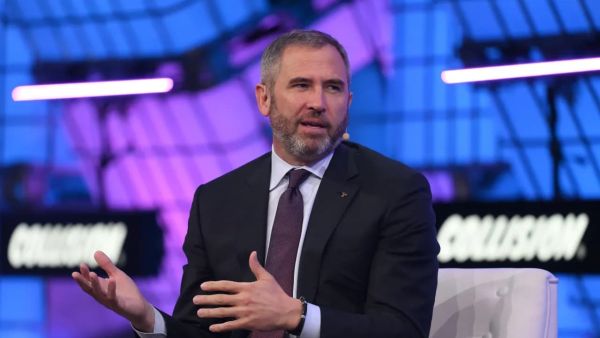
Speaking at the SALT Wyoming 2026, published on Friday, Garlinghouse said AI should be an "enabler and an accelerant" for companies that are growing and gaining market share, rather than a justification for layoffs. "When I see companies announce big layoffs and they say, 'Oh, well, AI,' that to me says they were bloated before and they are using this as an excuse," Garlinghouse said.
He pointed to layoffs at companies including Block (XYZ), saying that workforce reduction should not necessarily be attributed to AI. In contrast, Ripple expects to have approximately 1,500 employees worldwide and 150 open positions. Adding that Ripple intends to continue with its hiring process as its business grows.
Further, Garlinghouse said Ripple is on track for a record year and expects to double its revenue year over year, despite the broader bear market across the crypto industry. Garlinghouse argued that companies with businesses dependent only on retail crypto trading were more vulnerable to market downturns, while institutional adoption could prove more resilient — a structured Ripple followed with its RLUSD stablecoin, partnering with major Wall Street corporations like BlackRock (BLK) and BNY Mellon (BNY), to name a few.
Garlinghouse also said the hype around agentic payments may be ahead of reality, arguing that corporate treasurers are unlikely to give AI agents unrestricted access to major company accounts without significant safeguards and accountability measures.
The CEO also chimed in on the clarity act, stating that while Ripple has already gotten what he referred to as legal clarity around XRP after its year-long battle with the Securities and Exchange Commission (SEC), the crypto industry needs a comprehensive regulatory framework in the U.S. He added that a federal judge has ruled that XRP "in and of itself" is not a security, but argued that the broader industry still needs clearer rules.
“Crypto was anti-regulation, which is the exact opposite,” he said, rejecting the idea that the industry wants to operate in a regulatory “Wild West”. Adding on to it, Garlinghouse says that Ripple holds about 75 licenses globally and said that the company had aggressively supported the Clarity Act because regulatory clarity was needed for the entire industry. “I really do think we have to not let perfection be the enemy of good,” said the CEO, arguing that the bill previously moving through Congress was positive and had not materially changed.
His remarks come as the contested Clarity Act remains a politically divisive issue in Washington. The bill is intended to establish a federal regulatory framework for digital assets, but its prospects have been clouded by disagreements over ethics provisions and other safeguards. A procedural vote in the Senate is expected to be on September 15.
XRP’s price was trading at around $1.39, up 0.8% in the last 24 hours. On Stocktwits, retail sentiment around XRP dropped to ‘neutral’ from the ‘bullish’ zone, while chatter dropped to ‘normal’ from ‘high’ levels over the past day.
Read also: 'Big Short' Steve Eisman Warns AI Trade Hinges On OpenAI, Anthropic: 'The Whole Tech Space Sells Off' If Spending Slows
For updates and corrections, email newsroom[at]stocktwits[dot]com.<