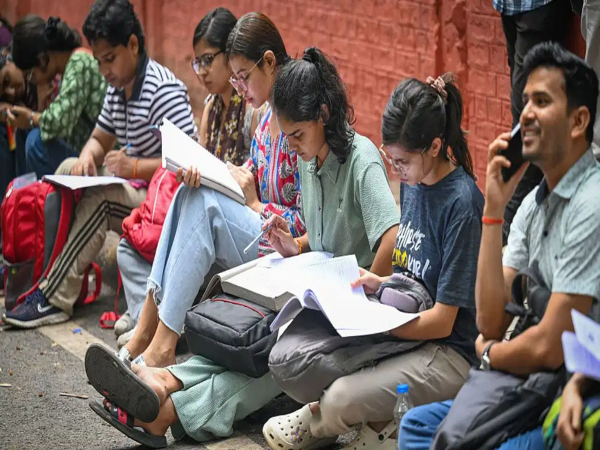
Artificial Intelligence (AI) is making inroads into every sector today, and UPSC preparation is no exception. While many aspirants are eager to know how AI can make their preparation easier and more efficient, others worry whether AI might eventually render Indian Administrative Service (IAS) officers obsolete. The answer to this question lies in the fundamental objective of the UPSC examination: it tests decision-making ability rather than mere information retention.
AI can provide a vast repository of information. If you ask about the causes of poverty in India, an explanation of climate change, or details regarding Article 21 of the Constitution, AI will instantly provide accurate information. However, an IAS officer often faces situations where information is incomplete, making human judgment paramount. For instance, in a flood-affected district with limited resources, whom should one rescue first—a school full of children or a village inhabited by the elderly? This is not a question for a search engine; it is a matter of human empathy, ethics, and on-the-spot decision-making—capabilities AI lacks. Not every administrative problem has a solution found in textbooks; once appointed as a District Magistrate (DM), one will encounter numerous uncertain situations requiring immediate and effective decisions.
Ways to Use AI Smartly in UPSC Preparation
There are several ways to utilize AI wisely during your preparation. If you struggle to understand a chapter from Laxmikanth, AI can explain it in simple language. You can use AI to gather background information on topics like the WTO mentioned in newspapers. It can assist in structuring answers for the Main examination, finding quotes for essays, and simplifying complex concepts in optional subjects. AI can also help generate revision questions, flashcards, and mind maps, or even review your study schedules. Additionally, it can suggest acronyms and learning techniques to boost memory retention.
The Pitfalls of Rote Learning AI-Generated Answers
However, aspirants should avoid one major mistake. Simply getting AI to write the entire answer and then rote-learning it amounts to merely gathering information rather than internalizing it. UPSC examiners do not look for AI-generated answers; instead, they evaluate the candidate's own understanding, ability to connect issues, use of examples, and the art of crafting a conclusion.
**Human qualities will become even more important in the age of AI**
In the era of AI, the significance of IAS officers will not diminish; rather, it will increase. While information is available to everyone, the real differentiator is the quality of decision-making. AI lacks human skills such as empathy, leadership, and the ability to win people's trust. During communal tension, AI can provide data, but establishing trust among the people is a task only an officer can perform. In a drought situation, AI can show rainfall trends, but the administration must decide which village should receive water tankers first. Technology may change the tools, but not the fundamental essence of public service—and UPSC tests precisely those human qualities.
**Increasing use of AI in the UPSC examination process**
It is also worth noting that UPSC itself is utilizing AI to make the examination process more efficient and impartial, whether through facial recognition or the evaluation of Main examination answers. AI is also proving to be a great equalizer. Whether you are in a village or a city, AI can act as a 24/7 mentor and companion. You no longer need to waste time flipping through old monthly magazines or searching for past years' questions; AI can make all of this instantly available.
**Make AI an aid, not a substitute for your own thinking**
In short, AI can revolutionize UPSC preparation, making it more accessible and efficient. However, its most critical limitation must always be kept in mind: AI can provide information, but it cannot make decisions. Developing your own decision-making ability, critical thinking, and human qualities is the key to success. Use AI as a tool, but do not let it replace your own thought process.
Disclaimer: This content has been sourced and edited from TV9. While we have made modifications for clarity and presentation, the original content belongs to its respective authors and website. We do not claim ownership of the content.