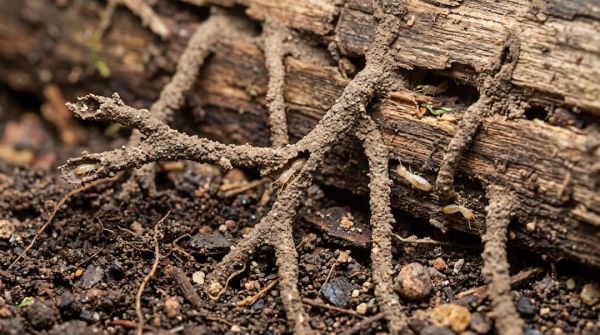
If mud or soil suddenly starts falling from a wall, don't immediately dismiss it as old plaster or dampness. Fine, mud-like debris can sometimes indicate termites hiding inside the house. Thin mud lines, tunnel-like structures or mud accumulating around wooden surfaces deserve attention. However, falling soil does not always mean a termite infestation. A few simple signs can help distinguish between dampness and possible termite activity.
Underground termites often build small mud tunnels to travel between the soil and wooden surfaces. These tunnels help protect them from drying out and allow them to move while remaining sheltered. Such mud trails may appear on foundations, walls, wooden doors, door frames, furniture, fences and other shaded areas. If you notice a straight or curved strip of mud extending upward from the ground towards a wall or wooden structure, don't simply brush it away as ordinary dirt. It could be a termite shelter tube and should be inspected.
Dampness generally appears as wet patches, peeling paint, flaking plaster or a white, salt-like deposit on the wall. The affected surface may also feel cold or moist to the touch. If moisture continues for a long period, the paint or plaster may keep deteriorating. Termite activity can look different. You may notice mud accumulating near the wall, hollow-sounding wood or mud tunnels accompanied by small cracks and other signs of damage. However, no single sign is enough to confirm a termite infestation. A proper inspection is needed to determine the actual cause.
Termite mud tunnels are commonly found in places where termites can move easily between soil, walls and wooden structures. Check areas around foundations, wooden door and window frames, floor edges, crawl spaces, wooden posts and fences connected to the house. A narrow mud trail that starts near the ground and extends towards a wall or wooden surface deserves particular attention. Termites may also take advantage of cracks in walls or gaps around pipes and other utility lines to move through a building.
A common mistake is to assume that termites have disappeared simply because a mud tunnel looks dry or no insects are visible. This isn't necessarily true. Termites can abandon one route and become active somewhere else. Therefore, don't rely only on the appearance of a tunnel or assume the problem is solved after breaking it. If you notice damaged or hollow wood, fresh mud deposits or other suspicious signs nearby, the surrounding area should also be inspected.
One of the biggest challenges with termite infestations is that the damage may not be obvious at first. Doors, frames and other wooden structures can look normal from the outside while becoming weak internally. Pay attention if wood feels unusually soft, sounds hollow when tapped or shows mud tunnels nearby. These signs can indicate that the structure needs closer examination.
Dampness and termites are different problems, but they can sometimes occur together. Persistent moisture, plumbing leaks, wet soil, water collecting near wooden structures and poorly ventilated or shaded areas can create conditions that favour termite activity. So, if soil is falling from a wall and moisture is also present, simply repainting or repairing the plaster may not address the underlying problem. The source of the moisture should be identified, while the area should also be checked for possible termite activity. If you are unsure whether the damage is caused by dampness or termites, consider getting the affected area inspected before carrying out major repairs.