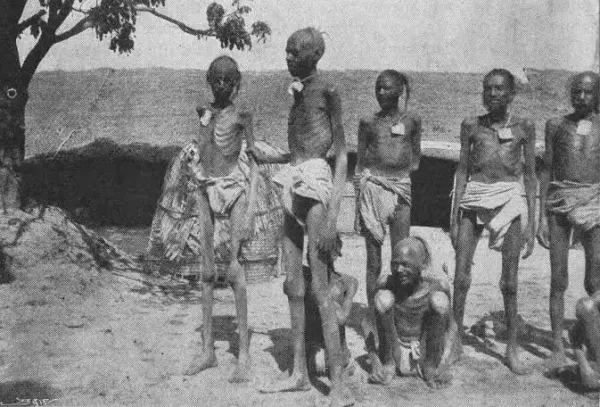
Chhappania Famine is considered to be one of the most terrible famines in the history of India. This famine occurred during the year 1899-1900 and its greatest impact was seen in Rajasthan, Gujarat, Central India and surrounding areas. Due to this famine that occurred in Vikram Samvat 1956, it is known as “Chhappaniya Famine” in Rajasthan and Western India.
In 1899, there was no rain in many parts of the country due to weak monsoon. Crops in the fields were ruined due to continuous drought. At that time, most of India's population was dependent on farming, so crop failure had a direct impact on farmers and rural families.
Reasons for lack of rain:
The impact of this famine was felt most in Rajasthan. At that time many areas here were under princely states and a large number of people were dependent on farming and animal husbandry.
Causes of famine:
The suffering of Chhappaniya famine is also recorded in folk songs and proverbs. Memories of this famine are still found in the folk culture of Rajasthan.
The Chhappaniya famine occurred during the British rule. At that time there was a lot of criticism regarding the famine relief policies of the British government. According to historians, relief efforts were initiated, but questions were raised about their pace and organization. In many areas, people were helped through relief camps and wage-based schemes, but these efforts did not prove sufficient in the face of widespread hunger and disease.
There are different estimates regarding the number of deaths in this famine. According to historians, millions of people lost their lives due to hunger, malnutrition and diseases. Heavy loss of livestock had made rural life more difficult.
According to Vikram Samvat, there was a severe famine in Rajasthan and Gujarat in the year 1956. That is why it was called “Chhappaniya Famine”. Even today, the mention of “Chhappaniya Famine” in the stories and folk literature of the elders of Rajasthan reminds us of the terrible conditions of that time.
The Chhappaniya famine was not just a natural disaster, but it also shows the social and economic challenges of that period. This incident forced India to think about issues like famine management, irrigation system and food security. This famine is a chapter of Indian history, which shows how the effects of nature and weak systems together can have a deep impact on the society. Even today the “Chhappaniya Famine” is recorded as a painful historical event in the collective memory of Rajasthan and Western India.