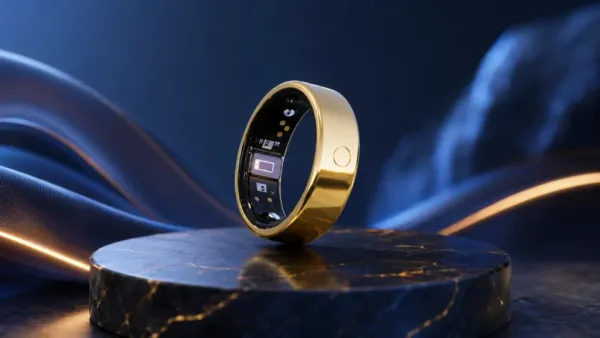
For years, the smartwatch sort of took the spotlight in wearable tech. It was mostly all about fitness tracking and notifications, calls, directions, and apps, plus the more and more advanced health sensors that just keep showing up. But there’s another style of wearable that’s been gaining momentum, kind of quietly, in its own little lane
A smart ring basically removes most of what makes a smartwatch feel like a tiny smartphone. There’s no large screen, no never ending parade of alerts, and in most day-to-day moments there’s no real expectation that the wearer will keep tapping, swiping, and interacting all day. Instead, the ring is supposed to blend into regular life, like it’s almost invisible
And somehow that low-key vibe becomes the main reason people actually want one. Right now, smart rings can measure a pile of wellness- data, like sleep trends, heart rate, blood oxygen, activity, recovery and more. Samsung’s Galaxy Ring, for instance, uses three built-in sensors, then it connects health tracking with Galaxy AI-powered insights inside Samsung Health. Samsung also says you can get up to seven days of battery life
Oura, on the other hand, leans on multiple optical sensors and uses algorithms to track things like heart rate, heart rate variability, respiration, and blood oxygen while you sleep. So the result is that this category is moving quickly, and it sits somewhere between jewellery, a fitness tracker, and a health monitoring gadget. Now the real question isn’t exactly “will smart rings have a future”. It’s more like what that future looks like, and whether rings can genuinely do the job people started expecting from watches and fitness bands too, or at least cover enough of it.
Honestly, the appeal starts with something kinda basic: people may not really want yet another screen. Smartwatches are strong precisely because they put information right on the wrist, but then again it can become a downside. Notifications, messages, calls, and apps can slowly turn a health gadget into one more source of digital distraction, and it is a bit annoying.
Smart rings take the opposite approach; they collect information quietly and shift most interaction to a smartphone application. So there is less constant checking, and that is part of why they feel so calm. They are especially attractive for people focused on sleep and recovery tracking. You can leave a ring on overnight without needing to sleep with a bright display, or constantly managing notifications or settings.
Also, the broader wearable world is showing more interest in discreet devices without screens. Recent 2026 coverage has pointed out a wider trend towards subtle fitness trackers that provide health information while not becoming another screen competing for attention. This hints that the future of wearable tech might not always mean adding more technology in front of users.
Maybe it will be about making technology less visible, while making the insights more useful, and maybe even more “there” when you need them.
People talk about smart rings and smartwatches like it is a showdown where one type will basically wipe out the other. But that seems pretty unlikely soon. They are not really the same thing; they do different tasks.
A smartwatch is, at its core, an interactive computer you wear on your wrist. It can show messages, help with navigation, run apps, monitor workouts, and give quick feedback, kind of all in your face. A smart ring is more like a low-effort health sensor, usually with limited interaction. Like, it does the quietly measuring thing.
For instance, if someone is jogging outdoors, they might like a smartwatch better because the screen can show pace, distance, heart rate, and workout details as it happens. But if someone mainly cares about sleep, recovery, and day-to-day wellness, they may go with a ring, since it can gather data without pulling their focus.
The split is getting even more obvious as screen-free wearables pick up steam. In most recent comparisons, rings tend to highlight sleep patterns and passive health tracking while watches keep a clear edge for workout notifications and other interactive functions.
So maybe the future won’t be about picking one or the other, but instead choosing the right mix for your routine.
The most important trend in smart rings is this shift from occasional measurement to sort of continuous monitoring, if you think about it.
Earlier fitness devices mostly focused on the more obvious metrics, like steps and calories, stuff you can quickly see and move on from.
Now these rings are more and more built to observe patterns across days and weeks, not just one snapshot.
Sleep is especially important. A ring worn all night can gather information without the user needing to actively kick off a tracking session; it just kind of happens. Samsung’s Galaxy Ring, for example, monitors sleep- measurements including heart rate, blood oxygen, and skin temperature.
Oura does something similar; it gives detailed sleep-stage information through its platform.
The point here is not just that one night’s measurement matters a lot. It’s more about the accumulation of data over time. One bad night of sleep may not mean much by itself. But a pattern that shows consistently reduced sleep quality could be far more useful to a user. That’s basically where smart rings are positioning themselves more and more now: not merely as trackers, but as long-term personal health-data platforms.
Wearables have, historically, generated a huge lot of data. The tricky part isn’t only grabbing it , it’s more like finding some meaning in what the data actually means, day after day, in the real world.
A person probably doesn’t need to know heart rate variability every single morning. They probably care more about whether their overall recovery shows something different from the usual, and if there’s some reasonable pattern worth noticing, maybe even acting on. That’s where artificial intelligence starts getting more important, sort of like a hidden translator working in the background
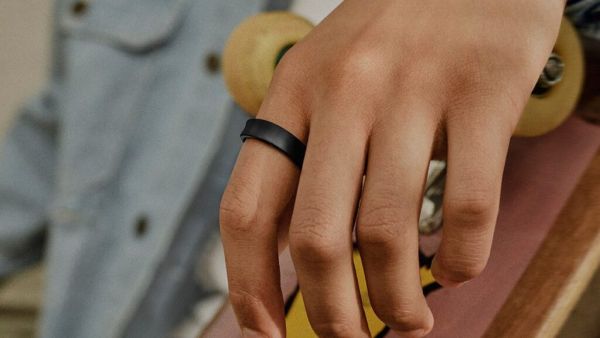
For example, Samsung’s Galaxy Ring already uses Galaxy AI inside Samsung Health to slice up health data then produce personalized insights. Its Energy Score basically folds sleep activity and heart rate details into one simpler summary, kinda like a quick interpretation rather than a plain list. And this hints at a bigger change in wearable technology, not just one neat product adding a tidy little extra
So the competitive edge could slowly shift away from:
“Which device collects the most measurements?” toward
“Which platform turns those measurements into the most useful understanding?”
If that happens, AI-based coaching could end up being one of the key smart ring trends for the next few years, maybe even sooner than people expect.
One of the more interesting developments is that manufacturers are kind of not treating rings and watches as competing, like at all. Samsung explicitly supports using its Galaxy Ring next to a Galaxy Watch.
If both are on your body, Samsung says the watch can act as the main unit for certain measurements, while the ring keeps doing health tracking when the watch has to recharge. Samsung also claims that using the two together can stretch the Ring battery life by as much as 30% in some supported cases.
This seems to point toward a wider wearable ecosystem. Instead of only asking if a ring can substitute for a smartwatch, companies may start to wonder more like:
How can multiple wearables smartly share information?
The watch can do the active workouts, and the real-time back and forth too. The ring can manage passive monitoring, plus sleep, in a quieter sort of manner. The phone can stay as the main interface.AI can then merge all those data streams together. That approach could end up feeling more powerful than expecting one single device to handle every role, all on its own.
Battery life is a less glamorous but still most important detail for health wearables, you know. A device can’t really do continuous monitoring if the user is constantly taking it off to recharge.
Smart rings have a natural advantage here, because they don’t have to feed a large display or juggle a wide collection of smartwatch applications. Samsung claims up to seven days on the Galaxy Ring, and today’s smart ring options are often trying to match that by offering around a week-long stretch or even more endurance.
More battery capacity actually shows up most clearly for sleep tracking. Taking the ring off overnight to charge it leaves gaps, right when people may want the most steady and uninterrupted data.
So the next wave of rings is likely to lean hard into energy efficiency upgrades, quicker charging, and charging cases that make brief recharges feel easier.
The tiny size of a ring brings an engineering challenge that is kind of hard to explain, because everything is so tight. Manufacturers have to place sensors, batteries, processors, and connectivity parts into an extremely compact form factor, and it has to look neat too. Meanwhile, the device still has to feel comfortable enough to wear day after day, which is not as simple as it sounds.
Right now, many products already rely on a mix of optical sensors plus temperature- sensing. Oura’s Smart Sensing system, for example, combines a bunch of sensors with algorithms made to tune the measurements based on the user’s body signals and day activity level.
Next, newer generations will probably put more effort into boosting signal quality, while also shrinking the sensors and cutting power needs. So the real competition might not be on the ring surface at all, but rather happening inside the ring, quietly.
Hardware is really only one piece of the smart-ring business model. Some manufacturers roll in advanced software insights as part of a recurring membership, so it feels more like a package than just a product. That changes the buying question a bit. People are starting to weigh not only “how much does the ring cost” but also, like, “how much will it cost to use the full platform over a few years?”
Subscription models can help fund steady software development, cloud services, and AI features. But they can also make consumers a little reluctant because it can start to feel like paying again and again for information created by a device they already bought.
In general, the industry will probably keep going back and forth between subscription-based ecosystems and products that lean hard into one-time hardware purchases. And honestly, this could turn into a pretty meaningful differentiator as the market grows.
Smart rings gather pretty personal information.
Sleep patterns, heart rate, movement levels, stress measurements, and a few other biometric signals can end up pointing at how someone lives. So privacy gets extra important quickly.
People will be asking more and more, like:
Samsung says Galaxy Ring health data is sent to and stored via Samsung Cloud, and that happens through the user’s account.
As smart rings keep moving toward health plus longevity uses, expectations for data transparency will become even more significant.
The more valuable the information gets, the more responsible data handling will matter.
There is a growing split between wellness tracking and medical diagnosis, like sorta two lanes that people keep blending. Most consumer smart rings are framed mostly as wellness and fitness devices rather than true medical diagnostic tools. Samsung, for example, is very clear that Galaxy Ring metrics are meant for general wellness and fitness, and not for medical diagnosis or treatment.
Still, the tech keeps creeping toward more advanced health insights, step by step, even if the marketing stays careful.
Some companies are also trying out uses beyond everyday fitness monitoring. In 2026, Happy Health rolled out a smart-ring-centered platform aimed at sleep apnea, where biometric monitoring is paired with AI analysis, plus clinician access.
That basically shows where this category can eventually head, not just a gadget for “steps” and “recovery.”
So the smart ring could shift from something like:
tracker → personal health dashboard → intelligent health assistant.
But the nearer consumer wearables get to medical functions, the more critical accuracy, verification, privacy, and regulatory supervision become, and those are not optional details.
Fitness bands are in another interesting place. Usually they are a lot cheaper, and they can still give very good activity tracking without the cost or all the complications that come with a full smartwatch. But rings have this specific physical perk: they can be worn more discreetly, and in a way they are especially handy for overnight tracking.
Bands might stay appealing for people who want the workout information right there, visible and straightforward, or for anyone who is looking for a lower-cost fitness device. Rings, meanwhile, seem more likely to attract those who go for passive monitoring, comfort, and a kind of minimalism.
So the whole divide could start to feel like interaction versus invisibility. Bands and watches, generally, ask users to interact with the tech; rings are made to let the technology fade out into the background.
Even with all the promise, smart rings kind of hit a few walls. Like, sizing. A smartwatch can be adjusted, strapped, done, but a ring has to sit on the finger the right way, not just “close enough”. So makers usually hand out sizing kits or ask people to measure carefully before they buy. For instance, Samsung says Galaxy Ring sizing is not the same as normal ring sizes, and it points users toward its sizing kit.
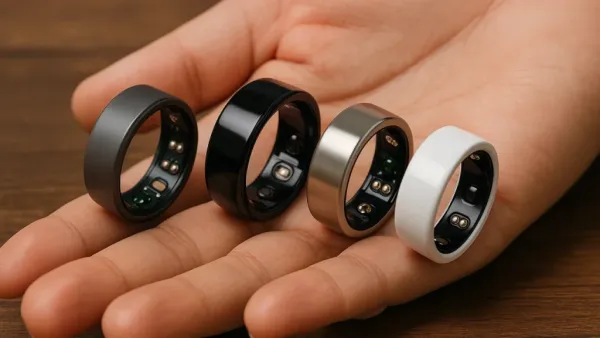
Then comfort, honestly, can be different from person to person. What feels fine in one moment might become annoying during long days, or certain routines. Some activities also make a ring less practical, and in turn could raise the chances of scratches, or even other physical damage.
Another big point is that smart rings generally come without a screen. This is great if someone wants minimalism or a quieter device, but it is not so great if you need quick data while working out.
And lastly, the smart-ring ecosystem still seems a bit fragmented. Compatibility matters a lot: phones, health platforms, and even other wearables can all affect what people choose to buy.
The most likely future for wearable tech probably won’t look like one device type just wins everything. Instead, people may end up wearing a few specialized devices at once, synced up in real life, without all the whole “single product” fantasy.
A ring might help with sleep monitoring, and it quietly keeps an eye on you. A watch can manage workouts, and it could also toss in recovery cues when needed. Earbuds could track movement or deliver contextual audio depending on what’s going on around you, like subtle hints rather than big announcements.
Then the smartphone could remain the main interface, the sort of “hub” device that everything talks to.
After that, AI could fuse all those signals into one personalized health overview, not as separate snippets but as one continuous thread of meaning. With this kind of setup, each device does what it’s best at, and doesn’t try to cover every single job, because that often gets messy pretty fast.
The ring is valuable because it stays out of the way and keeps monitoring even when you’re not thinking about it at all. The watch stays valuable because it’s still solid for interaction and quick feedback. And the phone keeps being the central computing platform, always there in the background.
So yeah, this ecosystem approach could make smart rings more useful, without needing them to fully replace smartwatches or anything that dramatic, like not even close to that.
The future of smart rings isn’t only about making them smaller, lighter, or somehow more stylish. What feels like it matters even more is that shift in the software side, plus health intelligence blending together.
Right now the most advanced devices already show where this is heading: continuous sleep and activity tracking, stronger sensors, longer battery life, AI-driven interpretations, and smooth syncing with wider wearable ecosystems. Then the next generation after that will likely stand out based on how useful those interpretations are, not so much on the number of sensors listed on a spec sheet.
Smartwatches will still stay in front for real-time workouts, notifications, apps, and all that interactive, responsive stuff. Fitness bands will keep being attractive for low-cost activity monitoring.
Smart rings sit somewhere in the middle, like between categories. They’re made for monitoring, not for interrupting. And that contrast might grow even more meaningful as people get tired of nonstop screens, plus those constant pings.
So, the big opportunity for smart rings probably becomes an almost invisible personal technology layer, quietly collecting useful signals, spotting long-term patterns and offering clear insights only when it really counts. In the end, smart rings may be less about replacing what we wear on our wrists, and more about helping wearable health tech quietly blend into everyday life.