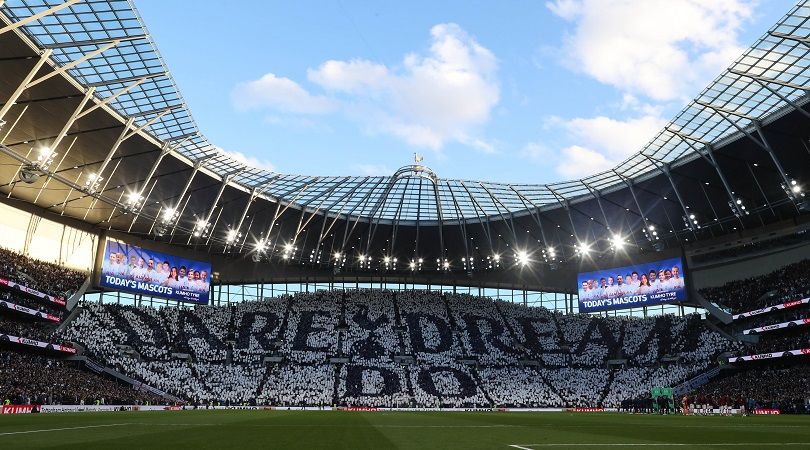
As more clubs in the Premier League and Championship have left their traditional homes for gleaming new stadiums, the considerable commercial appeal of naming rights has become an established part of English football.
Trying to rename Highbury or Goodison Park would once have been unthinkable, quite apart from the fact that Arsenal and Everton supporters would almost certainly have continued calling those grounds by their original names.
But nobody calls the Emirates Stadium by Ashburton Grove, or the Hill Dickinson Stadium by Bramley-Moore Dock, and there is little reason to do so. Those are no longer their official names.
Tottenham Hotspur have been playing at their new home since 2019, and throughout that period it has remained the Tottenham Hotspur Stadium. For supporters of a certain outlook, that has been a welcome exception in a sport increasingly driven by revenue.
That is not to suggest Spurs are hesitant commercially — far from it. Even so, for traditionalists, not having to casually refer to the ground as the AIA Stadium or something similar is a small mercy.
Premier League clubs are now more than ever shaped by the need to match their football spending with their income, particularly those competing in Europe on a regular basis.
UEFA’s squad cost ratio (SCR) rules have now been adopted, adjusted and repackaged by the Premier League as the replacement for its much-criticised Profitability and Sustainability Rules (PSR).
The straightforward explanation is that SCR “limits Premier League clubs’ on-pitch spending to 85% of their football-related revenue and net profit/loss from player sales.” Put even more simply, clubs that want to spend big must also generate big money.
Spurs are no different, yet the Tottenham Hotspur Stadium still has no naming-rights sponsor. Considering the wide-ranging and constant use of the venue — with its capacity to stage concerts and other sporting events having been central to the project from the outset — the possibility of a major financial boost remains there.
“We are in a highly competitive industry alongside a number of clubs with similar ambitions, and we will only look to partner with the most-respected, renowned brands that align to our club values and can bring something to our fan experience,” a Spurs spokesperson told BBC Sport.
It is clear that whenever Spurs do eventually sell the naming rights to their stadium, the financial upside of such an agreement will be a decisive factor.
Exactly what that figure might be is not known, but estimates of around £20 million per season from several years ago now appear badly outdated, especially if the club are prepared to wait for a premium offer.
Everton are reportedly earning £10 million per season from the naming rights to the impressive new Hill Dickinson Stadium. Arsenal’s most recent renewal of their Emirates agreement, which covers much more than the stadium naming rights alone, is believed to be worth £70 million annually.
Remove the shirt sponsorship element and meet somewhere in the middle, and the likely value of naming rights for the Tottenham Hotspur Stadium starts to come into focus. Add in the London advantage, the scale and status of the venue itself, and Spurs’ readiness to hold out for the right deal, and a sum of about £40 million looks attainable.